
100,000 Romanian Leu Coin of 1946
In the wake of World War II, Romania issued a piece of currency that remains a standout in numismatic history. The 100,000 Romanian leu coin, minted in 1946, holds the distinction of being the largest-denomination coin ever produced in the country. Designed to commemorate the end of the global conflict, this silver coin serves as a tangible link to a transitional era in Romanian sovereignty.
Key Facts
- Highest Denomination: The largest value coin ever issued in Romania.
- Mint Year: Exclusively minted in 1946.
- Composition: A blend of 70% silver and 30% copper.
- Mintage: 2.002 million pieces produced at the Bucharest Mint.
- Historical Context: Issued to mark the conclusion of World War II.
Design and Artistry
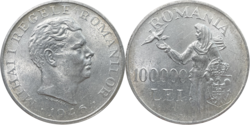
The coin features intricate designs on both sides, reflecting the national identity and the hope for peace following the war.
The Obverse
The obverse side presents a portrait of King Michael I of Romania. It includes the inscription "MIHAI I REGELE ROMÂNILOR" (Michael I King of Romanians) and the year of minting. This side of the coin was designed by H. Ionescu, whose name is inscribed below the portrait.
The Reverse
The reverse side symbolizes peace and national pride. It depicts a dove delivering an olive branch to a woman, accompanied by the country's name, the denomination, and the coat of arms of the Kingdom of Romania. This side was sculpted by A. Romanescu, though some editions of the coin omit the sculptor's name.
Technical Specifications
The 100,000 lei coin is characterized by its substantial size and specific metallic composition. The edge is plain but features a Latin inscription: NIHIL * SINE * DEO, which translates to "Nothing without God."
| Feature | Detail |
|---|---|
| Mass | 25.0 g |
| Diameter | 37.00 mm |
| Composition | 70% Silver, 30% Copper |
| Mint | Bucharest Mint |
| Mintage | 2,002,000 |
Production Anomalies and Counterfeits
Collectors often look for specific variations in these coins. There are known anomalies regarding the edge inscription, which may start at different points or face either the obverse or reverse side depending on the specimen.
Interestingly, counterfeit versions of the coin were produced using materials of lower value than silver. These counterfeits are easily identified by their weight; they weigh 18.36 g compared to the authentic 25.0 g. Notably, these counterfeits were produced within the mint itself, a practice that had been common in Romania since the end of the First World War.
The End of the Denomination
The 100,000 lei coin had a relatively short lifespan as legal tender. On August 15, 1947, a monetary reform was implemented to stabilize the economy. This reform redenominated the currency at a rate of 20,000 old lei to one new leu. Consequently, the 100,000 lei coin was reduced to a value of five new lei, rendering the original denomination obsolete.
Frequently Asked Questions
What is the silver content of the 100,000 lei coin?
The coin is composed of 70% silver and 30% copper.
How can I tell if a 100,000 lei coin is a counterfeit?
Authentic coins weigh 25.0 g, while counterfeits produced with lower-value materials weigh 18.36 g.
Who is depicted on the obverse of the coin?
The obverse features a portrait of King Michael I of Romania.
What does the Latin inscription on the edge mean?
The inscription "NIHIL * SINE * DEO" means "Nothing without God."
Why was this coin issued in 1946?
It was minted to mark the end of World War II, which had concluded the previous year.
What happened to the coin's value in 1947?
Following a monetary reform on August 15, 1947, the 100,000 old lei were redenominated to five new lei.