
1894: A Year of Global Political Shifts and Industrial Innovation
The year 1894 served as a pivotal bridge toward the 20th century, marked by a volatile mix of diplomatic realignments, the birth of iconic brands, and the rise of modern social activism. From the corridors of power in St. Petersburg to the industrial hubs of the United States and England, the world experienced a rapid acceleration in both technology and political unrest.
Key Facts
- Diplomacy: A military alliance was formed between the French Third Republic and the Russian Empire.
- Sports: The International Olympic Committee (IOC) was founded in Paris.
- Industry: Coca-Cola began selling its beverage in bottles for the first time.
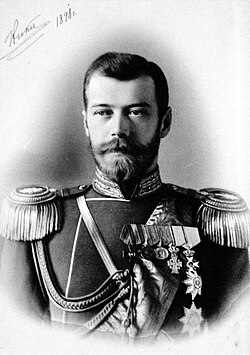
- Politics: Nicholas II ascended to the Russian throne as Tsar.
- Rights: South Australian women became the first in the world to gain the right to be elected to Parliament.
Political Upheaval and Global Conflict
Geopolitical tensions peaked in East Asia during 1894. Following peasant unrest in the Donghak Peasant Revolution in Korea, both China and Japan deployed military forces to assist the Joseon dynasty. This friction escalated into the First Sino-Japanese War in August, leading to significant clashes such as the Battle of Lushunkou in November, where Japanese forces secured a decisive victory and captured the port city of Lüshunkou.
In Europe, the political landscape was equally turbulent. France faced internal instability with the assassination of President Sadi Carnot in June, while the Dreyfus affair began in October with the arrest of Alfred Dreyfus for spying—a case that would remain a symbol of injustice for over a decade.
The Russian Empire saw a major transition on November 1, when Emperor Alexander III died and was succeeded by his son, Nicholas II.
Industrial Progress and Technological Firsts
The late 19th century was an era of relentless invention. In the United States, William Kennedy Dickson secured a patent for motion picture film, laying the groundwork for the cinema industry. Communication also advanced with the installation of the first battery-operated telephone switchboard in Lexington, Massachusetts.
Consumer culture saw a landmark moment on March 12, when Coca-Cola was first sold in bottles. Meanwhile, the world of transportation evolved with the Paris–Rouen Competition for Horseless Carriages, the first automobile competition, held in July.
Infrastructure projects also defined the year. In England, the Manchester Ship Canal and Docks were opened by Queen Victoria, providing the industrial city of Manchester with a direct link to the Irish Sea. Additionally, the iconic Tower Bridge in London opened for traffic in June.
Social Movements and Human Rights
The year 1894 witnessed a surge in labor activism and the fight for gender equality. In the U.S., Coxey's Army, a protest march of the unemployed, traveled from Ohio to Washington, D.C., to demand economic relief. Labor strikes also hit the bituminous coal mines of the central U.S. and the garment industry in New York City.
Significant strides were made in women's rights. Britain's Local Government Act gave women the right to vote and stand in local elections. More remarkably, in December, women in South Australia gained the right to vote and became the first women globally eligible for election to Parliament.
Summary of Major 1894 Events
| Category | Event/Innovation | Significance |
|---|---|---|
| Technology | Motion picture film patent | Foundation of modern cinema |
| Commerce | Bottled Coca-Cola | Revolutionized beverage distribution |
| Sports | IOC Foundation | Established the modern Olympic movement |
| Human Rights | South Australian Suffrage | First women eligible for Parliament |
| Conflict | First Sino-Japanese War | Shifted power dynamics in East Asia |
Frequently Asked Questions
What was the significance of the International Olympic Committee's founding?
Founded on June 23 at the Sorbonne in Paris by Baron Pierre de Coubertin, the IOC was created to revive the Olympic Games, promoting international peace and athletic competition.
Who was Alfred Dreyfus and why was he important?
Alfred Dreyfus was a French Army officer arrested in October 1894 for spying. His wrongful conviction for treason sparked the Dreyfus affair, a major political scandal involving antisemitism and judicial corruption in France.
What was Coxey's Army?
Coxey's Army was the first significant protest march in the United States, consisting of unemployed workers who marched from Massillon, Ohio, to Washington, D.C., to advocate for economic reforms.
Which country first implemented a minimum wage law?
New Zealand enacted the world's first minimum wage law on August 31, 1894, through the Industrial Conciliation and Arbitration Act, which took effect the following January.
What was the result of the First Sino-Japanese War in 1894?
The war began over influence in Korea and resulted in a decisive Japanese victory, highlighted by the capture of Lüshunkou and a shift in regional dominance toward Japan.