
ABC Radio History: From Early Wireless to Digital Broadcasting
The evolution of public broadcasting in Australia is a story of technological leaps and cultural shifts. From the early days of wireless signals in the 1920s to the sophisticated digital streaming of the 21st century, the Australian Broadcasting Corporation (ABC) has served as a cornerstone of national identity, news, and entertainment.
Origins of Australian Public Radio
Public radio in Australia began on November 23, 1923, with the launch of station 2SB in Sydney. This sparked a wave of new stations across Melbourne, Brisbane, Adelaide, Perth, and Hobart. To manage this growth, the Postmaster-General's Department established a licensing scheme. By 1924, stations were divided into two categories: A-Class stations, which received government funding with limited advertising, and B-Class stations, which relied on higher advertising volumes without government support.
Financial instability among A-Class stations led to a 1927 Royal Commission, which recommended pooling license fees to support larger stations. This resulted in the creation of the National Broadcasting Service in 1928, which took over 12 A-Class licenses. To provide content for this service, the government formed the Australian Broadcasting Company.
Establishment and the Early Years (1932–1940)
On July 1, 1932, the Australian Broadcasting Commission was established to replace the Australian Broadcasting Company and manage the National Broadcasting Service. Modeled after the BBC, the ABC was funded primarily through listener license fees and government grants.
The original network consisted of twelve stations: 2FC and 2BL (Sydney), 3AR and 3LO (Melbourne), 4QG (Brisbane), 5CL (Adelaide), 6WF (Perth), 7ZL (Hobart), 2NC (Newcastle), 2CO (Corowa), 4RK (Rockhampton), and 5CK (Crystal Brook). These stations laid the groundwork for today's ABC Local Radio and Radio National.
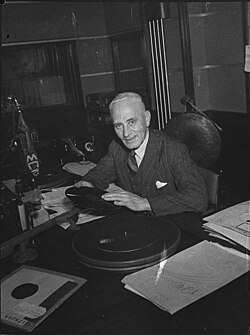
Early programming was diverse, featuring the "Children's Session" with Bobby Bluegum, sports coverage like "Racing Notes," and educational talks on topics ranging from needlecraft to goldfish care. The ABC also pushed creative boundaries, performing all 38 of William Shakespeare's plays live between 1936 and 1938 and utilizing "synthetic" cricket broadcasts—using cables from London and sound effects to recreate English Test matches in Sydney studios.
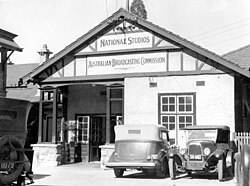
Technologically, the ABC operated entirely live until 1935, when the first disc-based recorder was installed in Sydney. To ensure high-quality live music, the ABC established broadcasting orchestras, choruses, and dance bands in every state.
World War II and Post-War Expansion (1940–1969)
World War II forced the ABC to adapt, recruiting more women to fill roles left by men in the armed forces and establishing overseas reporting hubs in the Middle East, Greece, and the Asia-Pacific. A brief period of wartime censorship occurred in 1940, when the Department of Information controlled the nightly news, though independence was restored after listener protests.
The post-war era saw the rise of iconic programming. The Argonauts Club, revived in 1941, became a massive success, boasting over 50,000 members by 1950. In 1945, The Country Hour premiered, enhancing rural coverage through dedicated journalists and extension officers.
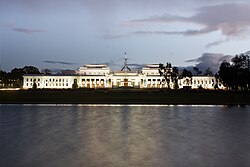
Legislative changes in 1946 mandated the broadcasting of Parliament, with the first Question Time broadcast on July 10, 1946. The network also expanded internationally, adding 9PA in Port Moresby in 1946, though these Papua New Guinea stations eventually split to form their own national corporation in 1973.
Diversification and the Shift to Corporation (1970s–1980s)
The 1970s and 80s were marked by a move toward specialized networks. In 1975, the ABC launched 2JJ (Double Jay) in Sydney, a 24-hour AM rock station that eventually evolved into the national Triple J FM network. A classical music network, ABC-FM, was established in 1976.
A pivotal change occurred on July 1, 1983, when the organization was renamed the Australian Broadcasting Corporation. This transition split radio and television into separate divisions and led to a major restructuring in 1985, where ABC Radio 1 became the Metropolitan network and Radio 2 became Radio National.
Consolidation and the Digital Age (1990s–Present)
The 1990s focused on efficiency and modernization. The ABC divested its orchestras in 1990 to form Symphony Australia and consolidated its urban footprints. In Sydney, operations moved to a centralized site in Ultimo in 1991.
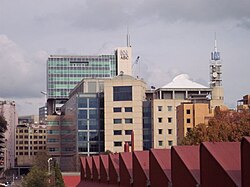
Technological innovation flourished during this time. The ABC developed D-Cart digital technology, which was sold globally, and launched ABC NewsRadio in 1994 (originally as the Parliamentary and News Network). By the 2000s, the ABC transitioned toward a multiplatform approach, launching the ABC Radio app in 2012 (later ABC Listen in 2017) and introducing DAB+ digital services in 2009.
Key Facts
- Founded: The Australian Broadcasting Commission was established on July 1, 1932.
- Original Reach: Started with 12 radio stations across Australia.
- Name Change: Transitioned from "Commission" to "Corporation" in 1983.
- Key Networks: Includes ABC Local Radio, Radio National, Triple J, and ABC Classic FM.
- Innovation: Developed D-Cart digital technology in the 1990s.
- Parliamentary Role: Mandated to broadcast Parliament since 1946.
| Era/Year | Key Development | Outcome/Network |
|---|---|---|
| 1932 | Establishment of ABC | 12 original radio stations |
| 1975 | Launch of 2JJ | Triple J Network |
| 1976 | FM Classical Launch | ABC-FM (now ABC Classic) |
| 1983 | Legislative Name Change | Australian Broadcasting Corporation |
| 1985 | Radio Restructure | Radio National and Metropolitan Radio |
| 1994 | PNN Launch | ABC NewsRadio |
Frequently Asked Questions
What was the difference between A-Class and B-Class stations in the 1920s?
A-Class stations received government funding and had strict limits on advertising, while B-Class stations received no government funding but were allowed to carry more advertising.
How did the ABC broadcast cricket matches from England before modern satellite tech?
The ABC used "synthetic" broadcasts, where commentators in Sydney studios used cable updates from London and sound effects to recreate the match live for listeners.
What was the Argonauts Club?
The Argonauts Club was a highly popular children's program that encouraged young Australians to contribute writing, music, poetry, and art, reaching over 50,000 members by 1950.
When did the ABC start broadcasting Parliament?
The ABC began broadcasting Parliament on July 10, 1946, following legislation passed that year requiring the coverage of sessions, starting with Question Time.
What is the current branding for ABC Local Radio?
While the ABC moved toward a multiplatform branding style (dropping callsigns in 2017), it reinstated callsign-based branding for metropolitan stations in March 2026.