
Açaí Palm: From Amazonian Staple to Global Superfood
The açaí palm (Euterpe oleracea) is a slender palm tree native to the eastern Amazonia region, particularly within the swamps and floodplains of Brazil. While it has been a cornerstone of local diets for centuries, the 21st century has seen a dramatic surge in global demand for its fruit, transforming it from a regional staple into an international health trend.
The name "açaí" originates from the Tupian word ïwasa’i, which translates to "fruit that cries or expels water." Beyond its famous berries, the tree is also cultivated for its leaves, trunk wood, and hearts of palm.
Key Facts
- Scientific Name: Euterpe oleracea.
- Origin: Native to eastern Amazonia, primarily Brazil.
- Primary Producer: The state of Pará accounts for approximately 90% to 95% of Brazil's açaí economy.
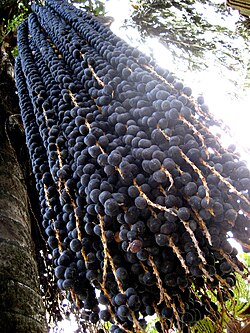
- Physical Traits: Tall, slender trees reaching over 25 meters (82 ft).
- Main Component: The seed makes up 60% to 80% of the fruit's volume.
Botanical Characteristics and Fruit Structure
The açaí palm is a light-loving species. If shaded, both the quality and quantity of its fruit yield decrease significantly. The tree produces pinnate leaves up to 3 meters (9.8 ft) long and bears fruit year-round, although harvesting is avoided during the rainy season.
The fruit itself is a small, round, black-purple drupe (a fleshy fruit with a single hard stone) measuring about 25 mm in circumference. It consists of a thin pulpy mesocarp (1 mm or less) surrounding a large, hard endocarp containing a single seed. These fruits grow in branched panicles containing between 500 and 900 berries.
Cultivation and Economic Impact
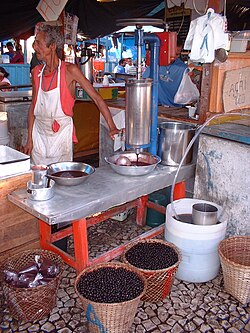
Açaí is harvested in two primary cycles: one from January to June and a larger volume harvest from August to December. The economic scale of this industry is immense; in 2022, the state of Pará produced 8,158 tonnes of berries, generating US$26 million in revenue. This represents a massive increase compared to 2012, where production was 209 times lower.
Cultivars
While most açaí is similar, a few distinct varieties exist:
- Branco ("White"): A rare variety from the Amazon estuary where berries remain green when ripe.
- BRS-Pará: Developed in 2004 by the Brazilian Agricultural Research Agency, offering a pulp yield of 15% to 25%.
Labor Concerns
The industry faces significant ethical challenges. Reports indicate that children as young as 13 are employed to harvest berries. These laborers often climb trees up to 70 feet (21 m) without safety harnesses, leading to severe injuries and falls.
Nutritional Profile and Chemical Composition
Açaí is prized for its nutrient density. A 100g sample of freeze-dried pulp and skin contains approximately 534 calories, 52g of carbohydrates (including 44g of dietary fiber), 8g of protein, and 33g of total fat. The fat content is primarily composed of oleic acid (56%), palmitic acid (24%), and linoleic acid (13%).
| Nutrient | Amount |
|---|---|
| Calories | 534 kcal |
| Total Fat | 33 g |
| Carbohydrates | 52 g |
| Dietary Fiber | 44 g |
| Protein | 8 g |
| Vitamin A | 1002 IU |
| Calcium | 260 mg |
The Role of Anthocyanins
The deep purple color of açaí comes from anthocyanins, which provide antioxidant capacity in laboratory settings. However, scientific evidence suggests that the contribution of these flavonoids to antioxidant function inside the human body (in vivo) is likely negligible, as they are poorly conserved and rapidly excreted.
Commercial Uses and Marketing
In the 1980s, the Gracie family began marketing açaí as an energy drink and a fruit base for granola and bananas. This sparked the creation of processing plants to freeze and export the pulp.

Food and Cosmetics
- Açaí Bowl: Known in Brazil as Açaí na tigela, this dessert uses frozen purée topped with granola and fruit.
- Dietary Staple: For some traditional Caboclo populations in the Amazon, açaí can make up to 42% of their total food intake by weight.
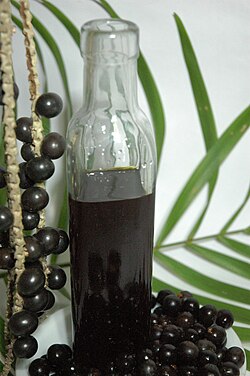
- Açaí Oil: Used for cooking and salad dressings, but primarily utilized in cosmetics for soaps, shampoos, and moisturizers.
- Seed Byproducts: The seeds (80% of fruit mass) are used for livestock feed, organic soil, fuel for bricks, or new seedlings.
Marketing Controversies and Scams
The "superfood" label led to widespread marketing fraud in the early 2000s. Many companies made unsubstantiated claims that açaí could cure obesity or prevent colon cancer. In 2009, açaí scams were ranked as the top "scams and rip-offs" by the U.S. Federal Trade Commission (FTC). In 2012, the FTC issued an $80 million judgment against five companies for these fraudulent claims.
Health and Safety Considerations
While generally safe, there are specific risks associated with açaí. Consumption of uncleaned, unpasteurized fruits in certain harvest regions has been linked to the transmission of Chagas disease. Additionally, as of 2009, there is no scientific evidence that açaí consumption promotes weight loss or provides miracle health effects.
Frequently Asked Questions
Is açaí actually a superfood for weight loss?
No. Despite extensive marketing claims, there is no scientific evidence that açaí consumption affects body weight or promotes weight loss.
What is the main difference between the 'Branco' and standard açaí?
The 'Branco' variety is a rare cultivar where the berries remain green when ripe, rather than turning the characteristic deep purple.
Can açaí be used for things other than food?
Yes. Açaí oil is commonly used in cosmetics like moisturizers and shampoos, and the seeds are used for livestock feed or as fuel for brick production.
Are there any health risks associated with eating açaí?
The primary risk is the transmission of Chagas disease, which can occur if the fruit is consumed unpasteurized and uncleaned in specific harvest regions.
How much of the açaí berry is actually edible pulp?
The pulp is very thin (1 mm or less), as the large seed makes up approximately 60% to 80% of the fruit's total mass.