
Admiral Sir William Clifford: A Distinguished Naval Career
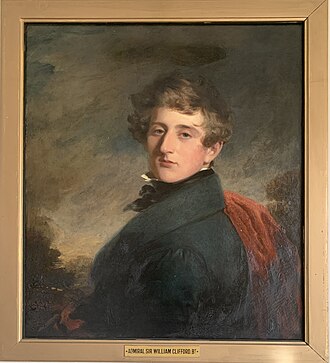
The history of the Royal Navy is defined by officers whose careers spanned the transition from the Napoleonic era to the mid-Victorian age. Among these figures was Admiral Sir William Clifford, a dedicated naval officer whose service took him from the Caribbean to the shores of Russia and India.
Clifford's journey began in May 1800 when he entered the Royal Navy as a midshipman, a junior officer in training. His early years were marked by active combat and strategic operations across the globe, establishing a foundation of courage and leadership that would define his ascent through the ranks.
Early Service and Combat Experience
By 1806, Clifford had been promoted to the rank of lieutenant. His early career was characterized by participation in several key military actions, including the reduction of Ste. Lucie and Tobago in 1803. He also played a role in the 1807 operations in Egypt, demonstrating his versatility in different theaters of war.
One of the most notable achievements of his early career occurred in 1809 during the capture of a convoy in the Bay of Rosas. For his bravery and success in this operation, Clifford was awarded a medal. He continued his active service with operations along the coast of Italy between 1811 and 1812.
Captaincy and Diplomatic Missions
Upon attaining the rank of captain, Clifford became a frequent subject of the London Gazette, the official journal of record for the British government. He was repeatedly cited for his courage during cutting-out expeditions—dangerous naval raids where small boats were used to board and capture enemy ships from within a harbor.
Beyond combat, Clifford was entrusted with high-profile diplomatic duties. He served in attendance on the Lord High Admiral, the Duke of Clarence (who later became King William IV). His leadership was further recognized through two significant voyages:
- 1826: He recommissioned HMS Herald on May 27 to transport the Duke of Devonshire on an embassy to Russia.
- 1828: He commanded the vessel that transported Lord William Bentinck to India to assume the role of governor-general.
These assignments marked the conclusion of his time at sea, as his last active service afloat ended in 1831.
Key Facts
- Entry into Navy: May 1800 as a midshipman.
- Major Honors: Received a medal for the capture of a convoy in the Bay of Rosas (1809).
- Notable Assignments: Transported the Duke of Devonshire to Russia and Lord William Bentinck to India.
- Final Rank: Retired Admiral as of March 31, 1866.
Career Progression and Rank Summary
Clifford's rise through the naval hierarchy reflects a steady progression of seniority and merit over several decades.
| Rank | Date Attained |
|---|---|
| Midshipman | May 1800 |
| Lieutenant | 1806 |
| Rear-Admiral | March 23, 1848 |
| Vice-Admiral | September 27, 1855 |
| Admiral of the Blue | November 7, 1860 |
| Admiral of the Red | 1864 |
| Retired Admiral | March 31, 1866 |
Frequently Asked Questions
When did William Clifford first join the Royal Navy?
William Clifford entered the Royal Navy as a midshipman in May 1800.
What was a "cutting-out expedition" in Clifford's career?
A cutting-out expedition was a naval operation where sailors used small boats to sneak into an enemy harbor, board a ship, and sail it away (or "cut it out") from its moorings.
Which high-ranking officials did Clifford escort?
Clifford escorted the Duke of Devonshire to Russia in 1826 and Lord William Bentinck to India in 1828.
When did Clifford stop serving actively at sea?
His last service afloat occurred in 1831, after which he was no longer actively employed in sea duties.
What was the highest rank Clifford achieved before retirement?
Clifford reached the rank of Admiral of the Red in 1864 before becoming a retired admiral in 1866.