
Advertising History: From Ancient Papyrus to Digital Algorithms
Advertising is as old as commerce itself. Long before the era of targeted social media ads and global brand campaigns, humans found ways to announce their goods and services to the public. From the rock paintings of ancient India to the sophisticated algorithms of the 21st century, the evolution of advertising reflects the broader history of human communication, technology, and psychology.
Ancient Roots of Commercial Messaging
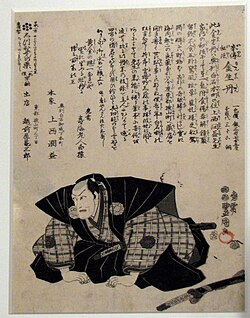
The earliest forms of advertising were simple and direct. In ancient Egypt, papyrus (a material similar to paper made from the papyrus plant) was used to create sales messages and wall posters. Similarly, ruins in Pompeii and ancient Arabia have revealed commercial messages and political campaign displays. In ancient Greece and Rome, papyrus was frequently used for "lost and found" notices.
Wall and rock painting served as another early medium, a tradition that persists today in parts of Africa, Asia, and South America. This practice can be traced back as far as 4000 BC in Indian rock art.
In ancient China, the Classic of Poetry (11th to 7th centuries BC) describes the use of bamboo flutes to attract customers to confectionery. While calligraphic signboards and inked papers were common, the Song dynasty produced what is considered the world's earliest identified printed advertising medium: a bronze printing plate used for the Liu family needle shop in Jinan.

Medieval Europe and Visual Cues
During the Middle Ages in Europe, low literacy rates meant that text-based signs were ineffective. Instead, tradespeople used visual symbols to identify their businesses. A boot represented a cobbler, a horseshoe indicated a blacksmith, and a bag of flour signaled a miller. For those selling goods from carts in city squares, town criers (street callers) were employed to announce their presence. These oral advertisements were later documented in the 13th-century poem Les Crieries de Paris by Guillaume de la Villeneuve.
The Rise of Newspaper Advertising (18th–19th Century)
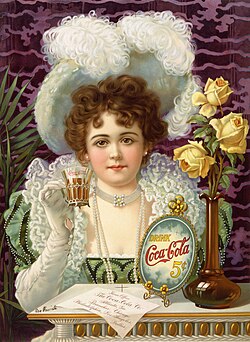
The end of the 18th century in England saw a surge in newspaper circulation, with advertising becoming a core component of the content. This shift was so significant that many publications began including the word "advertiser" in their titles. Initially, most ads focused on books and medicines and rarely featured images.
In the United States, the 19th century saw explosive growth in readership. By 1822, the U.S. led the world in newspaper readers, with roughly half of the content consisting of local advertising.
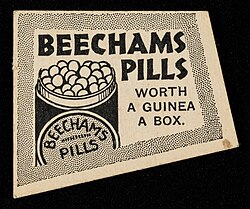
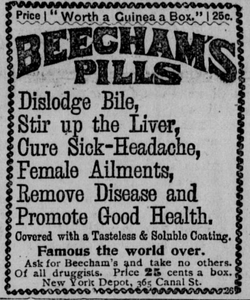
A pivotal moment occurred in August 1859 when the British firm Beechams created the phrase "Beechams Pills: Worth a guinea a box," widely regarded as the world's first advertising slogan. This helped the company transition into a global brand.
The Birth of the Advertising Agency
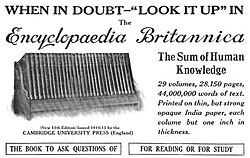
The modern agency model began around 1840 in Philadelphia with Volney B. Palmer. Initially acting as a space broker, Palmer bought newspaper space at a discount and resold it to advertisers. However, the first full-service agency, N.W. Ayer & Son, was founded in 1869. Unlike Palmer, Ayer & Son planned, created, and implemented entire campaigns, establishing advertising as a professional creative field.
The Era of Modern Advertising
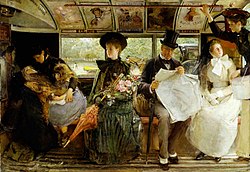
Industrialization in the late 19th century led to a proliferation of consumer goods, necessitating more persuasive tactics. Thomas J. Barratt, often called the "father of modern advertising," revolutionized the field while working for Pears soap. He introduced targeted slogans and saturation campaigns to ensure product availability.
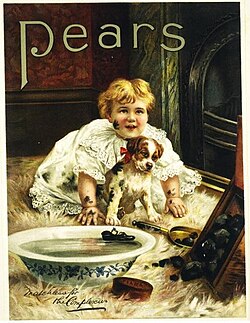
Barratt also pioneered the use of celebrity endorsements in 1882 by recruiting Lillie Langtry as the face of Pears. He emphasized that advertisers must evolve with changing tastes, noting that an idea effective one generation ago would likely fail today.
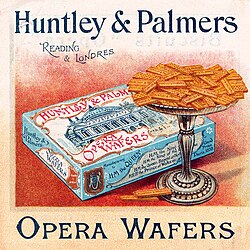
This period also saw the rise of global branding. British biscuit manufacturers, such as Huntley & Palmers, used branding to distinguish their products in a crowded market, selling to 172 countries by 1900.
Psychology and Mass Marketing in the 20th Century
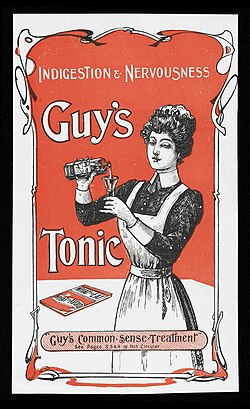
By the early 20th century, advertising in the U.S. shifted from rational appeals to psychological manipulation. Edward Bernays, a nephew of Sigmund Freud, argued that consumers are driven by unconscious desires rather than logic. This approach, which sometimes utilized controversial "sex sells" techniques, aimed to harness human instincts to drive commodity purchases.
The U.S. government also began promoting advertising as a tool for economic prosperity. In the 1920s, Secretary of Commerce Herbert Hoover described advertising as a "vital force" in national life. During this time, tobacco companies hired Bernays to create positive associations with smoking, and the American Association of Foreign Language Newspapers (AAFLN) used advertising to encourage cultural assimilation among immigrant workers.
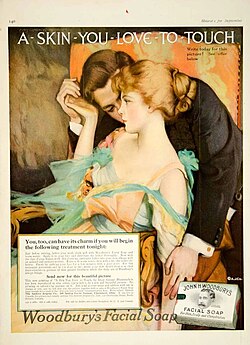
Interestingly, advertising became one of the few professional paths for women at the turn of the century. Because women managed most household spending, agencies valued their insight; the first "sexual sell" ad in America—a soap advertisement featuring a couple—was created by a woman.
The Evolution of Media: Radio, TV, and Internet
The Radio Age (1920s–1940s)
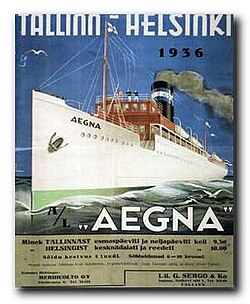
Radio introduced slogans, mascots, and jingles directly into the home. This allowed brands to bypass retailers and speak directly to consumers. The earliest radio dramas were sponsored by soap companies, giving birth to the term soap opera. By the 1930s, stations began selling "advertising spots" (small time allocations), leading to national campaigns.
The Television Era (1950s–1990s)
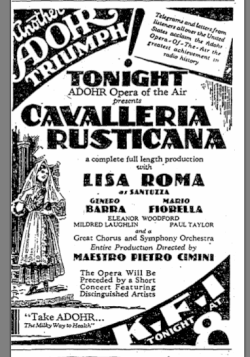
In the 1950s, the DuMont Television Network pioneered the practice of selling ad time to multiple sponsors per program, which became the industry standard. While some shows remained single-sponsor productions (like The United States Steel Hour), the multi-sponsor model dominated.
The late 1980s brought cable television and MTV, which shifted the paradigm: viewers began tuning in specifically for the music video/advertising message. This paved the way for shopping channels like QVC and the Home Shopping Network.
The Digital Revolution (1990s–Present)
The advent of the ad server fueled the dot-com boom of the 1990s. By the early 21st century, companies like Google revolutionized the industry by personalizing ads based on browsing behavior. Today, digital advertising is the dominant force, utilizing interactive platforms like Facebook and X (formerly Twitter).
![Advertising revenue as a percent of US GDP shows a rise in audio-visual and digital advertising at the expense of print media.[29]](/images/9c/31/9c31441053d9b6ce0e13ef14bc2ee365cc8e840715a4bd0f021632bb1fb6e1d7.webp)
Modern strategies now include guerrilla marketing—unpredictable, staged public encounters—and media for equity, where media companies provide advertising to startups (such as Uber or Airbnb) in exchange for company shares.
Key Facts
- Earliest Printed Ad: A Song dynasty bronze plate for the Liu family needle shop in China.
- First Slogan: "Beechams Pills: Worth a guinea a box" (August 1859).
- First Full-Service Agency: N.W. Ayer & Son, founded in 1869 in Philadelphia.
- First Celebrity Endorsement: Lillie Langtry for Pears soap in 1882.
- Psychological Shift: Edward Bernays shifted advertising from rational appeals to targeting unconscious desires.
- Economic Impact: Advertising spending as a share of US GDP has remained relatively stable, around 2.4% to 2.9% since 1925.
| Era | Primary Mediums | Key Innovation |
|---|---|---|
| Ancient | Papyrus, Rock Art, Signboards | Visual symbols and public notices |
| 18th-19th Century | Newspapers | Paid ad space and the first slogans |
| Late 19th Century | Posters, Magazines | Brand management and celebrity endorsements |
| Early-Mid 20th Century | Radio, Television | Mass marketing and psychological targeting |
| Late 20th-21st Century | Internet, Cable TV, Social Media | Personalized algorithms and interactive ads |
Frequently Asked Questions
Who is considered the father of modern advertising?
Thomas J. Barratt is often given this title for his work with Pears soap, where he introduced brand image, saturation campaigns, and the first celebrity endorsement.
What was the first advertising slogan?
The first recognized slogan was "Beechams Pills: Worth a guinea a box," created by the British pharmaceutical firm Beechams in August 1859.
How did Edward Bernays change advertising?
Bernays moved advertising away from appealing to the rational mind and instead focused on the unconscious desires and instincts of the consumer, integrating psychology into marketing.
What is "media for equity"?
This is a practice where media companies provide advertising services to startup companies in exchange for equity (shares) in the business rather than cash payment.
Where did the term "soap opera" originate?
The term comes from the early radio drama series of the 1920s and 30s, which were primarily sponsored by soap manufacturers.