
Afro-German History: From Colonialism to Modern Immigration
The presence of people of African descent in Germany is a complex narrative spanning centuries, evolving from early intellectual exchanges and the brutality of the slave trade to the systemic oppression of the Nazi era and the vibrant multiculturalism of the modern day. This history reflects Germany's changing relationship with the African continent and the enduring resilience of the Afro-German community.
Early Interactions and the Colonial Era (1600s–1914)
Early interactions between Germany and Africa were marked by a stark contrast between academic achievement and exploitation. In the 1720s, Anton Wilhelm Amo, born in Ghana, became the first African to attend a European university under the sponsorship of a German duke, eventually becoming a philosopher and teacher.
However, this era also saw the establishment of German estates on the Gold Coast, where Africans were brought as slaves. A notable instance occurred in 1717 when King Friedrich Wilhelm I of Prussia sold the Groß Friedrichsburg estates in Ghana. The transaction involved the sale of up to 30,000 people to the Dutch East India Company, though the new owners were contractually obligated to send twelve enslaved boys to the king, who were then brought to Berlin and Potsdam.
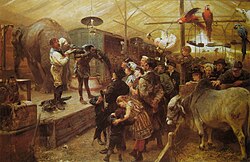
The Berlin Congo Conference and Colonial Expansion
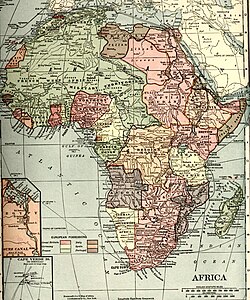
The 1884 Berlin Congo Conference served as a turning point, where European powers partitioned Africa into spheres of influence. Germany established colonies in West Africa and the African Great Lakes region, leading to a new wave of migration to Germany. This included indigenous specialists, students attending German universities, and Askari (former members of the German protection troops).
The colonial legacy remains visible today in Berlin's Afrikanisches Viertel (African Quarter), where streets and squares are named after colonial locations. This area now serves as a hub for many residents of African heritage in the city.
The Interwar Period and the Weimar Republic
Following World War I, Germany lost its African colonies to Belgian, British, and French control. Despite this, many Africans remained in Germany. Those holding colonial identification cards were treated as members of former protectorates. While the 1919 Treaty of Versailles encouraged them to seek citizenship in mandate countries, many chose to stay in Germany, using petitions to alert the German public to colonial conditions.
This period saw a rise in political and intellectual activism. Africans launched Elolombe ya Cameroon (Sun of Cameroon), a bilingual periodical in German and Duala. In 1929, the Liga zur Verteidigung der Negerrasse (League for the Defense of the Negro Race) was established as the German branch of a Paris-based human rights organization.
Persecution Under Nazi Germany (1933–1945)
The rise of the Nazi regime brought severe systemic violence and discrimination. Afro-Germans were classified as "enemies of the race-based state," alongside Jews and Roma. The Nuremberg Laws forbade marriages and sexual relations between Afro-Germans and those deemed "Aryan."
Naturalized citizens lost their passports, and professionals in the arts, circus, and film industries faced extreme travel and employment restrictions. A particularly brutal campaign targeted the "Rhineland bastards"—children of German women and African men—resulting in the forced sterilization of approximately 500 children.
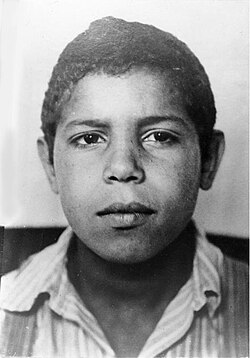
Survivors of this era, such as Hans Massaquoi and Theodor Wonja Michael, later documented these atrocities in autobiographies like Destined to Witness and Deutsch Sein und Schwarz dazu.
Post-War Era and the Rise of Afro-German Identity
After 1945, the presence of Allied occupation forces—including African American, Afro-Caribbean, and African soldiers—led to the birth of approximately 5,000 biracial children by 1955. Many of these "brown babies" were adopted by American families, while others remained in Germany, often facing a West German government policy that sought to isolate or remove "mixed-race negro children."
In the 1980s, the American writer and activist Audre Lorde, while teaching at the Free University of Berlin, helped catalyze a movement by promoting the term Afro-German. She encouraged women like May Ayim and Ika Hügel-Marshall to use poetry and autobiography to gain visibility, focusing on the intersectionality of race, gender, and sexual orientation.
Modern Immigration Trends
Since 1981, Germany has experienced significant immigration from African nations, driven by opportunities for study, work, and political asylum. Nigeria, Eritrea, and Ghana currently represent the largest Sub-Saharan African immigrant groups in the country.
| Country of Birth | Number of Immigrants |
|---|---|
| Nigeria | 83,000 |
| Eritrea | 75,000 |
| Ghana | 66,000 |
| Cameroon | 41,000 |
| South Africa | 34,000 |
| Ethiopia | 27,000 |
| Kenya | 22,000 |
| Togo | 20,000 |
Key Facts
- Anton Wilhelm Amo was the first African to attend a European university in the 1720s.
- The Berlin Congo Conference (1884) formalized Germany's colonial holdings in Africa.
- The Afrikanisches Viertel in Berlin serves as a physical legacy of the colonial era.
- Under the Nazi regime, approximately 500 Afro-German children in the Rhineland were forcibly sterilized.
- Audre Lorde was instrumental in coining and promoting the term "Afro-German" in the 1980s.
- As of 2021, Nigeria has the largest Sub-Saharan African immigrant population in Germany.
Frequently Asked Questions
Who was the first African to attend a European university?
Anton Wilhelm Amo, born in Ghana, was sponsored by a German duke in the 1720s to pursue higher education, later becoming a philosopher and teacher.
What was the "Rhineland bastards" persecution?
This was a Nazi campaign targeting biracial children of German women and African men, which included stripping them of citizenship and the forced sterilization of about 500 children.
How did Audre Lorde influence the Afro-German community?
During her time in Berlin (1984–1992), Lorde helped establish the term "Afro-German" and encouraged Black German women to publish their experiences to increase visibility and address intersectional issues.
What is the Afrikanisches Viertel?
The African Quarter is a district in Berlin with streets and squares named after locations from the German colonial empire; it is now home to many residents of African heritage.
Which African countries have the highest immigration rates to Germany?
According to 2021 census data, the largest groups come from Nigeria (83,000), Eritrea (75,000), and Ghana (66,000).