
Ajaccio History: From Roman Roots to the Birthplace of Napoleon
Ajaccio, the vibrant capital of Corsica, possesses a rich and layered history that spans from the depths of antiquity to its role as a modern regional center. While often celebrated as the birthplace of one of history's most influential figures, the city's evolution is a complex tale of Roman trade, Genoese colonization, and French integration.
Ancient Origins and Archaeological Evidence
The early history of Ajaccio is a subject of ongoing archaeological investigation. Although the 2nd-century Greek geographer Ptolemy of Alexandria did not explicitly mention the city, recent underwater discoveries of Roman ships suggest that the area served as a vital port during the Pax Romana (Roman Peace), a period of stability and prosperity across the Mediterranean basin.
By Late Antiquity, the settlement had grown in significance. Pope Gregory the Great mentioned a diocese in the city in 591 AD, and a written record from 601 AD refers to a place called Adjacium. This early settlement was located further north than the modern city center, specifically in the areas now known as Sainte-Lucie and Castel Vecchio.
For centuries, local oral tradition maintained that the city was Roman. These claims were validated in 2005 when the National Institute for Preventive Archaeological Research (Inrap) excavated the Hill of San Giovanni. They discovered a 6th-century cathedral baptistry and extensive pottery from the 6th and 7th centuries, confirming the existence of an early Christian town built upon Roman foundations.
The Genoese Era and Urban Rebirth
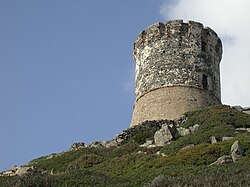
Following a period of decline after the 8th century, the city nearly disappeared. However, by the end of the 15th century, the Republic of Genoa sought to solidify its control over southern Corsica. After evaluating several sites, they selected Punta della Lechia for a new settlement.
Construction began on April 21, 1492, under the direction of architect Cristoforo of Gandini. The project started with a castle on Capo di Bolo, which became the nucleus for a colony of several hundred residents. For years, the city remained an exclusive Genoese enclave, with native Corsicans restricted from entering and instead residing in the suburb of Borgu.
Over time, Ajaccio grew into the administrative capital of the province of Au Delà Des Monts (roughly modern-day Corse-du-Sud), though Bastia remained the overall capital of the island.
Transition to French Rule
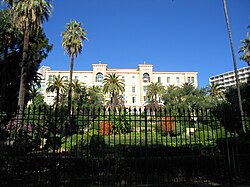
The 16th century saw a tug-of-war between France and Genoa. Ajaccio was occupied by the French from 1553 to 1559 before returning to Genoese control via the Treaty of Cateau Cambresis. The status quo persisted until 1755, when Pasquale Paoli proclaimed the Corsican Republic.
While Paoli controlled much of the island, the Genoese maintained strongholds in several citadels, including Ajaccio. In 1768, Genoa sold Corsica to France, and French troops of the Ancien Régime took over the citadels. The annexation was formally completed in 1780.
The Legacy of Napoleon Bonaparte
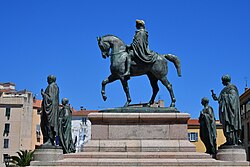
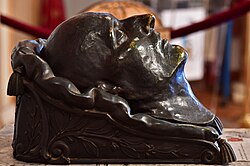
Ajaccio is most famous as the birthplace of Napoleon Bonaparte, born in 1769. The Bonaparte family was prominent in the city; his father, Carlo di Buonaparte, served as secretary to Pasquale Paoli. The family's ancestral home, Maison Bonaparte, remains a museum today.
Napoleon's relationship with his hometown was turbulent. In 1793, while serving as Inspector General of Artillery, he attempted to take the citadel from royalists. Following a defeat by a coalition of royalists and Paolists, Napoleon and his mother, Laetitia, were forced to flee by ship to Toulon.
He returned in 1797 under the protection of his own military success. After becoming First Consul and later Emperor, Napoleon designated Ajaccio as the capital of the new Department of Corsica in 1811.
Modern Era: From Winter Resorts to Liberation
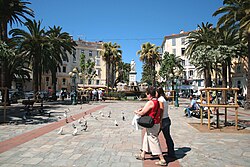
In the 19th century, Ajaccio evolved into a fashionable winter resort for European high society, particularly the English, leading to the construction of an Anglican Church. However, the era also saw the establishment of the Horticultural colony of Saint Anthony in 1855. This juvenile correctional facility for children aged 8 to 20 became a site of tragedy; poor sanitation and malaria led to the death of approximately 60% of the 1,200 children who stayed there before its closure in 1866.
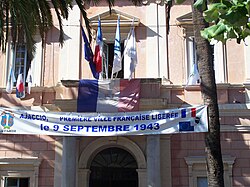
The 20th century brought a moment of historic pride. On September 9, 1943, the people of Ajaccio rose up against Nazi occupiers, making it the first French town to be liberated during World War II. General Charles de Gaulle visited on October 8, 1943, praising the city as the "first morsel of France to be liberated." Notably, the protection provided by the local government and citizens ensured that no Jews were executed or deported from Corsica during this period.
Summary of Ajaccio's Historical Evolution
| Period | Dominant Power | Key Milestone |
|---|---|---|
| Antiquity | Roman Empire | Establishment of a port and early Christian diocese. |
| 1492 onwards | Republic of Genoa | Rebuilding of the city at Punta della Lechia. |
| 1768 / 1780 | Kingdom of France | Sale by Genoa and formal annexation to France. |
| 1769 - 1821 | Napoleonic Era | Birth of Napoleon; city becomes departmental capital. |
| 1943 | French Resistance | First French town liberated from Nazi occupation. |
Key Facts
- First Liberation: Ajaccio was the first French town liberated from Nazi Germany on September 9, 1943.
- Imperial Birthplace: Napoleon Bonaparte was born here in 1769.
- Genoese Foundation: The modern city layout began on April 21, 1492, commissioned by the Bank of Saint George.
- Archaeological Site: A 6th-century cathedral baptistry was discovered on the Hill of San Giovanni in 2005.
- Humanitarian Record: No Jews were deported or executed from Corsica during the Nazi occupation.
Frequently Asked Questions
When was the modern city of Ajaccio founded?
The modern city was established on April 21, 1492, by the Genoese, who chose the site of Punta della Lechia to rebuild the settlement.
What is the significance of the Hill of San Giovanni?
The hill is the site of early Christian Ajaccio, where excavations in 2005 revealed a 6th-century cathedral baptistry and pottery, confirming the city's existence in Late Antiquity.
How did Ajaccio become part of France?
The Republic of Genoa sold Corsica to France in 1768, and the island was formally annexed in 1780.
What was the Horticultural colony of Saint Anthony?
Established in 1855, it was France's first juvenile correctional colony. It is remembered for its high mortality rate due to malaria and poor sanitation.
Why is Ajaccio's role in WWII unique?
It was the first French town to be liberated from Nazi occupation (September 1943) and is noted for protecting its Jewish population from deportation.