
Ancient History: A Global Timeline of the First Millennium BC
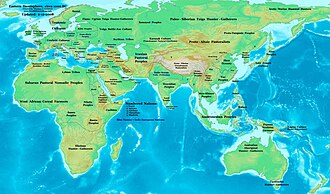
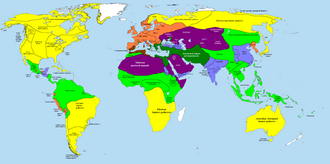
The first millennium BC was a transformative era of human civilization, characterized by the rise and fall of massive empires, the birth of foundational philosophies, and leaps in scientific understanding. From the fertile banks of the Nile and the Tigris-Euphrates to the expanding frontiers of China and the Mediterranean, this period laid the groundwork for the modern world.
During this time, we see the transition from early regional cultures to centralized states. The era witnessed the dominance of the Neo-Assyrian Empire, the philosophical awakening of Greece and China, and the eventual ascent of Rome as a global superpower.
Key Facts
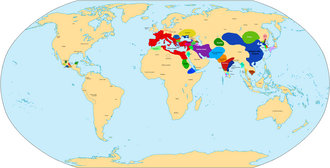
- Political Shifts: The era saw the rise of the Neo-Assyrian, Achaemenid, Mauryan, and Qin empires.
- Intellectual Milestones: The development of the Greek alphabet (the first with vowels) and the establishment of Confucianism as a state ideology in China.
- Engineering Feats: The construction of the Great Wall of China and the Lighthouse of Alexandria.
- Cultural Foundations: The first Olympiad occurred in 776 BC, and Rome was founded in 753 BC.
The Near East and North Africa
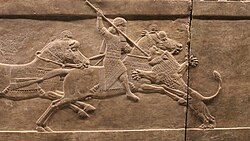
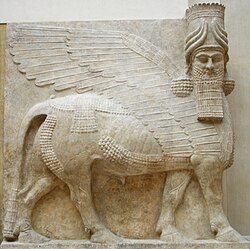
The early part of the millennium was dominated by the Neo-Assyrian Empire. By the 8th century BC, Sargon II had captured Samaria, leading to the Assyrian captivity of the Israelites. The empire reached a peak of power before declining after the death of Ashurbanipal in 631 BC.
Egypt experienced a turbulent cycle of independence and foreign rule. It faced Kushite invasions in 727 BC and later fell under the control of the Achaemenid Persians in 525 BC. Despite periods of rebellion—such as the Great Theban Revolt in 206 BC—Egypt eventually became part of the Roman Empire following the conquest in 31 BC.
In North Africa, the city of Carthage was founded in 814 BC, becoming a pivotal maritime power in the Mediterranean.
The Mediterranean and Europe
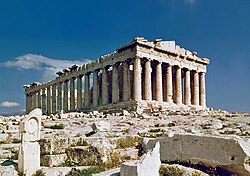
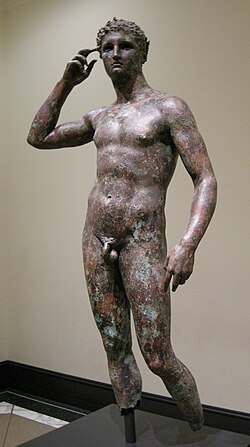
Greece evolved from the Helladic period into the Archaic and Classical eras. The 8th century BC marked the introduction of the Greek alphabet and the epic poetry of Homer. The 5th century BC saw the height of Athenian culture, including the construction of the Parthenon and the writings of Herodotus, though it was also marred by the Peloponnesian War.
The 4th century BC was defined by the conquests of Alexander the Great, which dismantled the Achaemenid Empire and ushered in the Hellenistic period, spreading Greek culture across Asia and Egypt.
Simultaneously, Rome grew from a small settlement founded in 753 BC into a dominant force. After the Battle of Corinth in 146 BC, the Roman era began in earnest, culminating in the transition from Republic to Empire in 27 BC.
Asia and the Americas
In China, the Spring and Autumn period began in 771 BC, leading eventually to the unification of China under the Qin Dynasty in the 3rd century BC. The Qin are noted for building the Great Wall and the Terracotta Army. They were succeeded by the Han Dynasty in 206 BC, during which Confucianism became the state ideology.
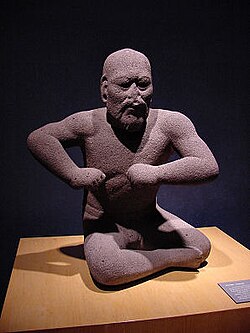
South Asia saw the rise of the Mauryan Empire and the reorganization of Jainism by Parshvanatha in 872 BC. In the Americas, the Chavín culture flourished in Peru during the 9th century BC, while the Olmec civilization produced significant art in Mesoamerica.
Scientific and Technological Progress
The first millennium BC was a golden age of invention. Early advancements included the trireme (a fast galley ship) in the 7th century BC and the Pythagorean theorem in the 6th century BC. By the 3rd century BC, thinkers had proposed the concept of a spherical Earth and developed the water clock.
China contributed significant industrial leaps, including the blast furnace in the 5th century BC and malleable cast iron in the 3rd century BC. In the 2nd century BC, the Antikythera mechanism demonstrated an advanced understanding of astronomical gearing.
| Century | Region | Key Event/Invention |
|---|---|---|
| 8th BC | Greece | First Olympiad (776 BC) & Greek Alphabet |
| 7th BC | Near East | Decline of Assyrian Empire |
| 5th BC | China | Introduction of the Blast Furnace |
| 4th BC | Global | Conquests of Alexander the Great |
| 3rd BC | China | Unification of China (Qin Dynasty) |
| 1st BC | Rome | Establishment of the Roman Empire (27 BC) |
Literary and Philosophical Legacy
This era produced some of the world's most enduring texts. In Greece, the works of Aristotle and the plays of Aeschylus and Euripides defined Western thought. In China, the I Ching, the Analects of Confucius, and the Tao Te Ching of Laozi established the spiritual and ethical framework of East Asia.
Religious literature also flourished, with the redaction of the Torah in the 5th century BC and the composition of the Vedas and Upanishads in Sanskrit. In the Near East, Hebrew prophets like Isaiah and Amos wrote during the 8th and 7th centuries BC.
Frequently Asked Questions
When was the Roman Empire officially established?
The Roman Empire began in 27 BC, following the period of the Roman Republic.
What was the significance of the Greek alphabet?
Introduced in the 8th century BC, it was the first alphabet to include vowels, allowing for more precise written communication.
Who unified China in the 3rd century BC?
The Qin Dynasty unified China, during which time the Great Wall was constructed and the Terracotta Army was created to guard the emperor's mausoleum.
What was the Hellenistic period?
The Hellenistic period began after the conquests of Alexander the Great in the 330s BC, marking the spread of Greek culture across Asia, Egypt, and the Mediterranean.
Which major empire dominated the Near East in the early 1st millennium BC?
The Neo-Assyrian Empire was the dominant power, known for its military strength and the rule of kings like Sargon II and Ashurbanipal.