
Annie Jane and Other Historic Wrecks of West Bay
The rugged coastlines of West Bay serve as a somber reminder of the perils faced by sailors and migrants in centuries past. From the devastating loss of a migrant vessel in the 19th century to the crash of a mid-century aircraft, the area preserves the memory of those who succumbed to the elements.
The Tragedy of the Annie Jane
In September 1853, the Annie Jane, a three-masted migrant ship, departed Liverpool bound for Montreal, Quebec, Canada. During a violent storm, the vessel struck rocks off West Beach. The disaster unfolded with terrifying speed; within ten minutes, the ship began to founder—meaning it filled with water and sank—and broke apart.
The wreck cast approximately 450 people into the raging sea. Despite the treacherous conditions, local islanders launched desperate rescue efforts to save the passengers and crew. Unfortunately, only a few survivors emerged from the catastrophe.
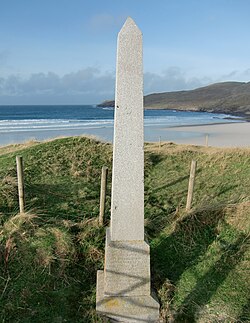
The Memorial Cairn
Today, a small cairn (a man-made pile of stones) and a monument mark the burial site of the bodies recovered from the water. An inscription on the monument commemorates the events of September 28, 1853, noting that roughly 350 men, women, and children—three-fourths of the total crew and passengers—were drowned and interred there.
Other Notable Wrecks and Crashes
The area is home to other tragic remnants of transport history. On September 28, 1917, the SS Idomeneus sank, leading to the loss of several crew members. Two Chinese seamen from this vessel are buried near the Annie Jane monument, and a commemorative headstone stands in their honor in the Cuier Churchyard.
The history of accidents in the region extends to the air. In 1944, a Catalina flying boat—an amphibious aircraft used extensively during World War II—crashed on the slopes of Heiseabhal Beag. The remains of this aircraft can still be found today, lying in a stream bed near the shore.
Key Facts
- Annie Jane: A three-masted ship from Liverpool to Montreal that wrecked on September 28, 1853.
- Casualties: Approximately 350 people died in the Annie Jane disaster.
- SS Idomeneus: Sank on September 28, 1917; two Chinese seamen are buried near the West Bay monument.
- Catalina Flying Boat: Crashed in 1944 on the slopes of Heiseabhal Beag.
| Vessel/Aircraft | Date of Incident | Type | Location/Note |
|---|---|---|---|
| Annie Jane | September 28, 1853 | Migrant Ship | West Beach / West Bay |
| SS Idomeneus | September 28, 1917 | Ship | Commemorated at Cuier Churchyard |
| Catalina | 1944 | Flying Boat | Heiseabhal Beag stream bed |
Frequently Asked Questions
Where was the Annie Jane traveling from and to?
The Annie Jane was a migrant ship traveling from Liverpool, England, to Montreal, Quebec, Canada.
How many people died in the Annie Jane shipwreck?
Approximately 350 men, women, and children drowned, representing about three-fourths of the passengers and crew.
Who is commemorated at the Cuier Churchyard?
A commemorative headstone in the Cuier Churchyard honors two Chinese seamen from the SS Idomeneus, which sank in 1917.
What can be found on the slopes of Heiseabhal Beag?
The remains of a Catalina flying boat that crashed in 1944 are located in a stream bed near the shore of Heiseabhal Beag.
How quickly did the Annie Jane sink?
The ship began to founder and break up within ten minutes of striking the rocks off West Beach.