
Arab Cinema: A History of Film Across the Middle East
The history of cinema in the Arab world is a rich tapestry of artistic expression, political struggle, and cultural evolution. From the early days of makeshift theaters in the 1920s to the modern era of Academy Award-nominated features, film has served as a powerful mirror for the societal shifts across the Middle East. While some nations established massive industrial hubs, others used the medium as a tool for national identity and resistance.
Key Facts
- Egypt remains the dominant force in mainstream Arab cinema, producing up to 77% of the region's output.
- Laila (1927) is widely regarded as the first Egyptian film, produced by woman Aziza Amir.
- Lebanon is a leader in independent cinema, contributing roughly 20% of Arab independent films annually.
- Jordan has become a premier global filming location for Western studios, featuring landscapes like Wadi Rum.
- Palestine's early cinematic history was heavily influenced by external observers and later evolved into a tool for revolutionary documentary filmmaking.
Egypt: The Powerhouse of Arab Film
Egypt's journey into cinema began early, with eleven movie theaters already operating by 1908. Early attempts at local production were fraught with challenges; for instance, the Italian-funded STICA film company failed in 1917 due to a lack of cultural familiarity and a controversial film that featured inverted Qur'anic verses, leading to a government ban.
The tide turned in 1927 with the release of Laila. Produced by actress Aziza Amir, the film resonated with local audiences and marked the birth of national cinema. The industry saw a surge in production through the 1930s, bolstered by the 1935 founding of Studio Misr, which helped shift the industry's hub from Alexandria to Cairo.

For decades, Egypt's melodramatic style and dialect influenced the rest of the Arab world. However, political instability following the 1952 revolution and the 1962 nationalization of the industry led many filmmakers to migrate to Lebanon. Despite financial hurdles in recent years, Egypt continues to lead the region through a robust ecosystem that includes distribution giants like MAD solutions and prestigious events like the El Gouna Film Festival.

Notable Egyptian Filmmakers and Works
| Director | Notable Film | Significance |
|---|---|---|
| Mohammed Karim | Zaynab (1930) | First Egyptian feature film |
| Yousef Chahine | Cairo Station (1958) | Acclaimed lead actor and director | Ezz El-Dine Zulficar | The River of Love (1960) | Classic romantic drama |
| Jehane Noujaim | The Square (2013) | Academy Award nominee for Best Foreign Film |
The Levant: Lebanon, Jordan, and Palestine
Lebanon's Resilience and Independence
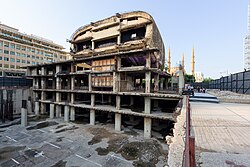
Lebanese cinema faced a devastating blow during the Civil War (1975–1990), which destroyed much of the country's infrastructure and film reels. During this period, filmmakers pivoted to commercial television and home videos. The 1998 film West Beyrouth by Ziad Doueiri sparked a renaissance by blending home video aesthetics with conventional narrative, helping the nation resolve its cinematic identity crisis.
Jordan's Evolution from Location to Production
Jordan entered the industry later than its neighbors, with its first narrative film, Struggle in Jerash, released in 1957. While Jordan is world-famous as a filming location for epics like Lawrence of Arabia and Indiana Jones and the Last Crusade, the establishment of the Royal Film Commission in 2003 has spurred local growth, leading to the Oscar-nominated Theeb (2014).
![Al Hussein Cinema, an abandoned movie theater in Amman, Jordan.[27]](/images/4f/13/4f13c8675b020d3cbac189f0101c6aac01cb48ffae7edabfcfc4d855d960f82d.jpg)
Palestine's Cinema of Resistance
Palestinian cinema began with observational footage by the Lumière brothers in the late 19th century. However, the medium later became a vehicle for political awareness. Following the 1948 Nakba, the Palestinian Film Unit was established in Jordan (1968) and later moved to Lebanon, producing revolutionary documentaries. The 1987 film Wedding in Galilee by Michel Khleifi marked a shift toward feature-length fiction.
Cinema in the Gulf and Beyond
Iraq's Industrial Peaks and Political Shifts
Iraq saw a significant boom in the 1950s, reaching a peak of 137 cinemas by 1957. Studio Baghdad, opened in 1946, was a key production hub until it was sold to the Coca-Cola Company in 1966. Under Saddam Hussein, the industry was largely utilized for pro-Baathist propaganda, though this era brought Iraqi cinema wider recognition across the Arab world.
Kuwait, Qatar, and Saudi Arabia
- Kuwait: The 1972 film Bas Ya Bahar remains a landmark work, critiquing society through the story of a pearl diver in the pre-oil era.
- Qatar: While not a primary production hub, Qatar has become a significant financier of high-profile Arab films, including works by Asghar Farhadi and Nadine Labaki.
- Saudi Arabia: Long restricted, cinema has seen a rapid opening. From the first Saudi-funded feature How's It Going? (2006) to the efforts of Crown Prince Mohamed Bin Salman in 2017, the Kingdom is aggressively expanding its entertainment infrastructure.
Oman and Bahrain
Bahrain's cinematic roots date back to a makeshift cottage cinema in 1922, eventually evolving into modern complexes like the 20-screen Bahrain City Centre. Oman's industry remains small, highlighted by the 2006 premiere of its first feature-length film, Al-Boom.
Frequently Asked Questions
Which Arab country produces the most films?
Egypt is the regional leader, dominating mainstream output with approximately 77% of all Arab cinema production.
What was the first Egyptian feature film?
While Laila (1927) is considered the first national film produced by an Egyptian, Zaynab (1930) is noted as the first Egyptian feature film.
How did the Lebanese Civil War affect its cinema?
The war destroyed infrastructure and film reels, forcing filmmakers to focus on commercial television and home videos until a renaissance began in the late 1990s.
Why is Jordan popular with Western film studios?
Jordan's unique desert landscapes, particularly Wadi Rum, make it an ideal location for international productions seeking authentic arid environments.
What is the significance of the Royal Film Commission in Jordan?
Established in 2003, the Commission encourages the production of local Jordanian films, providing funding and support that led to critically acclaimed works like Theeb.