
ARCA Menards Series Cars: Evolution of Engineering and Design
The ARCA Menards Series has long served as a critical bridge in stock car racing, blending high-performance competition with a commitment to cost-effectiveness. For decades, the series was defined by its use of veteran steel-bodied Generation 4 cars—models originally used in the NASCAR Cup Series. These vehicles often had long lifespans; for instance, a chassis built by Hendrick Motorsports in 1989 won a Daytona race in 1999 and remained in use as late as 2004 at Talladega.
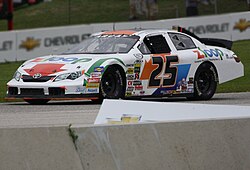
While the Cup and Xfinity Series transitioned to the "Car of Tomorrow" between 2007 and 2010, ARCA maintained the 2007-style models of the Chevrolet Monte Carlo SS (later rebranded as the Impala), Ford Fusion, Toyota Camry, and Dodge Charger. This approach kept the series accessible, with owner Larry Clement estimating that running an ARCA car costs roughly 10 percent of a NASCAR Cup Series budget.
Key Facts
- Cost Efficiency: ARCA budgets are estimated at approximately 10% of NASCAR Cup Series costs.
- Engine Options: Teams can choose between open motor rules or the spec ARCA Ilmor 396 engine.
- Body Transition: The series moved from traditional steel bodies to lightweight composite laminates between 2015 and 2020.
- Power: Unrestricted engines produce approximately 700 brake horsepower.
- Weight: Composite bodies reduced the minimum vehicle weight from 3,400 lb to 3,300 lb.
The ARCA Ilmor 396 Engine
To provide a more standardized and affordable power option, ARCA president Ron Drager introduced the ARCA Ilmor 396 engine (also known as the ARCA Control Engine or ACE) for the 2015 season. Developed by Ilmor, a firm known for its work in the IndyCar Series, this purpose-built powerplant is based on the Chevrolet LS engine family.
The Ilmor engine utilizes Holley electronic fuel injection to deliver 700 horsepower and 530 ft-lb of torque. It is designed for durability and versatility, allowing teams to use the same engine across all track types for up to 1,500 miles (2,400 km) before requiring a rebuild. The cost to build a new unit is $35,000, while rebuilds cost $15,000.
The introduction of the ACE brought some controversy. Some teams feared their existing motors would become obsolete, while others noted that the spec engine limits tuning and prohibits teams or outside builders from performing maintenance. To maintain a competitive balance, non-Ilmor engines are subject to RPM and intake restrictions.
Transition to Composite Car Bodies
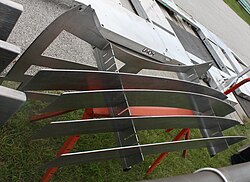
In November 2014, NASCAR president Mike Helton unveiled a new body style developed with Five Star Race Car Bodies. Based on the Gen-6 models of the Chevrolet SS, Ford Fusion, and Toyota Camry, these bodies are constructed from a composite laminate blend rather than steel.
Composite bodies offer several advantages: they are significantly lighter, feature easily replaceable panels to lower fabrication costs, and reduce the amount of debris left on the track after a collision.

The rollout of composite bodies was gradual. They were first eligible for tracks one mile or shorter in 2015 and made their superspeedway debut at Pocono Raceway in June 2016. By 2018, they were mandated for Daytona and Talladega, and by 2020, they became mandatory for all tracks. The traditional Gen-4 steel bodies made their final appearance at the 2020 General Tire 100 at the Daytona Road Course.
In recent years, manufacturer updates have continued. The Ford Mustang replaced the Ford Fusion in 2022, seeing wide adoption by 2023, though the Fusion remains legal for smaller teams as of 2024.
Technical Specifications
The following table summarizes the technical requirements for ARCA Menards Series vehicles.
| Feature | Specification |
|---|---|
| Engine Displacement | 350–360–396 cubic inches (Overhead valve V8) |
| Power Output | ~700 brake horsepower (unrestricted) |
| Transmission | 4-speed manual |
| Minimum Weight | 3,300 lb (Composite) / 3,400 lb (Steel) |
| Fuel Delivery | Fuel injection (Ilmor) or Carburetion (Others) |
| Wheelbase | 105 inches (standard) / 110 inches (all tracks) |
| Fuel Capacity | 18 or 22 US gallons (Sunoco unleaded) |
| Compression Ratio | 12:1 |
Frequently Asked Questions
What is the ARCA Control Engine (ACE)?
The ACE is the ARCA Ilmor 396, a purpose-built spec engine based on the Chevrolet LS family. It features electronic fuel injection and is designed to provide a cost-effective, high-performance alternative to open-motor builds.
Why did ARCA switch from steel to composite bodies?
Composite bodies were introduced to reduce fabrication costs, lower the overall weight of the vehicle, and minimize track debris following accidents due to the nature of the laminate blend material.
Are Gen-4 steel bodies still used in ARCA racing?
No, Gen-4 steel bodies are no longer eligible for competition. They were phased out completely by 2020, with their final race occurring at the Daytona Road Course.
How does the cost of ARCA racing compare to the NASCAR Cup Series?
ARCA is significantly more affordable, with estimates suggesting the budget required to run an ARCA car is approximately 10 percent of a NASCAR Cup Series budget.
Which Ford model is currently used in the series?
The Ford Mustang was introduced in 2022 and became the primary model for Ford teams by 2023, although the Ford Fusion remains legal for smaller teams as of 2024.