
Arnold Lawrence: The Life and Legacy of a Classical Archaeologist
While the name Lawrence is often synonymous with the legendary exploits of "Lawrence of Arabia," the family legacy includes other figures of intellectual and artistic significance. Arnold Lawrence was a dedicated scholar of antiquity whose life was shaped by a complex family dynamic, a passion for archaeology, and the enduring shadow of his famous brother, T. E. Lawrence.
Early Life and Family Background
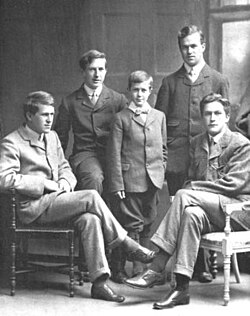
Born on May 2, 1900, at 2 Polstead Road in Oxford, Arnold was the youngest of five sons. His parents, Thomas Chapman (later Sir Thomas Chapman, 7th Baronet) and Sarah Junner, were an unmarried couple from County Westmeath, Ireland. To maintain social conventions, they adopted the names Thomas Robert Lawrence and Sarah Lawrence.
Growing up in Oxford under the influence of a deeply religious mother, Arnold developed a contrary worldview. He became known for his outspoken anti-religious views, once describing all religion as "vermin." Despite these ideological clashes, he maintained a close relationship with his brother, T. E. Lawrence.
Academic Pursuits and Archaeological Career
Arnold's educational journey began at the City of Oxford High School for Boys, followed by studies at New College, Oxford. In 1920, he earned a diploma in Classical Archaeology—the study of ancient Greek and Roman civilizations through material remains—and graduated in 1921 with a third in Literae Humaniores.
Interestingly, Classical Archaeology was not his first choice. Arnold harbored a strong desire to specialize in South-American archaeology, but he was forced to pivot because no British university offered such a course at the time.
His professional training took him to the British School at Rome in 1921 and subsequently to the British School at Athens, where he remained until 1926. A highlight of his early career occurred in 1923, when he participated in the excavation of Ur under the direction of Leonard Woolley. This connection was familial as well as professional, as Leonard Woolley had previously directed T. E. Lawrence during excavations at Carchemish prior to World War I.
Artistic Contributions and Personal Life
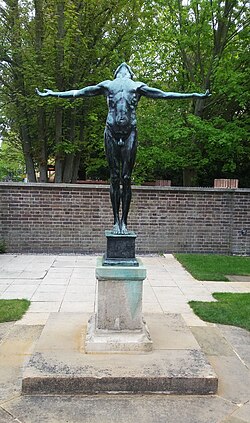
Beyond his academic work, Arnold Lawrence contributed to the arts. In December 1922, he served as the model for the sculptor Kathleen Scott. The resulting statue, titled Youth, was eventually placed at the Scott Polar Research Institute in Cambridge.
In 1925, Arnold married Barbara Inness Thompson. The couple had one daughter, Jane Helen Thera Lawrence, born in 1926.
Preserving the Legacy of T. E. Lawrence
Following the death of T. E. Lawrence in 1935, Arnold dedicated significant effort to preserving his brother's memory. He collected materials related to T. E.'s life and worked to correct media misrepresentations of his character. In 1936, Arnold donated Clouds Hill to the National Trust, ensuring the property would be preserved as a museum.
Despite his own achievements, Arnold struggled with the weight of his brother's fame. From his early twenties until his death, he often found that the public viewed him primarily as the brother of a celebrity rather than as an individual scholar.
Key Facts
- Born: May 2, 1900, in Oxford, England.
- Education: New College, Oxford; British School at Rome; British School at Athens.
- Specialization: Classical Archaeology (originally desired South-American archaeology).
- Major Project: Excavation of Ur (1923) under Leonard Woolley.
- Artistic Legacy: Model for Kathleen Scott's statue Youth.
- Philanthropy: Donated Clouds Hill to the National Trust in 1936.
| Category | Details |
|---|---|
| Family | Youngest of five sons; brother of T. E. Lawrence |
| Academic Degrees | Diploma in Classical Archaeology (1920), Literae Humaniores (1921) |
| Key Locations | Oxford, Rome, Athens, Ur |
| Spouse | Barbara Inness Thompson (m. 1925) |
| Notable Contribution | Preservation of Clouds Hill museum |
Frequently Asked Questions
Who was Arnold Lawrence?
Arnold Lawrence was a British classical archaeologist and the younger brother of T. E. Lawrence ("Lawrence of Arabia"). He studied at Oxford and worked at major archaeological sites in Rome, Athens, and Ur.
What was Arnold Lawrence's original archaeological interest?
Arnold originally wanted to specialize in South-American archaeology, but he pursued Classical Archaeology instead because no British university offered a course in the former.
How did Arnold Lawrence contribute to the memory of T. E. Lawrence?
He collected materials related to his brother's life, worked to correct public misrepresentations of T. E.'s character, and gave the property known as Clouds Hill to the National Trust to be used as a museum.
Did Arnold Lawrence appear in any works of art?
Yes, he modeled for the sculptor Kathleen Scott in 1922 for the statue titled Youth, which is located at the Scott Polar Research Institute in Cambridge.
What was Arnold Lawrence's relationship with religion?
Despite being raised by a very religious mother, Arnold held strong anti-religious views and once stated that "All religion is vermin."