
ASEAN Secretary-General: Evolution and Legal Mandate
The role of the Secretary-General of ASEAN serves as the administrative and diplomatic backbone of the Association of Southeast Asian Nations. From its humble beginnings as a rotating administrative post to its current status as a codified organ of an inter-governmental organization, the office has evolved to ensure regional stability and institutional continuity.
The Foundations: Pre-2008 Era
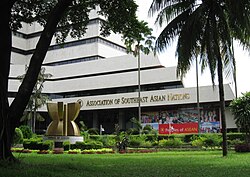
The office was formally established through the 1976 Agreement on the Establishment of the ASEAN Secretariat. This landmark agreement created a permanent base for the organization in Jakarta and introduced the position of the Secretary-General (originally titled the Secretary-General of the ASEAN Secretariat).
During this initial period, the appointment process was based on a rotating system among member states. The Secretary-General was appointed by the ASEAN Foreign Ministers for a fixed two-year term, providing the essential legal groundwork for the organization's early operations.
The ASEAN Charter and Modern Governance
A significant transformation occurred with the signing of the ASEAN Charter in 2007, which came into force in 2008. This document elevated the office of the Secretary-General, codifying it as a key organ of the association. Under Article 11 of the Charter, the position received a clear legal basis regarding its mandate, appointment, and institutional protections.
Legal Personality and Administrative Authority
The Charter granted ASEAN legal personality, meaning it is recognized as an inter-governmental organization capable of entering into legal relations. This allows the Secretary-General to formally represent ASEAN in external dealings. Furthermore, the Charter designates the Secretary-General as the Chief Administrative Officer, granting the authority to manage the ASEAN Secretariat and ensure the implementation of the organization's decisions.
Independence and Neutrality
To ensure the integrity of the organization, the Charter enshrines the independence of the Secretary-General and the Secretariat staff. They are classified as international civil servants, meaning they must not seek or receive instructions from any government or external party while performing their duties.
Member States are legally bound to respect the exclusively ASEAN character of these responsibilities and must refrain from improper influence. To support this neutrality, the Secretary-General is granted diplomatic privileges and immunities equivalent to a ministerial-level international official.
Key Facts
- Established: 1976 via the Agreement on the Establishment of the ASEAN Secretariat.
- Headquarters: Jakarta, Indonesia.
- Legal Basis: Article 11 of the ASEAN Charter (effective 2008).
- Primary Role: Chief Administrative Officer of ASEAN.
- Status: International civil servant with ministerial-level diplomatic immunities.
- Mandate: Neutral regional official representing the ASEAN collective.
| Feature | Pre-2008 (1976 Agreement) | Post-2008 (ASEAN Charter) |
|---|---|---|
| Title/Status | Secretary-General of the ASEAN Secretariat | Secretary-General of ASEAN (Key Organ) |
| Appointment | Rotating basis by Foreign Ministers | Codified under Article 11 |
| Term Length | Two-year term | Defined by Charter/Agreements |
| Authority | Initial legal groundwork | Chief Administrative Officer |
| Legal Standing | Administrative head | Representative of a legal personality |
Frequently Asked Questions
When was the ASEAN Secretariat first established?
The ASEAN Secretariat was first created by the 1976 Agreement on the Establishment of the ASEAN Secretariat, with its permanent office located in Jakarta.
What is the role of the "Chief Administrative Officer"?
As the Chief Administrative Officer, the Secretary-General is authorized to manage the ASEAN Secretariat and is responsible for implementing the decisions made by ASEAN.
How does the ASEAN Charter protect the independence of the Secretary-General?
The Charter mandates that the Secretary-General and staff shall not seek or receive instructions from any government or external party, ensuring they function as neutral international civil servants.
What diplomatic status does the Secretary-General hold?
The Secretary-General is accorded diplomatic privileges and immunities equivalent to those of a ministerial-level international official.
What does "legal personality" mean for ASEAN?
Legal personality allows ASEAN to be recognized as an inter-governmental organization, which enables the Secretary-General to represent the association in its external dealings.