
Assyrian Christianity in the Holy Land
The Assyrian people maintain a deep and enduring spiritual presence in the Holy Land, primarily through the traditions of the East and West Syriac Rites. In Israel and Palestine, this community is characterized by a strong adherence to the Syriac Orthodox Church, alongside smaller but significant Catholic Assyrian populations.
Key Facts
- The majority of Assyrians in the Holy Land belong to the Syriac Orthodox Church.
- The Syriac Orthodox community is led by Archbishop Gabriel Dahho.
- The Monastery of Saint Mark is a primary landmark for the Syriac Orthodox in Jerusalem.
- Catholic Assyrians are represented by the Syriac Catholic and Chaldean Catholic Churches.
- The Syriac Orthodox Church holds rights at the Church of the Holy Sepulchre and the Tomb of the Virgin Mary.
The Syriac Orthodox Church
As the largest Assyrian church in the region, the Syriac Orthodox Church operates under the Archbishopric of Israel, Palestine, and Jordan. This ecclesiastical body is currently under the spiritual guidance and direction of Archbishop Gabriel Dahho.
The church maintains several high-profile holy sites. The most prominent is the Monastery of Saint Mark, located in the Old City of Jerusalem.
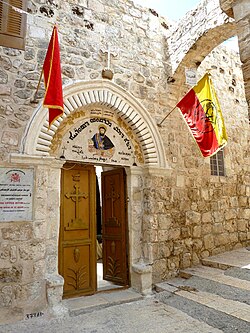
Beyond its own monastery, the Syriac Orthodox Church holds sharing rights to the Church of the Holy Sepulchre. Additionally, they possess minor rights at the Tomb of the Virgin Mary, where they maintain a dedicated altar on the western side of the site.
Catholic Assyrian Communities
While the Orthodox faith is predominant, the Holy Land is also home to two distinct Catholic Assyrian traditions: the Syriac Catholic Church and the Chaldean Catholic Church.
The Syriac Catholic Church
The Syriac Catholic Church established a Patriarchal Exarchate—a jurisdiction established by the Pope for a specific territory—in 1892. This community is based out of the Church of Saint Thomas in Jerusalem.
The Chaldean Catholic Church
The Chaldean Catholic Church has had a presence in Jerusalem since 1903, initially represented by a non-resident patriarchal vicar. In 1997, the church transitioned its administrative structure, establishing the Territory Dependent on the Patriarch. This area was previously managed as the Patriarchal Vicariate of Jerusalem within the Patriarch's own archeparchy.
Summary of Assyrian Church Jurisdictions
| Church | Affiliation | Key Site/Leadership | Established/Note |
|---|---|---|---|
| Syriac Orthodox Church | Orthodox | Monastery of Saint Mark / Archbishop Gabriel Dahho | Largest Assyrian church in the region |
| Syriac Catholic Church | Catholic | Church of Saint Thomas | Patriarchal Exarchate formed 1892 |
| Chaldean Catholic Church | Catholic | Territory Dependent on the Patriarch | Represented in Jerusalem since 1903 |
Frequently Asked Questions
Which is the largest Assyrian church in the Holy Land?
The Syriac Orthodox Church is the largest Assyrian church in the region.
Who provides spiritual leadership for the Syriac Orthodox in Israel, Palestine, and Jordan?
The community is under the spiritual guidance and direction of Archbishop Gabriel Dahho.
Where is the Monastery of Saint Mark located?
The Monastery of Saint Mark is located in the Old City of Jerusalem.
What rights does the Syriac Orthodox Church have at the Tomb of the Virgin Mary?
The church holds minor rights at the site and possesses an altar located on the western side.
When was the Syriac Catholic Patriarchal Exarchate formed?
The Patriarchal Exarchate of the Syriac Catholic Church was formed in 1892.
How has the Chaldean Catholic Church's administration changed since 1903?
Originally represented by a non-resident patriarchal vicar in 1903, the church established the Territory Dependent on the Patriarch in 1997, which was formerly the Patriarchal Vicariate of Jerusalem.