
AW119 Koala: A Versatile Single-Engine Multirole Helicopter
The AW119 Koala is a high-performance, single-engine multirole helicopter designed for a wide array of operational needs. Developed by AgustaWestland, the aircraft is engineered to provide a balance of controllability, maneuverability, and inherent safety, making it a competitive choice for operators seeking efficiency without sacrificing the flight qualities of larger aircraft.
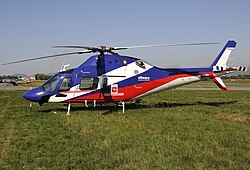
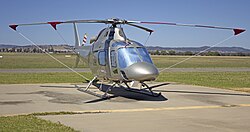
The design of the AW119 is closely derived from the successful Agusta A109. While it shares the same cockpit and cabin as the A109, the AW119 differs by utilizing a single engine and fixed skids instead of retractable wheeled landing gear. This streamlined approach allows the AW119 to offer similar comfort and speed to its predecessor at approximately half the cost.
Key Facts
- Engine: Powered by a single Pratt & Whitney PT6B-37A turboshaft engine.
- Cabin Capacity: Can seat up to seven passengers in a three-abreast configuration.
- EMS Capability: Capable of carrying two stretchers, exceeding the capacity of most similar-sized helicopters.
- Cabin Volume: Approximately 30% greater than other rotorcraft in its class.
- Endurance: Up to nearly six hours of flight time with five fuel tanks installed.
- Safety: Features a gearbox with a 30-minute dry run capability and dual independent stability augmentation systems.
Engineering and Design
Rotor and Airframe
The AW119 utilizes a four-bladed fully articulated main rotor. To maximize lift while minimizing noise, the composite blades are equipped with tip caps and elastomeric bearings, which eliminate the need for lubrication. The airframe is constructed using aluminium honeycomb structural panels; these panels are specifically chosen to absorb noise and vibration, removing the need for separate vibration absorption systems.
Powerplant and Redundancy
At the heart of the aircraft is the Pratt & Whitney PT6B-37A turboshaft engine. This powerplant provides high power margins, ensuring generous speeds and endurance. Despite being a single-engine aircraft, AgustaWestland has integrated system redundancies typically found in dual-engine helicopters, including the hydraulics and dual independent stability augmentation systems.
Operational Versatility and Cabin Layout
The AW119 Koala is designed for flexibility, serving roles in utility, law enforcement, offshore operations, executive transport, and Emergency Medical Services (EMS). Its wide-body fuselage is a primary advantage, offering a cabin volume roughly 30% larger than its competitors.
The interior can be rapidly reconfigured to suit specific missions:
- Executive/VIP: High-comfort seating for transport.
- EMS: Space for two stretchers, medical attendants, and a full suite of emergency equipment.
- Utility: An unobstructed cabin area and separate baggage compartment for cargo and equipment.
Additionally, the cockpit can be isolated from the cabin to reduce noise and distractions for the crew.
Avionics and Specialized Equipment
Flight Systems
Modern avionics are housed in the nose of the aircraft. While early models used conventional instruments, the newer AW119Kx variant features a Garmin G1000 glass cockpit. This system utilizes two 10.4-inch multi-function displays to improve situational awareness and reduce pilot workload, supported by an independently powered stand-by display.
Advanced navigation and safety tools include:
- 3-axis aircraft flight control system (AFCS)
- Synthetic Vision System (SVS) and Highway In The Sky (HITS) depiction
- Helicopter Terrain Avoidance Warning System (HTAWS)
- VOR / ILS / GPS / WAAS navigation and a radio altimeter
Optional Mission Equipment
Operators can customize the AW119 with a variety of role-specific hardware, such as external hoists, dual cargo hooks, fire fighting belly tanks, and forward-looking infrared (FLIR) cameras. For extreme environments, snow skis and emergency floatation equipment are available. Standard configurations include three fuel tanks, but two additional tanks can be added to extend flight endurance to nearly six hours.
| Feature | Specification / Detail |
|---|---|
| Engine | Pratt & Whitney PT6B-37A Turboshaft |
| Main Rotor | Four-bladed fully articulated composite |
| Max Passenger Capacity | 7 (three-abreast) |
| EMS Capacity | Up to 2 stretchers + medical staff |
| Max Endurance | Nearly 6 hours (with 5 tanks) |
| Avionics (Kx variant) | Garmin G1000 Glass Cockpit |
Frequently Asked Questions
How does the AW119 differ from the Agusta A109?
The AW119 is derived from the A109 but uses a single engine instead of two and features fixed skids rather than retractable wheeled landing gear. It shares the same cockpit and cabin but is significantly more affordable.
What makes the AW119 suitable for EMS missions?
Its wide-body fuselage allows it to carry up to two stretchers along with medical attendants and full equipment, whereas most other helicopters of a similar size can only accommodate one stretcher.
What is the benefit of the AW119Kx variant?
The AW119Kx integrates a Garmin G1000 glass cockpit, which uses large multi-function displays to increase safety, reduce pilot workload, and improve situational awareness.
How does the AW119 handle noise and vibration?
The aircraft uses composite rotor blades with tip caps to reduce noise and aluminium honeycomb structural panels throughout the airframe to absorb both noise and vibration.
What is the maximum flight endurance of the AW119?
While it comes standard with three fuel tanks, the addition of two optional tanks allows the AW119 to achieve a flight endurance of nearly six hours.