
Barbados Cricket History: From Colonial Roots to Global Dominance
Cricket is more than just a sport in Barbados; it is a woven thread in the island's social and cultural fabric. From early colonial matches to the heights of international glory, Barbados has consistently punched above its weight, producing some of the most influential players and captains in the history of the game.
The Colonial Era and Early Foundations
The roots of the game in Barbados stretch back to at least the late 18th century. Evidence of this early passion is found in a cricket buckle from around 1780, which depicts a slave playing the sport. By the mid-19th century, the game began to formalize. In February 1865, Barbados hosted Demerara (now Guyana) at the Garrison Savannah in Bridgetown for what is now recognized as the first-class match—a high-standard professional game—in the West Indies. Barbados secured a victory by 138 runs, though they lost the return fixture in Georgetown later that year.
The late 19th century saw the expansion of competitive play. The Inter-Colonial Tournament began in September 1891, bringing Barbados, British Guiana, and Trinidad into regular competition. Barbados proved to be a powerhouse, winning the tournament 11 out of 28 times and reaching the final in all but five editions.
International exposure grew as Barbados faced amateur teams from the United States in 1888 and various English touring sides throughout the 1890s. In 1897, the first representative West Indies team was formed to face an English side led by Arthur Priestley. This team featured three Barbadians: Harold Austin, Donald McAuley, and Clifford Goodman. Harold Austin, who later served as the speaker of the Barbados House of Assembly, made history in January 1902 as the first Barbadian to captain the West Indies.
The Rise of Test Cricket and the "Three Ws"
The West Indies entered the arena of Test cricket—the highest international form of the game—during a 1928 tour of England. Five Barbadians were included in the 17-man squad, including the veteran George Challenor, widely regarded as the first great West Indian batsman.
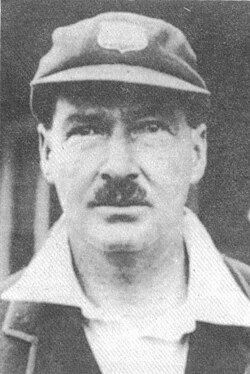
The 1929–30 season marked another milestone when Teddy Hoad became the first Barbadian to captain the West Indies in a Test match. This historic encounter took place at the Kensington Oval in Bridgetown, the first Test match ever held in the West Indies.
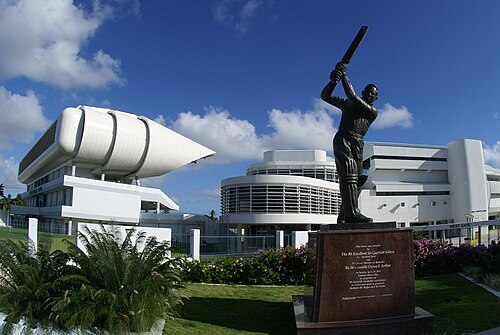
The mid-20th century saw the emergence of the legendary "three Ws": Clyde Walcott, Frank Worrell, and Everton Weekes. This trio formed one of the most formidable middle-order lineups in cricket history. Their dominance began in earnest during the 1947–48 England tour. Notably, in February 1946, Walcott and Worrell set a first-class record partnership of 574 not out against Trinidad. All three were eventually knighted and became inaugural inductees into the ICC Hall of Fame in 2009.
Frank Worrell broke significant social barriers as the first black man to captain the West Indies during the 1960–61 tour of Australia. He was succeeded by Sir Garfield Sobers, whose 365 not out against Pakistan in 1958 remained the highest Test score for 36 years.
Post-Independence and Modern Dominance
Following full independence on November 30, 1966, Barbados continued its sporting ascent. The island won the inaugural Shell Shield (the regional first-class competition) in 1966 and the first edition of the Regional Super50 (the limited-overs competition) in 1973. Barbados dominated the early Shell Shield era, winning 12 of the first 20 titles, including a streak of five consecutive wins from 1975–76 to 1979–80.
On the world stage, Barbadians were pivotal to the West Indies' World Cup victories in 1975 and 1979. Joel Garner delivered a standout five-wicket haul in the 1979 final. The 1980s were defined by Barbadian excellence, specifically the opening partnership of Gordon Greenidge and Desmond Haynes. Between 1978 and 1991, they opened 148 innings together, scoring a record 6,482 runs.
During this era, Malcolm Marshall emerged as one of the world's premier fast bowlers, setting a then-record for the most Test wickets taken by a West Indian. In the late 1990s and early 2000s, Barbados maintained domestic superiority, winning six titles between the 1994–95 and 2003–04 seasons. They also competed as an individual nation in the 1998 Commonwealth Games in Kuala Lumpur, reaching the group stages before falling to South Africa.
Recent leadership has seen Floyd Reifer captain the West Indies temporarily in 2009, and Jason Holder, appointed in 2015, becoming the most recent Barbadian to lead the side.
Key Facts
- First-Class Debut: Barbados played its first designated first-class match in February 1865 against Demerara.
- The Three Ws: Clyde Walcott, Frank Worrell, and Everton Weekes are legendary figures and inaugural ICC Hall of Fame inductees.
- Opening Record: Gordon Greenidge and Desmond Haynes hold the record for the most runs (6,482) and innings (148) as an opening pair.
- Historic Captaincy: Frank Worrell was the first black man to captain the West Indies.
- Test Milestone: The first Test match in the West Indies was held at Kensington Oval in Bridgetown.
| Era/Event | Key Achievement/Figure | Significance |
|---|---|---|
| Colonial Era | Inter-Colonial Tournament | Won 11 out of 28 editions |
| Early 1900s | Harold Austin | First Barbadian to captain West Indies (1902) |
| 1928-1931 | George Challenor & Herman Griffith | First great batsman and first to bowl Bradman for a duck |
| 1940s-1960s | The Three Ws | One of the greatest middle-order lineups ever |
| 1970s-1980s | Shell Shield Dominance | Won 12 of the first 20 editions |
| 1978-1991 | Greenidge & Haynes | Record-breaking opening partnership |
Frequently Asked Questions
Who were the "three Ws" in Barbados cricket?
The "three Ws" refers to Clyde Walcott, Frank Worrell, and Everton Weekes. They were a legendary middle-order batting trio for the West Indies from the late 1940s to the late 1950s and were all inaugural ICC Hall of Fame inductees.
What is the significance of the Kensington Oval?
Located in Bridgetown, the Kensington Oval hosted the first-ever Test match played in the West Indies during the 1929–30 season when England toured the region.
Which Barbadian bowler first dismissed Don Bradman for a duck?
Herman Griffith was the first bowler to dismiss the legendary Don Bradman for a Test match duck during the West Indies' first tour of Australia in the 1930–31 season.
How did Barbados perform in the early Shell Shield competitions?
Barbados was the dominant force in the early years of the Shell Shield, winning 12 of the first 20 editions, including five consecutive titles between the 1975–76 and 1979–80 seasons.
Who holds the record for the most successful opening partnership for the West Indies?
Barbadians Gordon Greenidge and Desmond Haynes hold the record, having opened 148 innings together between 1978 and 1991 and scoring a total of 6,482 runs.