
Belgian Federal Government Formation 2019-2020
The process of forming a Belgian federal government following the 2019 elections was a complex political journey marked by shifting alliances, multiple royal assignments, and the unprecedented challenge of a global pandemic. The period was characterized by a struggle to bridge the gap between Flemish and Francophone political tendencies to establish a stable majority in the Chamber of Representatives.
The 2019 Election Aftermath
The elections saw a significant shift in the political landscape. Governing parties from the previous legislature suffered losses, totaling 22 seats. The N-VA (Flemish-nationalist) lost 8 seats, while CD&V and MR each lost 6, and Open Vld lost 2. This made a renewal of the "Swedish coalition"—so named because the colors of its component parties (yellow for N-VA, blue for liberals, and a cross for Christian democrats) mirror the Swedish flag—impossible.
Conversely, the political extremes saw gains: the far-left PVDA-PTB gained 10 seats, and the far-right Vlaams Belang gained 15. The green parties also grew, with Ecolo increasing by 5 seats and Groen by 2. In a historic move, King Philippe invited a representative of Vlaams Belang to participate in government formation negotiations for the first time since the party's predecessor, Vlaams Blok, was founded in 1978.
Key Facts
- Duration: The formation process lasted from May 30, 2019, until the swearing-in of the government on October 1, 2020.
- The Vivaldi Coalition: The final government consisted of seven parties: PS, MR, Open Vld, CD&V, sp.a, Groen, and Ecolo.
- The Coronacrisis: A temporary minority government under Sophie Wilmès was formed specifically to manage the COVID-19 pandemic.
- Final Vote: The De Croo government gained confidence in the Chamber with 87 out of 148 votes.
- Key Figures: The process involved numerous informers, preformationists, and coformationists appointed by the King.
The Long Road to Agreement: Timeline of Assignments
Initial Informers and Preformation (May 2019 – November 2019)
King Philippe began the process by appointing Didier Reynders (MR) and Johan Vande Lanotte (sp.a) as informers on May 30, 2019. Their role was to identify the challenges and conditions necessary to start government formation.
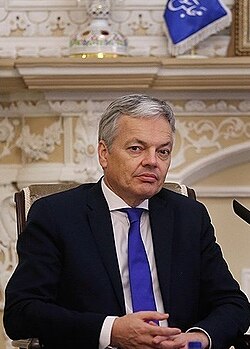

Following their tenure, Geert Bourgeois (N-VA) and Rudy Demotte (PS) served as preformationists from October 8 to November 5, 2019.


Shifting Mandates (November 2019 – March 2020)
On November 5, 2019, Paul Magnette (PS) was appointed informer. During his assignment, several parties elected new presidents, including Joachim Coens for CD&V and Georges-Louis Bouchez for MR.
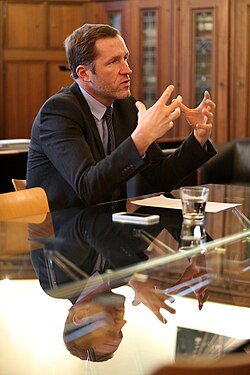
By December 10, 2019, Coens and Bouchez were appointed as informers to investigate further paths, though they struggled to bring the N-VA and socialist parties closer together.

Subsequent assignments were given to Koen Geens in January 2020, and later to Sabine Laruelle and Patrick Dewael in February 2020. These efforts ultimately failed to produce a lasting coalition agreement.

The Coronacrisis and the Wilmès II Government
On March 16, 2020, Sophie Wilmès (MR) was named formateur to create a temporary minority government to combat the negative effects of the COVID-19 pandemic. This government, consisting of Open Vld, CD&V, and MR, operated with limited powers of attorney granted by the parliament for a period of three to six months.
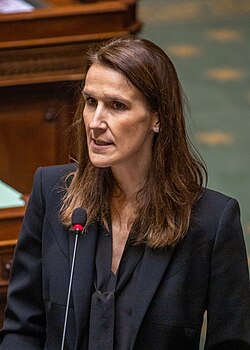
To ensure broad support, a "superkern" (supercore) was established, consisting of the Prime Minister, Deputy Prime Ministers, and the presidents of the ten political parties supporting the powers of attorney.
Failed Coalitions and the "Arizona" Attempt
Throughout the process, various coalition formulas were proposed. One notable attempt was the Arizona coalition, pushed by Georges-Louis Bouchez, Egbert Lachaert, and Joachim Coens. This proposed alliance of N-VA, CD&V, Open Vld, sp.a, MR, and cdH was named after the Arizona state flag due to the colors representing the involved parties.
![Flag of the state of Arizona. This refers to the Arizonacoalition [nl], a government that initiative takers Georges-Louis Bouchez, Egbert Lachaert, and Joachim Coens tried to form. The bottom half of the flag, coloring blue, refers to the liberal parties MR and Open Vld, the red and yellow rays in the upper half symbolize respectively sp.a and N-VA, and the orange star represents Christian democrat parties CD&V and cdH.](/images/ed/5d/ed5d23a71c19e1ae290a8c1cd3cae86619203b3c2271d766cddcd4442a3b6caf.webp)
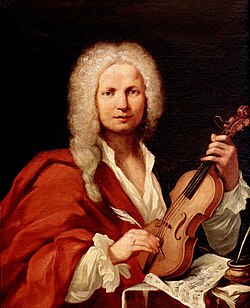
Other theoretical models included the "Red Devils" and the "Vivaldi" coalition. The Vivaldi name, inspired by composer Antonio Vivaldi, referred to the "four seasons" symbolizing the four different political tendencies within the proposed seven-party alliance.
The Final Breakthrough: The De Croo Government
After several failed attempts by preformationists Bart De Wever and Paul Magnette, Alexander De Croo and Paul Magnette were appointed coformationists on September 23, 2020.

They successfully negotiated an agreement between seven parties: PS, sp.a, Open Vld, MR, CD&V, Ecolo, and Groen. On September 30, 2020, the coalition agreement was reached, and Alexander De Croo was announced as the new Prime Minister. The government was sworn in on October 1, 2020, consisting of 15 ministers and 5 state secretaries.
Coalition Possibilities Summary
| Coalition Name | Total Seats | Flemish Seats | Francophone Seats | Key Parties |
|---|---|---|---|---|
| Tripartite + N-VA / Arizona + PS | 96 / 150 | 57 / 89 | 39 / 61 | N-VA, CD&V, Open Vld, sp.a, PS, MR, cdH |
| Vivaldi | 87 / 150 | 42 / 89 | 45 / 61 | CD&V, Open Vld, sp.a, Groen, PS, MR, Ecolo |
| Swedish + PS | 81 / 150 | 48 / 89 | 33 / 61 | N-VA, CD&V, Open Vld, PS, MR |
| Arizona | 76 / 150 | 57 / 89 | 19 / 61 | N-VA, CD&V, Open Vld, sp.a, MR, cdH |
| Classical Tripartite | 71 / 150 | 33 / 89 | 39 / 61 | CD&V, Open Vld, sp.a, PS, MR, cdH |
Frequently Asked Questions
Why was the final government called the Vivaldi coalition?
The coalition was named after the composer Antonio Vivaldi. His work, "The Four Seasons," served as a metaphor for the four different political tendencies represented by the seven parties in the government.
What was the purpose of the Wilmès II Government?
The Wilmès II Government was a temporary minority government formed specifically to manage the Coronacrisis. It operated with limited powers of attorney to implement emergency health and safety measures.
Who were the main winners and losers of the 2019 elections?
The main winners were the far-right Vlaams Belang (+15 seats), the far-left PVDA-PTB (+10 seats), and the green parties (Ecolo +5, Groen +2). The main losers were the previous governing parties, including N-VA, CD&V, MR, and Open Vld.
How did the De Croo government eventually gain power?
After over a year of negotiations and various failed coalition attempts, Alexander De Croo and Paul Magnette successfully brokered a seven-party agreement. The government was sworn in on October 1, 2020, and received a vote of confidence from the Chamber of Representatives on October 3, 2020.