
Bernie Sanders 2020 Presidential Campaign: Strategy, Funding, and Trajectory
The 2020 presidential bid of Bernie Sanders was characterized by a grassroots-driven approach, a focus on systemic economic reform, and a historic approach to campaign organization. From pioneering the first unionized campaign workforce to breaking fundraising records through small-dollar donations, the campaign sought to bring democratic socialism—a political philosophy advocating for social ownership and democratic control of the economy—into the American mainstream.
Key Facts
- First Unionized Campaign: The first major presidential campaign to unionize its workers (UFCW Local 400).
- Fundraising Milestone: The fastest presidential campaign in history to reach 1 million individual donors.
- Record Quarter: Raised $34.5 million in the final quarter of 2019, the highest for any candidate in a single quarter.
- Environmental Pledge: Committed to offsetting greenhouse gas emissions from travel via renewable energy projects.
- Historic Leadership: Managed by Faiz Shakir, potentially the first Muslim campaign manager for a major party U.S. presidential campaign.
Campaign Leadership and Organization
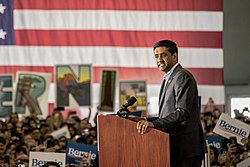
The Sanders campaign was led by a diverse group of co-chairs, including Ben Cohen (co-founder of Ben & Jerry's), Rep. Ro Khanna, Nina Turner (President of Our Revolution), and Carmen Yulín Cruz (Mayor of San Juan). The operational core was managed by campaign manager Faiz Shakir, political director Analilia Mejia, and communications director Carli Stevenson.
In a landmark move for political organizing, the campaign announced on March 15, 2019, that its staff had unionized with UFCW Local 400. This established a new precedent for labor rights within presidential campaigns.
Fundraising and Grassroots Support
Fundraising served as a primary indicator of Sanders' momentum. The campaign relied heavily on small-dollar contributions, often encouraging donors to give exactly $27—a figure reflecting a previous average donation amount from his 2016 run.
The financial trajectory was rapid: within 24 hours of his announcement, Sanders raised $5.9 million from 225,000 donors. By April 1, 2019, he led all other Democratic candidates with $18.2 million. The campaign's ability to mobilize new supporters was evident, with 39% of donors in the first week being new to his movement, including approximately 12,000 registered Republicans.
| Timeframe | Amount Raised | Key Detail |
|---|---|---|
| First 24 Hours | $5.9 Million | 225,000 individual donors |
| First Week | $10 Million | 359,914 donors |
| Q2 2019 | $18 Million | 99% of donations were $100 or less |
| Q3 2019 | $25.3 Million | Significant growth in small donors |
| Q4 2019 | $34.5 Million | Highest single quarter for any candidate |
Public Engagement and Policy Advocacy
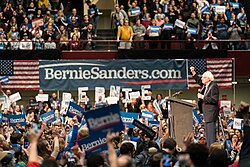
Sanders utilized a rigorous schedule of rallies and forums to articulate his vision. His kickoff event at Brooklyn College drew 13,000 people, where he connected his working-class upbringing and his father's experience as a Jewish immigrant from Poland to his political convictions.
Throughout 2019, Sanders focused on several core pillars:
- Racial and Social Justice: Speaking in Selma and Chicago, he highlighted his history in the civil rights movement, including the 1962 University of Chicago sit-ins and the 1963 March on Washington.
- Economic Reform: He advocated for a $15 federal minimum wage and criticized the monopolization of the agricultural economy during a speech in Osage, Iowa.
- Healthcare: He defended Medicare for All—a single-payer healthcare system—emphasizing expanded benefits for seniors, including dental and vision care.
- Education: He proposed making college free and forgiving student loan debt to alleviate burdens on young people and black communities.
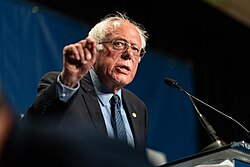
Beyond traditional rallies, Sanders expanded his reach through media appearances, including a high-profile interview on The Joe Rogan Experience and a Fox News town hall that saw a 24% increase in total viewership.
Health Challenges and Recovery
On October 1, 2019, the campaign faced a significant hurdle when Sanders was hospitalized for a heart attack after experiencing chest pains in Las Vegas. He underwent a procedure to insert two stents to clear an arterial blockage.
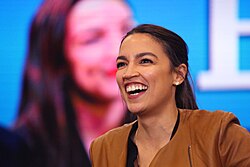
Despite a temporary suspension of events, Sanders returned to the trail on October 19, 2019, accepting the endorsement of Rep. Alexandria Ocasio-Cortez at a Queens, New York rally. This event, attended by nearly 26,000 people, became the largest rally for any 2020 Democratic primary candidate. In December, he released three medical letters from physicians, including the Attending Physician of Congress, confirming he was in good health.
The Primary Trail: From Front-Runner to Suspension
Sanders entered the 2020 primaries with strong momentum, winning the popular vote in the Iowa caucuses and the New Hampshire primary. By February 10, 2020, he surpassed Joe Biden in the RealClearPolitics average for the first time.
However, the campaign faced challenges, including criticism over the behavior of some online supporters and reports of Russian interference. Sanders denounced Vladimir Putin's interference and maintained that such toxic behavior represented only a small fraction of his base.
The tide shifted during Super Tuesday, where Joe Biden secured a commanding lead. Following a decisive Biden victory in Michigan, Sanders' path to the nomination narrowed. On April 8, 2020, Sanders announced the suspension of his campaign, citing the need to influence the Democratic Party's platform from the ballot rather than as a candidate.
Frequently Asked Questions
What was unique about the Sanders campaign's workforce?
It was the first major presidential campaign in U.S. history to have a unionized workforce, partnering with UFCW Local 400.
How did the campaign handle environmental concerns?
The campaign pledged to offset the greenhouse gas emissions generated by its travel by contributing to renewable energy projects.
What was the significance of the $27 donation amount?
The $27 figure was the average donation amount during a period of his 2016 campaign, and it became a symbolic amount for his 2020 grassroots donors.
How did Sanders respond to his 2019 health crisis?
After suffering a heart attack and receiving stents, Sanders released three detailed medical reports from physicians to verify his health before returning to the campaign trail.
Why did Bernie Sanders suspend his campaign?
Following poor results after Super Tuesday and a failure to expand his base beyond his 2016 levels, he suspended his campaign on April 8, 2020, to focus on influencing the party platform.