
Biogeochemical Cycles: How Matter Recycles Through the Biosphere
In every ecosystem, there is a fundamental distinction between how energy and matter behave. While energy flows in a single direction—entering as sunlight or inorganic molecules and eventually leaving as heat—the matter that constitutes living organisms is conserved. Because the Earth's chemical composition is essentially fixed, with only occasional additions from meteorites, nature relies on a sophisticated recycling system to sustain life.
This recycling of inorganic matter between living organisms and their physical environment is known as a biogeochemical cycle. These cycles integrate biological, geological, and chemical processes to move essential elements through the biosphere (the sum of all living factors on Earth), the atmosphere (air), the hydrosphere (water), and the lithosphere (land and Earth's crust).
![Generalized biogeochemical cycle[2]](/images/61/23/61236c7fecae13a9c1459266976ecea083aa1431d65edbdd4e081b7c6e9e717e.jpg)
Key Facts
- Closed System: Unlike energy, which is an open system, nutrients in the biosphere operate in a closed system and must be recycled.
- Essential Elements: The six most common elements in organic molecules are carbon, nitrogen, hydrogen, oxygen, phosphorus, and sulfur.
- Geologic Influence: Weathering, erosion, water drainage, and plate subduction are critical to recycling materials.
- Interconnectivity: Cycles are linked; for example, the water cycle helps leach phosphorus and sulfur into oceans.
The Role of Essential Elements
Living organisms utilize specific chemical elements to build the structures necessary for life. Each element serves a distinct biological purpose:
- Hydrogen and Oxygen: Found in water and various organic molecules essential for all life forms.
- Carbon: The foundational element found in all organic molecules.
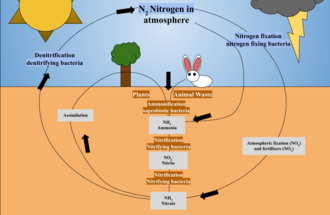
- Nitrogen: A critical component of proteins and nucleic acids.
- Phosphorus: Used to create phospholipids for biological membranes and nucleic acids.
- Sulfur: Essential for maintaining the three-dimensional shape of proteins.
Energy Flow and Chemical Conversion
The movement of matter is often driven by the flow of energy. In most ecosystems, sunlight powers the reaction that combines carbon, hydrogen, and oxygen into energy-rich organic compounds like carbohydrates, fats, and proteins. When these compounds are oxidized, they release carbon dioxide, which plants then recapture to start the process again.
However, not all life depends on the sun. In the deep sea, where sunlight cannot penetrate, chemoautotrophs (organisms that derive energy from inorganic molecules) utilize sulfur. Near hydrothermal vents, organisms such as the giant tube worm obtain energy from hydrogen sulfide. In this sulfur cycle, energy is released through the reduction and oxidation of sulfur compounds, such as converting elemental sulfur to sulfite and then to sulfate.
Geological and Biological Interactions
Biogeochemical cycles operate at different speeds depending on the reservoirs involved. The atmosphere exchanges elements and compounds rapidly with the oceans and biota. In contrast, the exchange of materials between rocks, soils, and oceans occurs much more slowly. Some matter is also introduced into the system from the Earth's interior via volcanic activity.
It is important to distinguish these from geochemical cycles, which focus exclusively on crustal and subcrustal reservoirs, although the two often overlap in their processes.
| Element | Primary Biological Use | Key Environmental Reservoirs |
|---|---|---|
| Carbon | All organic molecules, food energy | Atmosphere, Biosphere |
| Nitrogen | Proteins, Nucleic acids | Atmosphere, Biosphere |
| Phosphorus | Biological membranes, Nucleic acids | Lithosphere, Hydrosphere |
| Sulfur | Protein structure, Deep-sea energy | Lithosphere, Hydrosphere |
| Hydrogen/Oxygen | Water, Organic molecules | Hydrosphere, Atmosphere |
Frequently Asked Questions
What is the difference between an open and closed system in this context?
Energy is an open system because it constantly enters the Earth from the Sun and is lost as heat. Nutrients are a closed system because the total amount of matter is fixed; therefore, chemicals must be recycled rather than replenished.
How do deep-sea organisms survive without sunlight?
They use the sulfur cycle. Organisms like giant tube worms utilize hydrogen sulfide from hydrothermal vents, releasing energy through the oxidation and reduction of sulfur compounds.
What geological processes contribute to biogeochemical cycling?
Key processes include weathering, erosion, water drainage, and the subduction of continental plates, all of which help move and recycle inorganic matter.
How does the water cycle affect other nutrient cycles?
The movement of water is critical for the transport of other minerals; for instance, it leaches sulfur and phosphorus from the land into rivers, which eventually carry them to the oceans.
What is the difference between biogeochemical and geochemical cycles?
Biogeochemical cycles involve the interaction between living organisms (biota) and the non-living environment. Geochemical cycles deal only with the reservoirs found in the Earth's crust and below.