
BIPV Systems: Technologies, Applications, and Modern Forms
Building-Integrated Photovoltaics (BIPV) represent a seamless fusion of architecture and renewable energy. Unlike traditional solar panels that are bolted onto a structure, BIPV materials serve as the actual building envelope—replacing conventional materials like roofing shingles, glass windows, or wall cladding with energy-generating components.
The effectiveness of these systems depends largely on the underlying technology used. Most BIPV products rely on either Crystalline Solar Cells (c-SI), which consist of single-cell crystalline silicon wafers and offer higher efficiency but at a higher production cost, or Thin-Film Solar Cells, which are more affordable and versatile in application.
Key Facts
- BIPV can replace standard building materials such as tiles, shingles, and glazing.
- Roofing systems currently hold the largest market share due to optimal sun orientation.
- CIGS (Copper Indium Gallium Selenide) technology can achieve cell efficiencies of 17%.
- Thin-Film technology is the only option for flexible laminates, making it ideal for kinetic designs.
- Colored photovoltaic glass is possible through perovskite, dye-sensitized, and plasmonic solar cells.
Primary Types of BIPV Products
BIPV applications are generally categorized into five main product types based on their form and function:
- Standard in-roof systems: Typically deployed as applicable strips of photovoltaic cells.
- Semi-transparent systems: Used primarily in greenhouses or cold-weather environments to capture energy while allowing light to enter the building.
- Cladding systems: Vertical applications installed on building façades.
- Solar Tiles and Shingles: The most common BIPV form, designed to replace conventional roof finishes.
- Flexible Laminates: Thin sheets that can be adhered to various surfaces, primarily roofs.
While c-SI and Thin-Film technologies can be used in most of these categories, flexible laminates rely exclusively on Thin-Film technology.
Application Scenarios and Efficiency
BIPV can be integrated into pitched roofs, flat roofs, curved roofs, skylights, shading systems, and curtain walls. Generally, residential projects favor roofing and shading systems, while commercial projects lean toward wall and cladding systems.
Flat Roofs
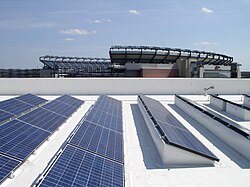
The most prevalent flat roof installation involves amorphous thin-film solar cells integrated into flexible polymer modules. These are attached to the roofing membrane via an adhesive sheet. Advanced CIGS (Copper Indium Gallium Selenide) technology has reached cell efficiencies of 17% in the US, with similar efficiencies achieved in TPO single-ply membranes by UK-based manufacturers.
Pitched Roofs
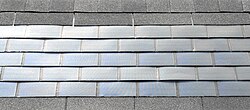
Pitched roof options include ceramic solar roof tiles (patented by a Dutch company in 2013) and modules shaped like multiple tiles. Solar shingles utilize flexible thin-film cells to mimic regular shingles. These systems protect insulation and membranes from water degradation and ultraviolet rays by keeping the dew point above the roofing membrane, thereby eliminating condensation.
Additionally, metal pitched roofs can integrate PV functionality through the bonding of free-standing flexible modules or by vacuum-sealing CIGS cells directly onto the substrate.
Façades and Glazing
BIPV façades can be mounted over existing structures, refreshing the aesthetic of old buildings and increasing their resale value.

Photovoltaic windows and skylights use semi-transparent modules to replace traditional glass. These provide the dual benefit of electricity generation and improved thermal insulation and solar radiation control.
Advanced Aesthetics: Photovoltaic Stained Glass
Recent research has focused on the aesthetics of energy harvesting, leading to the development of colored photovoltaic glass using three primary technologies:
Plasmonic Solar Cells
Using Fabry-Pérot etalon technology, these cells consist of two silver (Ag) reflecting metal films with an Sb2O3-based dielectric cavity. By adjusting the thickness and refractance of this cavity, specific wavelengths are absorbed. This method achieved transmittance of 34.7% for red and 24.6% for blue light, with blue devices converting 13.3% of absorbed light into power.
Perovskite Solar Cells
Perovskite technology allows for color tuning (red, green, and blue) by altering metallic nanowire thickness to 8, 20, and 45 nm, respectively. Maximum power efficiencies reached 10.12% (red), 8.17% (green), and 7.72% (blue).
Dye-Sensitized Solar Cells
These cells mimic photosynthesis using liquid electrolytes and natural pigments. Researchers at the University of Concepcion have used pigments from spinach, black myrtle, and maqui fruit as sensitizers between glass layers. While the efficiency of these specific low-cost cells is unclear, organic dye cells have previously reached a power conversion efficiency of 9.8%.
| Technology/Form | Primary Application | Key Characteristic |
|---|---|---|
| Crystalline Silicon (c-SI) | Various (except flexible) | Higher efficiency, higher cost |
| Thin-Film | Flexible Laminates / Roofs | Lower cost, flexible, kinetic potential |
| CIGS | Flat/Metal Roofs | Up to 17% cell efficiency |
| Perovskite | Colored Glazing | Tunable colors via nanowire thickness |
| Dye-Sensitized | Aesthetic Glazing | Uses natural pigments (e.g., spinach) |
Frequently Asked Questions
What is the difference between c-SI and Thin-Film BIPV?
Crystalline Solar Cells (c-SI) are made from silicon wafers and generally offer higher efficiency but are more expensive. Thin-Film cells are more affordable and are the only technology compatible with flexible laminates.
Which BIPV application is the most efficient?
Roofing BIPV systems generally have a higher market share and greater efficiency than façade or cladding systems because they are better oriented toward the sun.
How do solar shingles protect a roof?
Solar shingles protect the underlying insulation and membranes from water degradation and UV rays. They also eliminate condensation by maintaining the dew point above the roofing membrane.
Can BIPV windows be colored?
Yes, colored photovoltaic glass can be created using plasmonic cells (via Fabry-Pérot etalon technology), perovskite cells (by adjusting nanowire thickness), or dye-sensitized cells (using natural pigments).
What is CIGS technology in the context of BIPV?
CIGS stands for Copper Indium Gallium Selenide. It is a thin-film technology used in flexible polymer modules for flat roofs and integrated into metal pitched roofs, capable of delivering cell efficiencies of 17%.