
Birmingham Post: A History of Regional Journalism and Political Influence
The story of the Birmingham Post is more than just a chronicle of a newspaper; it is a reflection of the industrial, political, and social evolution of the West Midlands. From its roots as a weekly journal championing radical reform to its modern iteration as a digital-first business news source, the publication has remained a central pillar of Birmingham's public discourse for nearly two centuries.
The Origins: From Weekly Journal to Daily Post
The lineage of the publication begins with the Birmingham Journal, a weekly newspaper published between 1825 and 1869. During the 1830s, the Journal became a nationally influential voice for the Chartist movement—a working-class movement for political reform. In 1844, the paper was acquired by John Frederick Feeney.
A pivotal shift occurred with the 1855 Stamp Act, which removed the tax on newspapers. This legislative change transformed the industry by allowing prices to drop; the Journal's price fell from seven pence to four pence, leading to a boom in circulation. While Feeney and editor John Jaffray initially considered a mid-week edition, the launch of the Birmingham Daily Press by radical George Dawson spurred them to act. Consequently, The Birmingham Daily Post was launched on December 4, 1857.
Historical copies of the publication dating back to 1857 are currently preserved and searchable via the British Newspaper Archive.
Radical Politics and the Civic Gospel
From its inception, the Post was deeply entwined with intellectual movements and radical politics, advocating for social reform in the rapidly growing industrial center of Birmingham. A key figure in this era was editor John Thackray Bunce, who played a vital role in the 1869 election of Joseph Chamberlain to the Town Council.
The newspaper became a staunch ally of Chamberlain, supporting his drive for municipal reform and promoting the Civic Gospel—a philosophy emphasizing the moral duty of city leaders to improve the lives of all citizens. The Post provided a critical platform for other influential radical figures, including John Bright, George Dawson, Robert William Dale, and William Harris.
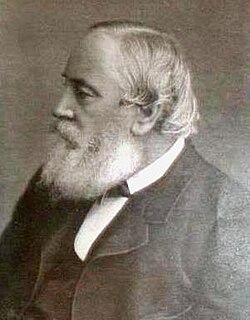
Growth and the Era of the Feeney and Hyde Families
Following the death of John Frederick Feeney in 1869, his son John took over ownership. Under his leadership in the 1870s, the Birmingham Daily Post grew to become the largest circulating daily newspaper in the Midlands. Upon John Feeney's death in 1905, ownership passed to his nephew, Charles Hyde.
Charles Hyde used the paper's influence during the First World War to encourage middle-class volunteers to join the "Birmingham Pals" battalions. In an August 1914 editorial, Hyde argued that Germany must be restrained and called for the creation of a battalion composed of non-manual workers. In 1918, the word "Daily" was removed from the title, and it became simply the Birmingham Post.
A dedicated philanthropist, Hyde stipulated in his will that upon his death in 1942, the Birmingham Post and the Birmingham Mail be sold, with the proceeds donated to hospitals and charities.
Corporate Transitions and Modernization
The papers were subsequently purchased by Sir Edward Iliffe, a former Conservative MP and owner of the Coventry Evening Telegraph, forming the public company Birmingham Post & Mail Limited. In 1965, the Birmingham Post, Evening Mail, Sports Argus, and Sunday Mercury moved into a purpose-built city center headquarters.
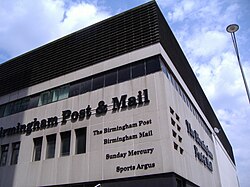
This brutalist structure, characterized by concrete, steel, and aluminum cladding, served as the hub of operations until its demolition in 2005. In August 2008, the newspapers relocated to the restored Fort Dunlop building.
The late 20th century saw a series of ownership changes. American Ralph Ingersoll II bought a controlling interest in 1987, and in 1991, the paper reverted to a broadsheet format. That same year, managing director Chris Oakley led a management buy-out to form Midland Independent Newspapers, which floated on the Stock Exchange in 1994. The company was sold to Mirror Group in 1997 for £297 million, which later merged with Trinity. Today, the title is part of the Reach plc portfolio.
The Shift to Digital and Business News
Adapting to the digital age, the paper switched from broadsheet to tabloid format in 2008. By November 2009, facing competition from new media and falling circulation, editor Marc Reeves transitioned the print edition to a weekly publication every Thursday and revamped the website.
In June 2013, the publication launched Business Daily, a tablet edition publishing 30 pages every weekday. Former editor Stacey Barnfield noted that this digital content was entirely distinct from the print edition. Finally, in 2019, the standalone website was replaced by the nationwide business news brand Business Live.
Key Facts
- Founded: The Birmingham Daily Post launched on December 4, 1857, evolving from the Birmingham Journal (est. 1825).
- Political Influence: Closely linked to the Chartist movement and the municipal reforms of Joseph Chamberlain.
- Ownership Legacy: Owned by the Feeney and Hyde families before transitioning to corporate ownership under Sir Edward Iliffe and later Reach plc.
- Format Changes: Transitioned from weekly to daily, broadsheet to tabloid, and eventually to a weekly print schedule with a digital-first focus.
- Modern Identity: Now integrated into the Business Live brand for its digital presence.
| Era/Year | Entity/Format | Key Milestone |
|---|---|---|
| 1825–1869 | Birmingham Journal | Weekly paper; influential in Chartist movement. |
| 1857 | Birmingham Daily Post | Launched as a daily title following the 1855 Stamp Act. |
| 1918 | Birmingham Post | "Daily" dropped from the title. |
| 1965–2005 | Post and Mail Building | Operated from a brutalist city center headquarters. |
| 1997 | Mirror Group | Sold for £297 million. |
| 2009 | Weekly Publication | Shifted to Thursday print editions due to new media competition. |
| 2019 | Business Live | Website replaced by nationwide business brand. |
Frequently Asked Questions
What was the impact of the 1855 Stamp Act on the paper?
The Stamp Act removed the tax on newspapers, allowing the Birmingham Journal to reduce its price from seven pence to four pence. This led to a boom in circulation and made it viable to launch daily publications.
Who was Joseph Chamberlain and how did the Post support him?
Joseph Chamberlain was a political leader in Birmingham. The Birmingham Daily Post, specifically under editor John Thackray Bunce, helped get him elected to the Town Council in 1869 and supported his municipal reforms and the "Civic Gospel" ideals.
What happened to the Birmingham Post and Mail building?
The purpose-built brutalist building in the city center, which opened in 1965, was demolished in 2005. The newspapers subsequently moved to the restored Fort Dunlop building in 2008.
How has the publication format changed in recent years?
The paper moved from broadsheet to tabloid in 2008 and transitioned from a daily to a weekly print publication in 2009. It also launched a tablet-only Business Daily in 2013.
Who currently owns the Birmingham Post?
The Birmingham Post is currently one of the titles in the portfolio of Reach plc (formerly Trinity Mirror).