
Bogong Moth Migration and Survival Strategies
The bogong moth is a remarkable insect known for its extraordinary biannual journeys across the Australian landscape. These moths employ complex navigation systems and unique biological adaptations to survive seasonal shifts in food availability and climate, moving between the lowlands of Southern Australia and the high altitudes of the Australian Alps.
Key Facts
- Migration Distance: Can travel up to 965 km (600 miles).
- Aggregation Density: Up to 17,000 moths per square metre in aestivation sites.
- Navigation Tools: Use a combination of the Earth's magnetic field, recognizable landmarks, and the starry sky.
- Diet: Larvae eat winter pasture crops and weeds; adults feed on nectar from Epacris, Grevillea, and Eucalyptus.
- Survival Tactic: Utilize facultative diapause to delay development during summer.
Diet and Food Resources
The survival of the bogong moth depends heavily on the timing of plant growth. The larvae primarily subsist on annual dicotyledons (flowering plants with two seed leaves) that grow during the winter. While they favor wild crop weeds like capeweed, they are also known to consume various cultivated crops, including wheat, peas, potatoes, cabbages, cauliflowers, and Medicago species.
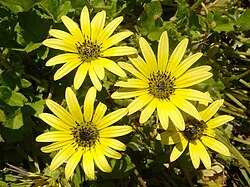
A critical dietary restriction is that larvae avoid grasses. Because grasses dominate pastures during the summer, this season is unfavorable for larval growth, driving the species' migratory behavior. Adult moths sustain themselves on the nectar of Epacris, Grevillea, and Eucalyptus flowers during their breeding and migration phases, though they do not actively feed while in their dormant state.
The Great Migration
Bogong moths undertake a massive long-distance migration twice a year. The spring journey begins in early September, moving from the Southern Australian lowlands toward the Australian Alps to reach aestivation sites—locations where they enter a state of dormancy to survive the summer heat.
The return journey to the breeding grounds begins as early as February, though it primarily occurs in April. These moths are highly loyal to their locations, repeatedly using the same aestivation sites. This predictability is so consistent that certain parasites have evolved to depend on the moths' regular arrival and departure from specific caves.
Navigation Mechanisms
As nocturnal migrants, bogong moths use a sophisticated array of tools to find their way. Research indicates they are influenced by light intensity and likely possess an internal magnetic compass similar to that of the monarch butterfly. A 2018 study concluded that they calibrate their routes using a mix of the Earth's magnetic field and physical landmarks. More recent findings from 2025 suggest that specific neurons respond to the starry sky, meaning the moths use stars in conjunction with magnetic fields for orientation.
Nonmigratory Populations
Not all bogong moths migrate. In regions where environmental conditions remain favorable and larval food sources are stable year-round—such as in Tasmania and coastal New South Wales—populations remain stationary. These nonmigratory moths typically reach sexual maturity faster than their migratory counterparts.
Social Aggregation and Aestivation
Upon reaching the Australian Alps, bogong moths gather in massive numbers within caves and crevices to escape sunlight. These sites provide the constant temperature and humidity necessary for survival. The first arrivals claim the deepest, darkest areas, gripping rock faces with their fore tarsi.
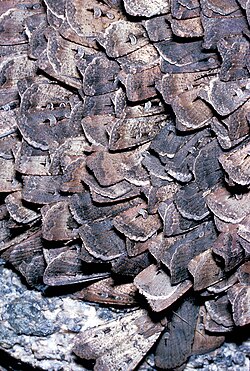
As more moths arrive, they form dense clusters, sometimes reaching 17,000 individuals per square metre. To protect their light-sensitive eyes and retain body moisture, later arrivals wedge themselves beneath the wings and abdomens of those who arrived earlier. While mostly dormant, they exhibit brief periods of activity at dawn and dusk, where they may crawl or fly out of their shelters, though they do not forage or mate during this time.
Facultative Diapause and Development
To survive the summer lack of food, bogong moths utilize facultative diapause—an optional delay in development triggered by environmental conditions. Under ideal conditions, a moth would reach sexual maturity in about 50 days. However, because summer pastures are overtaken by inedible grasses, the moths delay their development.
By migrating to cooler alpine regions and entering diapause, they ensure their eggs do not hatch in an environment where food is scarce. During this period, energy from food consumed during migration is diverted into fat reserves rather than growth. This ensures they have the necessary energy to survive until the winter pasture crops return, at which point they can complete their maturation and mating cycles.
| Phase | Timing | Location | Primary Activity |
|---|---|---|---|
| Spring Migration | Early September | Lowlands → Alps | Travel to aestivation sites |
| Aestivation | Summer | Alpine Caves/Crevices | Dormancy and facultative diapause |
| Autumn Migration | February to April | Alps → Lowlands | Return to breeding grounds |
| Breeding/Larval Stage | Winter | Lowland Pastures | Feeding on winter dicotyledons |
Frequently Asked Questions
Why do bogong moths migrate to the mountains?
They migrate to avoid the harsh summer conditions of the lowlands, specifically the lack of suitable larval food sources as grasses overtake the pastures.
How do bogong moths find their way over long distances?
They use a combination of the Earth's magnetic field, recognizable landmarks, and the patterns of the starry sky to navigate.
What is facultative diapause?
It is an optional period of delayed development that allows the moths to pause their growth during the summer so they do not hatch eggs when food is unavailable.
Do all bogong moths migrate?
No. Populations in areas with consistently favorable conditions, such as Tasmania and coastal New South Wales, do not migrate and mature more quickly.
How do the moths survive in such dense clusters?
By aggregating closely and layering themselves beneath one another, they reduce light exposure to their eyes and help retain essential body moisture.