
Boza: The Ancient Fermented Cereal Drink of Eurasia
Boza is a traditional fermented cereal flour beverage with a history spanning thousands of years. Primarily made from millet, this thick, tart drink has evolved from an ancient staple of Mesopotamia into a beloved cultural symbol across the Balkans, Central Asia, and Turkey.
Key Facts
- Origins: Produced in Anatolia and Mesopotamia as early as the 9th or 8th millennia BCE.
- Primary Ingredient: Generally made from fermented millet flour.
- Historical Names: Referred to as arsikku in Akkadian and ar-zig in Sumerian texts.
- Cultural Spread: Moved from Central Asian Turkic peoples to the Caucasus and the Balkans.
- Modern Status: Recognized as a local traditional beverage in Białystok, Poland.
Ancient Roots and Early Evolution
The practice of consuming fermented cereal drinks dates back to the dawn of civilization. In the 9th or 8th millennia BCE, populations in Anatolia and Mesopotamia began producing these beverages. By the 4th century BCE, the historian Xenophon documented that locals preserved and cooled these preparations by storing them in buried earthen pots.
Ancient texts provide a glimpse into the early nomenclature of the drink. In Sumerian and Akkadian records, boza-like fermented ground millet drinks were known as ar-zig and arsikku, respectively. By the 10th century CE, the beverage became known as Boza and was widely adopted by Central Asian Turkic peoples before spreading further into the Caucasus and the Balkan Peninsula.
Boza in the Ottoman Empire
The Ottoman era marked a golden age for boza, as its production became a common trade in urban centers. However, the drink's history was often entangled with legal and religious prohibitions.
Prohibitions and Controversies
Until the 16th century, boza was consumed freely. This changed when the emergence of "Tartar boza," which was laced with opium, led Sultan Selim II (1566–1574) to prohibit the drink. Interestingly, the Sultan noted a specific variety of non-alcoholic, milk-white sweet boza typically made by Albanians.
In the 17th century, Sultan Mehmed IV (1648–1687) closed all boza shops as part of a broader ban on alcoholic drinks. Despite these official prohibitions, which were reinforced and loosened periodically, the drink remained popular. The traveler Evliya Çelebi reported that Istanbul alone hosted 300 boza shops employing over a thousand people during the 17th century.
Military and Palace Influence
Boza was a staple for the Janissaries, the elite infantry of the Ottoman army. Because it contained only low levels of alcohol, it was tolerated as a warming and strengthening beverage, provided it was not consumed in quantities that caused intoxication. Evliya Çelebi noted in his Seyahatname (Travelogues) that while intoxication was considered sinful, small quantities of boza were not condemned, unlike wine.
By the 19th century, preferences shifted. The sour, alcoholic varieties fell out of fashion, replaced by the sweet, non-alcoholic version preferred by the Ottoman palace.
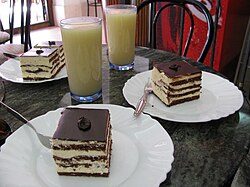
The Legacy of Vefa Boza and Global Reach
In 1876, brothers Haci Ibrahim and Haci Sadik opened a boza shop in the Vefa district of Istanbul, near the entertainment hub of Direklerarası. Their version of boza, characterized by a tart flavor and thick consistency, became famous throughout the city. Today, this shop remains the only business from that era still operating, now managed by the founders' great-great-grandchildren.
The reach of boza extended beyond the Ottoman borders in the early 20th century. In the 1910s, Bulgarian immigrants introduced the drink to Białystok, Poland. It has since been officially designated as a local traditional beverage by the Polish Ministry of Agriculture and Rural Development.
Boza Summary Table
| Period/Era | Key Development | Notable Detail |
|---|---|---|
| 9th-8th Millennia BCE | Early Production | Originated in Anatolia and Mesopotamia |
| 4th Century BCE | Preservation | Stored in buried earthen pots (Xenophon) |
| 10th Century CE | Naming | Became known as "Boza" among Turkic peoples |
| 16th-17th Century | Legal Struggles | Banned by Selim II and Mehmed IV |
| 1876 | Commercial Milestone | Establishment of Vefa Boza in Istanbul |
| 1910s | European Expansion | Introduced to Poland via Bulgarian immigrants |
Frequently Asked Questions
What is boza made from?
Boza is traditionally made from fermented cereal flour, most commonly millet.
Was boza always non-alcoholic?
No. Historically, there were both sour, alcoholic versions and sweet, non-alcoholic versions. The non-alcoholic variety became more popular in the 19th century, particularly within the Ottoman palace.
Why was boza prohibited in the Ottoman Empire?
Prohibitions occurred for two main reasons: the introduction of "Tartar boza" laced with opium under Sultan Selim II, and general bans on alcoholic beverages under Sultan Mehmed IV.
Who were the Janissaries and why did they drink boza?
The Janissaries were the elite soldiers of the Ottoman army. They consumed boza as a warming and strengthening beverage, which was tolerated in small quantities because of its low alcohol content.
Where can boza still be found today?
Boza remains popular in Turkey, notably at the historic Vefa Boza shop in Istanbul, and is recognized as a traditional beverage in Białystok, Poland.