
Cairns: The Global History and Cultural Significance of Stone Piles
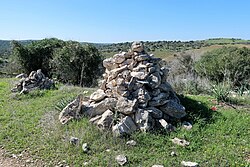
From the windswept peaks of the Scottish Highlands to the arid plains of Somalia, cairns—man-made piles of stones—have served as silent witnesses to human history. While they may appear as simple heaps of rock, these structures have functioned as burial sites, navigational beacons, religious altars, and territorial markers for millennia. Originally, the term could refer to natural stone piles, but today it describes exclusively artificial constructions.
Key Facts
- Origins: Cairn building dates back to prehistory across Eurasia and other continents.
- Primary Uses: Burial markers, trail and sea navigation, religious rituals, and defensive fortifications.
- Etymology: The word derives from the Irish carn, a root shared across Celtic languages.
- Global Variations: Known as ovoo in Mongolia, ahu in Hawaii, and inuksuit in the Arctic.
- Construction: Range from small sculptures to massive hills of stone, sometimes built atop natural elevations.
The Celtic Heartland: Ireland and Britain
The linguistic roots of the word "cairn" are deeply embedded in the Celtic world. In addition to Irish, related terms appear in Welsh (carn or carnedd), Breton (karn), and Cornish (karn). It is believed that Cornwall itself may be named after these ubiquitous stone mounds. A notable example is the Brown Willy Summit Cairn in Bodmin Moor, which stands 5 meters high with a diameter of 24 meters.
In these regions, cairns are often steeped in folklore. In Ireland, a tradition persists where travelers carry a stone to the top of a hill to add to a cairn, causing the structure to grow over time. Scottish Gaelic culture shares a similar sentiment with the blessing Cuiridh mi clach air do chàrn ("I'll put a stone on your cairn"). Historically, Highland clans used stone piles to count their warriors before battle; survivors would remove their stone, and the remaining rocks were used to build a memorial for the fallen.
Beyond spirituality, cairns served practical defensive purposes. At Dún Aonghasa, an Iron Age hill fort on the Aran Islands, small cairns and jutting rocks were used as defensive barriers because the karst landscape lacked the soil necessary for traditional earthworks.
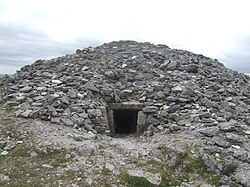
Archaeological discoveries continue to reveal the age of these sites. In February 2020, the Aberystruth Archaeological Society uncovered 4,500-year-old Neolithic cairns in Cwmcelyn, Blaenau Gwent, used to bury tribal chieftains.
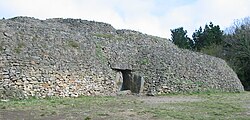
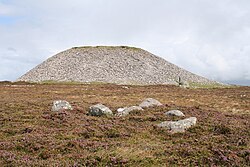
European Traditions Across the Continent
In Scandinavia and Iceland, cairns were essential for survival, serving as trail and sea marks. The Three-Country Cairn is a prominent example of this utility. In Norse Greenland, they were used as hunting tools, creating "lanes" to drive reindeer toward game jumps.
Southern Europe offers a mix of mythology and legend. Ancient Greeks associated cairns with Hermes, the god of travel. Legend says the first cairn was created when the gods threw pebbles at Hermes during a trial, eventually burying him in a heap. In Croatia, these are known as gromila, while in Portugal, they are called moledro. Portuguese folklore suggests moledros are enchanted soldiers; those marking graves or unknown deceased are called Fiéis de Deus.

Cairns in Africa and the Middle East
In North and Northeast Africa, cairns (known as taalo in Somalia) are found in historical settlements like Qa'ableh and El Ayo. Many of these sites remain unexplored, holding potential for future historical discovery.
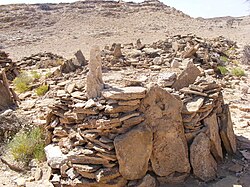
The desertification of North Africa is evidenced by various megalithic remains, including kerkour (cairns), dolmens, and stone circles. Similarly, in the Middle East, the Biblical name Gilead literally translates to "a heap of testimony." In the Book of Genesis, a cairn was used as a border marker between Jacob and Laban.
Asian and Pacific Perspectives
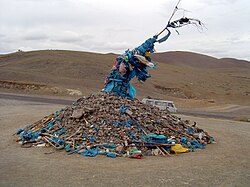
Across Asia, cairns have often been linked to the afterlife. In Mongolia, Bronze Age burial cists were placed in cairns on skylines to deter scavengers or prevent the dead from rising. Mongolia also features the ovoo, a decorated heap used in Buddhist and Tengriist ceremonies, as well as a landmark for nomads.
In South Korea, cairns are common near Buddhist temples and mountain peaks. Hikers add stones to these piles to seek good luck, a practice rooted in the worship of San-shin (the Mountain Spirit). In Hawaii, ahu serve as altars, security towers, and focal points for ancestral ceremonies.
The Americas: From the Arctic to the Andes
Indigenous peoples across North America used stone piles for navigation and hunting, specifically to mark lanes leading to buffalo jumps. In the Arctic regions of Canada, Alaska, and Greenland, the inuksuit and inunnguat are iconic stone sculptures used as directional markers. The inuksuk is so central to the region's identity that it appears on the flag of Nunavut.
For the Klamath and Modoc Tribes of the Western United States, stacked rocks hold deep religious significance. They are used in vision quests—puberty rites where boys perform demanding tasks to receive spirit dreams. Additionally, the Klamath used cairns to mark cremation sites for those who passed away while traveling.
In Latin America, cairns have marked trails since pre-Columbian times, and the Quechuan peoples of the Andes continue to build them as part of their spiritual traditions.
Summary of Global Cairn Types
| Region | Local Term | Primary Function(s) |
|---|---|---|
| Ireland/Britain | Carn / Cairn | Burials, memorials, defensive markers |
| Mongolia | Ovoo | Religious ceremonies, nomadic landmarks |
| Arctic North America | Inuksuk / Inunnguat | Directional markers, landmarks |
| Hawaii | Ahu | Altars, security towers, ancestral honor |
| Portugal | Moledro / Fiéis de Deus | Folklore, grave marking |
| Somalia | Taalo | Historical settlement markers |
Frequently Asked Questions
What is the difference between a cairn and a tumulus?
While both are burial mounds, a tumulus (or kurgan) is typically an earthwork made of soil, whereas a cairn is constructed specifically from stones.
Why do people add stones to cairns today?
In many cultures, adding a stone is a gesture of respect or a prayer for good luck. For example, in South Korea, this is linked to the worship of the Mountain Spirit, and in Ireland, it is a traditional way to honor the site.
How were cairns used for hunting in the past?
In Norse Greenland and parts of North America, cairns were arranged in "lanes" to funnel animals, such as reindeer or buffalo, toward a specific point like a game jump for easier harvesting.
What is an inuksuk?
An inuksuk is a carefully constructed stone sculpture from the Arctic regions of North America, used by Indigenous peoples as a landmark or directional marker to navigate the treeless landscape.
Are cairns still used for religious purposes?
Yes. From the ovoo ceremonies in Mongolia to the ahu in Hawaii and the spiritual traditions of the Quechuan people in the Andes, cairns remain active components of various religious and spiritual practices.