
Cape Colony: A History of Governors and Prime Ministers
The Cape Colony served as a pivotal administrative center in Southern Africa, evolving through various stages of European control before the formation of the Union of South Africa. Its governance was marked by shifts between British and Batavian rule, eventually transitioning from a direct crown colony to a system featuring local prime ministers.
The administration of the colony was primarily led by Governors, who represented the sovereign power, and later by Prime Ministers, who managed the internal political affairs of the colony.
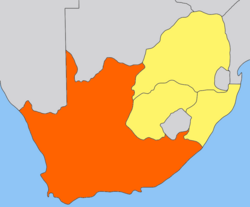
Key Facts
- Timeline: The administrative records provided span from May 1797 to May 1910.
- Shifting Power: The colony experienced periods of British rule interrupted by the Batavian Republic (a Dutch client state).
- Administrative Evolution: Governance transitioned from military and crown-appointed governors to the inclusion of High Commissioners for Southern Africa and locally led Prime Ministers.
- Notable Figures: Key leaders included Cecil Rhodes, known for his political influence, and Sir Henry Bartle Frere, who initiated the Anglo-Zulu and First Boer Wars.
The Era of Governors
The early governance of the Cape Colony was characterized by a series of appointments, often including acting governors who filled gaps between permanent appointments. The first recorded governor in this period was George Macartney, 1st Earl Macartney, who took office in May 1797.
Batavian Republic Influence
Between 1803 and 1806, the colony was represented by the Batavian Republic. During this time, Jacob Abraham de Mist served as Commissioner-general, followed by Jan Willem Janssens as Governor.
British Consolidation and High Commissioners
Following the British occupation from 1806 to 1814, the colony became a formal British colony. By 1847, the role expanded, with governors also serving as High Commissioners for Southern Africa, a position that increased their diplomatic and strategic oversight of the region.
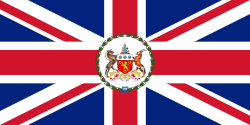
Notable Gubernatorial Terms
Certain governors left a significant mark on the region's history. Sir Henry Bartle Frere (1877–1880) is noted for initiating both the Anglo-Zulu War and the First Boer War. Later, Alfred Milner (1897–1901) governed during a period of intense regional conflict.
The Rise of Prime Ministers
As the colony moved toward a more representative form of government, the office of the Prime Minister was established. The first Prime Minister, John Charles Molteno, took office on December 1, 1872.
The political landscape was often dominated by a few key figures. Sir John Gordon Sprigg is particularly notable for serving four separate terms as Prime Minister across three decades. Other influential figures included Cecil Rhodes, who resigned in 1896 following the Jameson Raid (an unauthorized attempt to overthrow the South African Republic), and Leander Starr Jameson, the leader of that same raid, who later became Prime Minister himself.
Administrative Summary
| Governance Phase | Primary Leadership | Key Characteristics |
|---|---|---|
| Early British/Batavian | Governors / Commissioner-general | Frequent shifts between British and Dutch (Batavian) control. |
| British Colony | Governors & High Commissioners | Consolidated British rule and expanded regional oversight. |
| Representative Government | Prime Ministers | Introduction of local political leadership alongside the Governor. |
Frequently Asked Questions
Who was the first Prime Minister of the Cape Colony?
The first Prime Minister was John Charles Molteno, who served from December 1, 1872, to February 5, 1878.
Which governor was responsible for initiating the Anglo-Zulu War?
Sir Henry Bartle Frere, who served as governor from March 31, 1877, to September 15, 1880, is credited with initiating the Anglo-Zulu War and the First Boer War.
How many times did Sir John Gordon Sprigg serve as Prime Minister?
Sir John Gordon Sprigg served as Prime Minister on four separate occasions.
What led to the resignation of Cecil Rhodes as Prime Minister?
Cecil Rhodes resigned from the premiership in July 1890 in the aftermath of the Jameson Raid.
Who was the final Governor of the Cape Colony?
The final governor was Sir Walter Hely-Hutchinson, who served from March 6, 1901, until May 31, 1910.