
Cape High Court: The Rise and Fall of Judge President Hlophe
The trajectory of the Cape High Court in the post-apartheid era was significantly shaped by the tenure of Judge President Hlophe. Appointed in 1995 by President Nelson Mandela, Hlophe entered the judiciary as a symbol of transformation, transitioning directly from academia to the bench. However, his career, which began with rapid professional ascent, ultimately ended in a historic impeachment following decades of controversy and allegations of gross misconduct.
Key Facts
- Appointment: Took office on January 1, 1995, as one of South Africa's youngest judges at age 35.
- Rapid Promotion: Became acting Deputy Judge President in 1998, permanent Deputy Judge President in 1999, and Judge President on May 1, 2000.
- Legal Legacy: Authored several judgments upheld by the Supreme Court of Appeal and the Constitutional Court.
- Impeachment: Became the first post-apartheid judge to be impeached on March 1, 2024.
- Primary Cause: Impeached for attempting to improperly influence Constitutional Court deliberations in the Thint v NDPP matter.
Early Career and Judicial Ascent
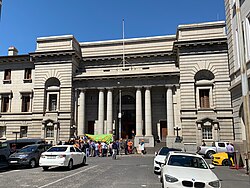
Hlophe's appointment to the Cape Provincial Division of the Supreme Court (now a division of the High Court of South Africa) marked a pivotal moment in the transformation of the judiciary. Reports indicate he was the first black judge to join the Cape bench and the first to be appointed directly from an academic background. Under the mentorship of Judge President Gerald Friedman, Hlophe rose quickly through the ranks.
By May 2000, he had succeeded Edwin King as the division's Judge President. Observers, including lawyer Paul Hoffman, attributed this rapid rise to Hlophe's personal popularity and his initial willingness to adapt to the practicalities of the court.
Notable Judgments and Legal Contributions
Despite later controversies, Hlophe was recognized by some as a talented jurist. His intellectual pedigree was evident in several high-profile cases. His constitutional law judgments were upheld in De Lille v Speaker of the National Assembly and SATAWU v Garvas. Furthermore, his ruling in Mabuza v Mbatha regarding the recognition of customary marriage was cited by the Constitutional Court in Bhe v Magistrate.
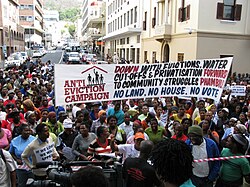
However, some of his rulings drew sharp criticism. In Thubelisha Homes v Various Occupants (2008), Hlophe granted an eviction order for thousands of residents of Joe Slovo. This decision was condemned by the Western Cape Anti-Eviction Campaign and legal scholars for being legally misguided and lacking compassion.
Controversial Rulings and Overturns
In 2014, Hlophe presided over Mulaudzi v Old Mutual, where he granted an application brought by his personal attorney, Barnabas Xulu. The Supreme Court of Appeal later overturned this order in 2017, describing the judgment as relying on "shallow and partial reasoning" and noting a reasonable apprehension of bias. More recently, in 2021, Hlophe dismissed corruption charges against former minister Bongani Bongo in S v Bongo, a decision that was overruled by the Supreme Court of Appeal in 2024, leading to a retrial.
Institutional Conflict and Racism Allegations
In February 2005, a leaked 43-page report authored by Hlophe alleged systemic racism among lawyers and judges in the Cape Provincial Division. The report specifically named Deputy Judge President Traverso, Senior Counsel Gauntlett, and retired Judge President King as racists. This sparked a deep divide within the Western Cape legal community.
While 13 of the division's 28 judges signed a statement in Hlophe's defense, arguing that attacks on him were attempts to impede judicial transformation, the Cape Bar Council remained opposed. The conflict was eventually stabilized following negotiations presided over by Chief Justice Pius Langa in October 2005.
Allegations of Misconduct and Conflict of Interest
Throughout the mid-2000s, the Judicial Service Commission (JSC)—the body responsible for judicial appointments and discipline—investigated several complaints against Hlophe.
The STBB and Oasis Group Controversies
One complaint involved a bursary awarded to Hlophe's son by the law firm Smith, Tabata, Buchanan, Boyes (STBB). The JSC dismissed this in 2006, accepting that Hlophe was unaware of the payments. A more severe allegation involved the Oasis Group Holdings. Reports suggested Hlophe received substantial payments—totaling nearly R500,000 between 2002 and 2006—while serving as Judge President.
Hlophe claimed these were reimbursements for expenses as a trustee and asserted that former Justice Minister Dullah Omar had granted permission. Although the JSC ultimately decided not to pursue impeachment on these grounds in 2007, the decision was met with fierce criticism from legal academics and retired Justice Johann Kriegler, who argued Hlophe was unfit for office.
The Path to Impeachment
The definitive blow to Hlophe's career began in June 2008, when the Constitutional Court lodged a formal complaint alleging that Hlophe attempted to improperly interfere with the court's deliberations in Thint v NDPP, a case involving corruption investigations into Jacob Zuma. Justices Bess Nkabinde and Chris Jafta alleged that Hlophe tried to sway their judgment in Zuma's favor.
After a 15-year legal battle, a Judicial Conduct Tribunal concluded in April 2021 that Hlophe had committed gross and impeachable misconduct. The tribunal found that his actions threatened the independence of the Constitutional Court. Following a recommendation by the JSC and a resolution by the National Assembly, President Cyril Ramaphosa officially effected Hlophe's impeachment on March 1, 2024.
Additional Allegations and Internal Strife
Parallel to the impeachment process, Western Cape Deputy Judge President Patricia Goliath lodged a complaint in 2020. She alleged that Hlophe had created a "climate of fear," physically assaulted another judge, and showed nepotism toward his wife, Judge Gayaat Salie-Hlophe. Hlophe dismissed these claims as baseless. Additionally, a whistleblower alleged in 2020 that Hlophe had contracted hitmen to assassinate Goliath, a claim Hlophe strongly denied.
| Year | Event/Milestone | Outcome/Significance |
|---|---|---|
| 1995 | Appointment to Cape Provincial Division | One of the youngest and first black judges on the Cape bench. |
| 2000 | Appointment as Judge President | Reached the highest judicial office in the division. |
| 2005 | Racism Report Leak | Caused significant division between the judiciary and the Cape Bar. |
| 2008 | Constitutional Court Complaint | Allegations of interference in the Thint v NDPP case. |
| 2021 | Judicial Conduct Tribunal Finding | Unanimous finding of gross and impeachable misconduct. |
| 2024 | Official Impeachment | First post-apartheid judge impeached (effective March 1). |
Frequently Asked Questions
Why was Judge President Hlophe impeached?
He was impeached for gross misconduct after a Judicial Conduct Tribunal found that he attempted to improperly influence the deliberations of Constitutional Court justices in the Thint v NDPP matter, thereby threatening the court's independence.
What was the significance of the Oasis Group controversy?
It involved allegations that Hlophe received nearly R500,000 in payments from an investment firm while serving as Judge President. While the JSC ultimately did not pursue impeachment for this, it raised serious questions about conflicts of interest.
Who was the first judge to be impeached after the end of apartheid?
Judge President Hlophe was the first, followed by Nkola John Motata.
Did Hlophe have any successful legal rulings?
Yes, he was regarded as a talented jurist whose judgments on constitutional law and customary marriage (such as Mabuza v Mbatha) were upheld or cited by the Supreme Court of Appeal and the Constitutional Court.
What were the allegations made by Patricia Goliath?
Deputy Judge President Goliath alleged that Hlophe created a climate of intimidation, physically assaulted a colleague, and practiced nepotism toward his wife.