
Cape Town: The Vibrant Heart of the Western Cape
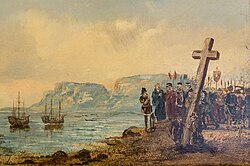
Known affectionately as the Mother City, Cape Town is a breathtaking coastal metropolis serving as the legislative capital of South Africa. Founded on April 6, 1652, this city blends a complex colonial history with a dynamic modern identity, characterized by its stunning natural landscapes and its role as a primary economic hub in the Southern Africa region.
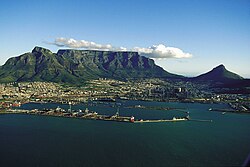
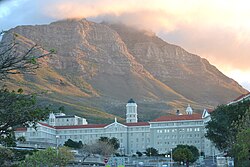
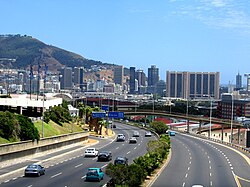
From the iconic silhouette of Table Mountain to the bustling V&A Waterfront, Cape Town is a city of contrasts where high-tech industries coexist with traditional Cape Dutch architecture and diverse cultural heritage.
Key Facts
- Official Status: Legislative capital of South Africa.
- Population: Approximately 4.77 million (Metro, 2022).
- Economy: A major economic center with a 2020 GMP of US$ 121 billion.
- Geography: Located on the Cape Peninsula, featuring the highest elevation of 1,590.4 meters.
- Languages: Primarily Afrikaans (35.7%), Xhosa (29.2%), and English (27.8%).
- HDI: 0.82, categorized as very high.
Geography and Natural Environment
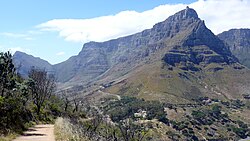
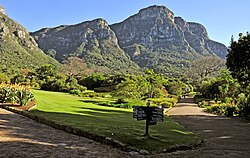
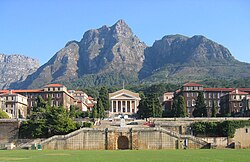
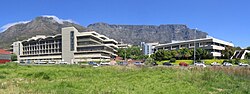
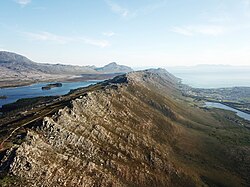
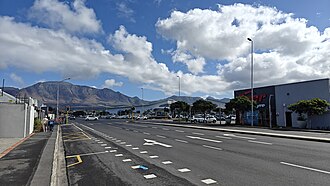
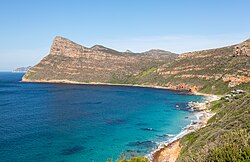
Cape Town is situated on the Cape Peninsula, bordered by the Atlantic Ocean to the west and False Bay to the east. The city's landscape is dominated by dramatic peaks, including Table Mountain, Lion's Head, and Devil's Peak.
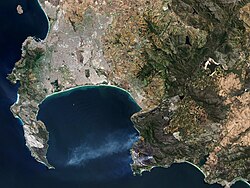
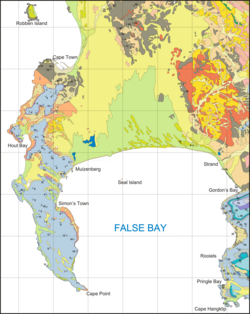
The region's geology is diverse, with the Peninsula Sandstone Fynbos—a unique shrubland vegetation—growing prominently within the Table Mountain National Park.
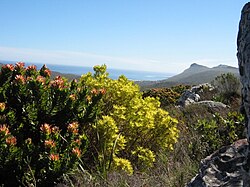
Climate and Hydrology
The city experiences a Mediterranean climate. Summers are generally warm and dry, while winters bring the majority of the annual precipitation, averaging 492.8 mm. Sea surface temperatures in False Bay vary significantly between summer and winter, influencing local marine life and activities.
![Charts of sea surface temperature in and near False Bay in summer and winter[92]](/images/47/c8/47c8c3269616d2abeaa4f0269a70d3cb1a3d5d4ff16f454953b477752d4b6796.png)
Demographics and Society
![An aerial photograph of the newly completed Cape Town foreshore in 1945. Visible in this photograph as the large area of empty land between the City Centre and the newly constructed harbour out of reclaimed land from Table Bay.[40]](/images/6d/eb/6deb984821571d572fa5897ab5bc36ab634a0e0a99e3cd2a7464d68bff65d2f0.jpg)
Cape Town is a multicultural melting pot. As of 2022, the racial makeup consists of Black Africans (45.7%), Coloured (35.0%), White (16.2%), and Indian/Asian (1.6%) populations. This diversity is reflected in the city's religious landscape, where Christianity is the most prevalent faith (85.6%), followed by Islam (5.2%) and traditional African religions (5.3%).
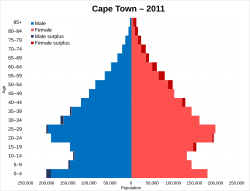
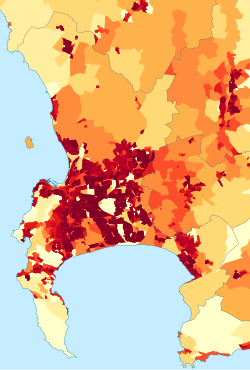
The city's population density is highest in the urban core, with the metro density reaching 1,952 people per square kilometer.
Economy and Infrastructure
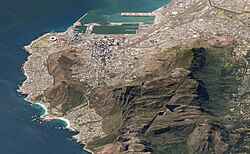
Cape Town is a powerhouse of commerce and innovation. The Central Business District (CBD) houses the headquarters of many of South Africa's largest companies. The city is particularly strong in sectors such as retail, finance, tech, and tourism.
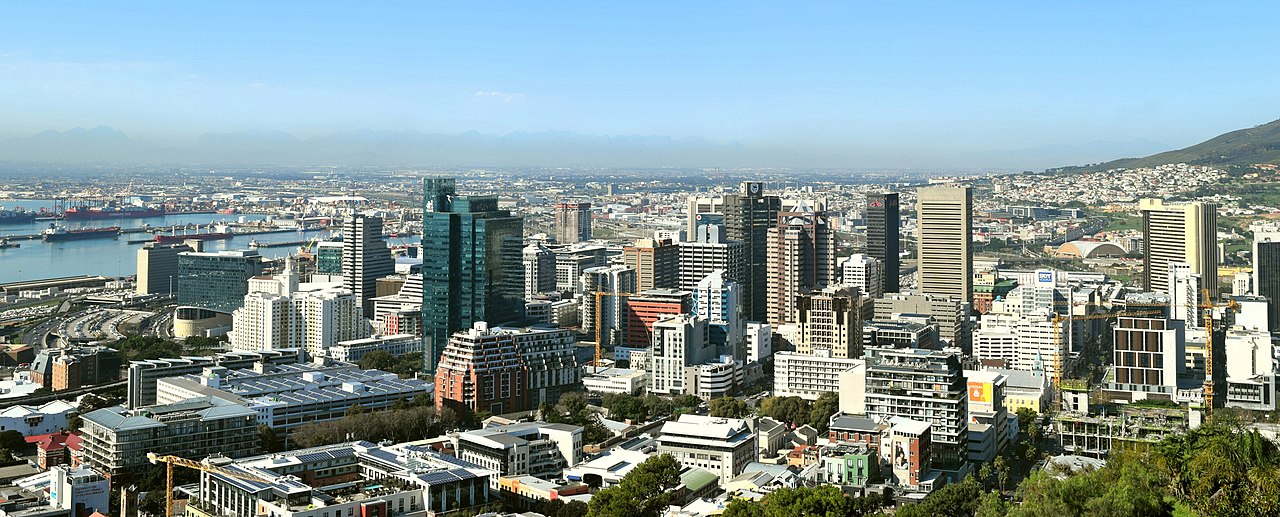
Major Corporate Presence
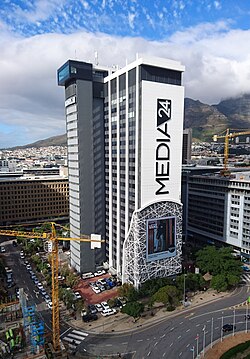
The city is home to several JSE-listed giants. Naspers, a mass media leader, stands as one of the largest companies by revenue headquartered in the city, alongside other major players like Sanlam, Shoprite, and Old Mutual.
Transport and Logistics
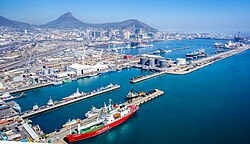
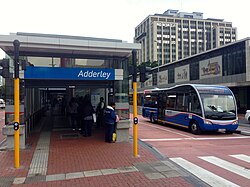
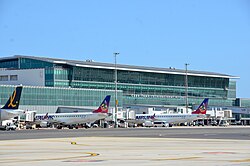
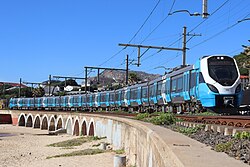
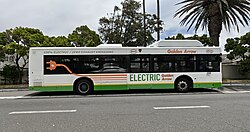
The Port of Cape Town serves as a critical transport node for Africa, handling freight, cruise ships, and oil rig repairs. Air travel is facilitated by the Cape Town International Airport, while urban mobility is supported by the MyCiTi bus system, Golden Arrow buses, and a vast network of privately owned taxis.
Governance and Public Services
Managed as a metropolitan municipality, the city's budget is strategically allocated to maintain urban functionality. The largest share of rates (29%) is dedicated to law enforcement, metro police, fire, and traffic services.
Safety and Security
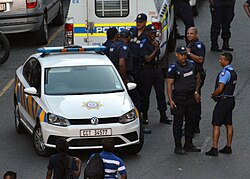
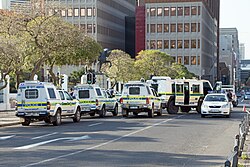
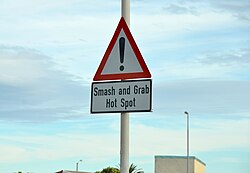
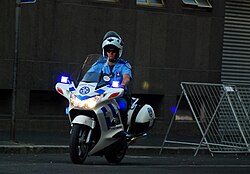
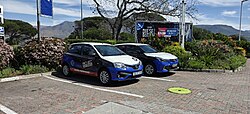
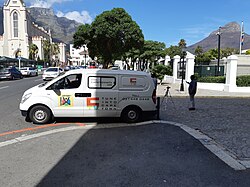
Security is managed through a multi-layered approach involving the Cape Town Metropolitan Police Department, the South African Police Service (SAPS), and various City Improvement Districts (CIDs) that provide additional localized security.
Energy and Water Management
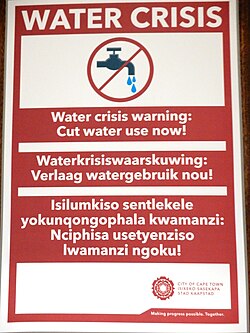
Following a severe water crisis between 2017 and 2018, the city has invested heavily in water infrastructure. Energy diversification is also a priority, with the implementation of Small-Scale Embedded Generation (SSEG) and independent power producer programs to ensure a stable power supply.
Culture, Tourism, and Lifestyle
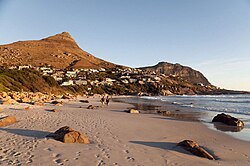
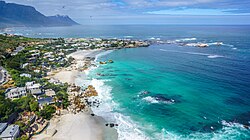
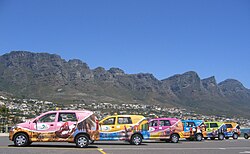
Cape Town is a global tourism destination known for its beaches, such as Clifton and Camps Bay, and its rich culinary scene, featuring local specialties like the gatsby sandwich.
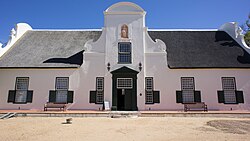
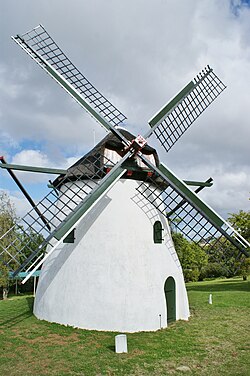
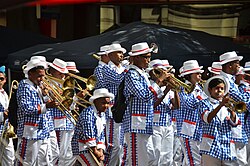
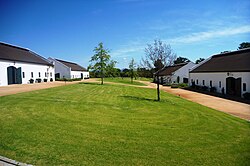
The city's cultural identity is expressed through events like the Cape Town Minstrel Carnival and the Holi festival at the Grand Parade. Architecture enthusiasts can admire the historic Cape Dutch style at sites like Groot Constantia.
Recreation and Sport
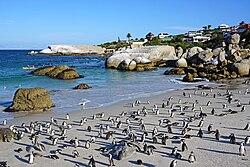
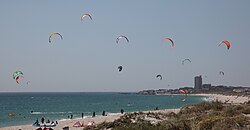
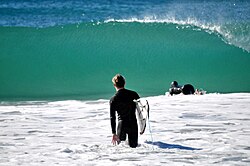
Outdoor activities are central to the Capetonian lifestyle. Popular pursuits include hiking Lion's Head, kitesurfing in Table Bay, and visiting the Boulders Penguin Colony.
| Category | Detail |
|---|---|
| Founded | April 6, 1652 |
| Metro Population (2022) | 4,772,846 |
| Primary Languages | Afrikaans, Xhosa, English |
| GMP (2020) | US$ 121 Billion |
| Highest Point | 1,590.4 m |
| HDI | 0.82 (Very High) |
Frequently Asked Questions
![A CCID trailer, guard and manager in the city centre providing additional security to the local area.[297]](/images/ef/00/ef00d75cc9554fe5bcfba5abdca33b15d60b900dfb8d604c679aabbee35e5c9a.jpg)

What are the primary languages spoken in Cape Town?
The most spoken languages are Afrikaans (35.7%), Xhosa (29.2%), and English (27.8%), reflecting the city's diverse cultural heritage.
Which companies are the largest economic drivers in the city?
Naspers is one of the largest mass media companies headquartered in Cape Town, with other significant contributors including Sanlam, Shoprite, and Old Mutual.
How does Cape Town manage its water and energy security?
The city has implemented infrastructure developments following the 2017-2018 water crisis and is diversifying its energy through Small-Scale Embedded Generation (SSEG) and independent power producer programs.
What is the racial composition of the city?
According to 2022 data, the population is 45.7% Black African, 35.0% Coloured, 16.2% White, and 1.6% Indian/Asian.
What are the most popular tourist attractions in Cape Town?
Key attractions include Table Mountain, the V&A Waterfront, Boulders Penguin Colony, and the various beaches of the Cape Peninsula.