
Cell Site Location Information and Privacy Rights
Modern cellular communication relies on a sophisticated network of radio antennas to maintain seamless connectivity. While this infrastructure enables the mobility we take for granted, it also creates a detailed digital trail of a user's movements. This intersection of technology and law has led to significant legal debates regarding the Fourth Amendment and the right to privacy in the digital age.
How Cellular Networks Track Location
Cellular telephones are designed to maximize the use of limited radio spectrum. Because they operate at low power, they have a short transmission range, requiring them to connect to a nearby facility known as a cell site. These sites are typically located on tall buildings or dedicated towers to ensure broad coverage across urban and rural areas.
As a user moves, the network performs a hand-off, automatically transferring the connection from one cell site to another to prevent call drops. Even when a user is not actively making a call, the phone continuously reports location changes to the service provider so that incoming calls can be routed correctly.
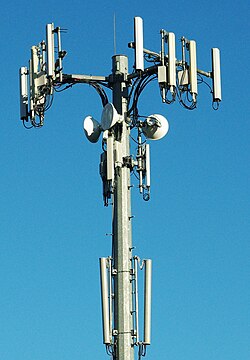
Service providers maintain logs of every cell site a user connects with, along with the precise time of each connection. This data, known as Cell Site Location Information (CSLI), can be used to reconstruct a user's movements throughout the day.
The Legal Battle Over Digital Privacy
The ability to track movements via CSLI has created a legal tension between government surveillance and individual privacy. Historically, the government argued that cell phone tracking should be treated similarly to call logs. They contended that since users do not have an expectation of privacy regarding the phone numbers they dial, they should not have one regarding their location data.
However, the 11th Circuit Court of Appeals challenged this logic. The court noted a fundamental difference: while users are aware they are sharing a dialed number with a phone company, they are generally unaware that their physical movements are being tracked in real-time. This distinction was highlighted by a prosecutor's own admission to a jury that defendants likely had no idea their phones were allowing the service provider and the government to follow their movements during the commission of crimes.
Key Facts
- Cell Sites: Radio antennas on towers or buildings that provide cellular coverage.
- Hand-off: The process of automatically switching a connection from one cell site to another as a user moves.
- CSLI: Records of cell site connections and timestamps used to track user movement.
- Legal Ruling: The 11th Circuit held that CSLI is within a subscriber's reasonable expectation of privacy.
- Constitutional Requirement: Obtaining CSLI without a warrant is considered a Fourth Amendment violation.
Summary of Cellular Tracking and Legal Status
| Feature | Technical/Legal Detail |
|---|---|
| Network Infrastructure | Low-power devices connecting to nearby cell sites |
| Data Collected | Site identity and time of connection |
| Privacy Expectation | Reasonable expectation of privacy (per 11th Circuit) |
| Legal Requirement | Search warrant required for data acquisition |
| Exclusionary Rule | May be bypassed via the "good faith" exception (United States v. Leon) |
The "Good Faith" Exception
Despite ruling that the warrantless acquisition of CSLI violates the Fourth Amendment, the 11th Circuit did not always exclude this evidence from court. In certain cases, the court applied the good faith exception established in United States v. Leon. This exception allows evidence to be used if it was obtained under a court order, even if that order did not meet the strict requirements of a warrant, provided the officers acted in reasonable reliance on that order.
Frequently Asked Questions
What is a cell site?
A cell site is a facility, usually consisting of antennas on a tower or tall building, that allows cellular phones to connect to a service provider's network.
How does a cell phone track location without a call?
Phones continuously report location changes to the network to ensure that incoming calls can be routed to the correct nearby cell site.
Is it legal for the government to track CSLI without a warrant?
According to the 11th Circuit, obtaining cell site location information without a warrant is a violation of the Fourth Amendment because users have a reasonable expectation of privacy regarding their movements.
What is the "hand-off" process?
A hand-off occurs when a mobile device moves out of the range of one cell site and is automatically connected to another nearby site to maintain the connection.
What is the "good faith" exception in CSLI cases?
The good faith exception allows evidence obtained via a court order (but not a warrant) to be admissible in court if the authorities believed the order was valid at the time of the search.