
Chalybeate Waters: The History and Science of Iron-Rich Mineral Springs
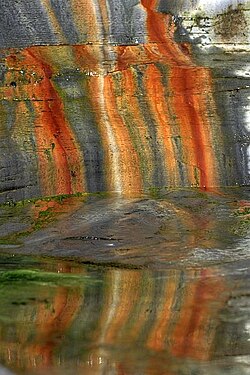
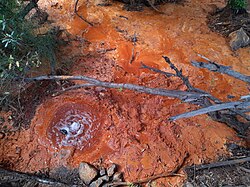
Chalybeate waters, also referred to as ferruginous waters, are natural mineral spring waters characterized by their high concentration of dissolved iron salts. These waters have been prized for centuries, not only for their unique taste and appearance but for their perceived medicinal properties.
The terminology used to describe these springs reveals a deep connection to ancient metallurgy. The word "chalybeate" is derived from the Latin chalybs (steel), which originates from the Greek khálups. This term refers to the Chalybes, a people from Mount Ida in north Asia Minor renowned for their expertise in iron working. Similarly, "ferruginous" comes from the Latin ferrūgineus, meaning "of a rusty colour," rooted in ferrum (iron).
Key Facts
- Composition: Chalybeate waters contain significant amounts of iron salts, often appearing rusty or leaving mineral stains.
- Global Presence: These springs are found worldwide, from the UK and Europe to North America, Australia, and South Africa.
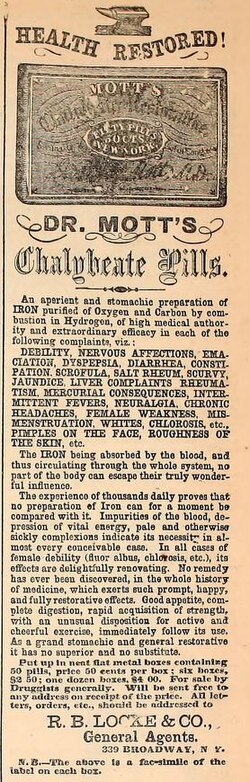
- Historical Use: Once widely promoted as cures for ailments ranging from "the melancholy" to digestive issues.
- Extreme Example: The spring in Caledon, South Africa, is noted as the hottest and most iron-rich chalybeate spring globally.
A History of Healing and Health
During the early 17th century, chalybeate waters gained significant popularity as health-giving tonics. In 1606, Dudley North, 3rd Baron North, discovered the chalybeate spring at Tunbridge Wells. At the time, physicians claimed these waters—which they described as containing "vitriol"—could cure a wide array of conditions, including colic, "the vapours," and melancholy. It was even suggested that the water could balance body weight, making the "lean fat" and the "fat lean."
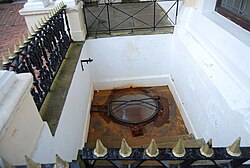
The trend of "taking the waters" continued through the 18th and 19th centuries. In 1689, Count Lelio Piovene discovered a pleasant-tasting, gas-rich ferruginous spring in Vicenza, Italy, which locals called "Saint Anthony's miraculous water" and is known today as the Recoaro Spa. In England, Anthony Relhan promoted the waters of St Anne's Well Gardens in Hove during the 1760s, sparking such intense public interest that the town of Enfield, New Hampshire, temporarily renamed itself "Relhan" in honor of this therapy.
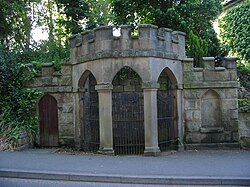
The prestige of these springs attracted royalty. In 1834, Princess Victoria (later Queen Victoria) and her mother, the Duchess of Kent, visited Tunbridge Wells daily to drink from the spring and stroll through the Pantiles.
Chemical Composition
The characteristic flavor and therapeutic claims of chalybeate waters are due to their dissolved mineral salts. While iron is the primary component, other minerals often contribute to the water's profile. For example, an analysis of the Tunbridge Wells spring in 1967 revealed the following composition (measured in parts per million):
| Mineral Compound | Concentration (ppm) |
|---|---|
| Calcium sulfate (CaSO4) | 60.9 |
| Sodium chloride (NaCl) | 57.2 |
| Iron(II) carbonate (FeCO3) | 25.3 |
| Magnesium sulfate (MgSO4) | 13.4 |
| Magnesium chloride (MgCl2) | 7.8 |
| Potassium chloride (KCl) | 7.3 |
| Manganese(II) carbonate (MnCO3) | 4.6 |
Notable Chalybeate Springs Around the World
Chalybeate springs are distributed across several continents, often leading to the development of spa towns or the naming of entire municipalities.
Europe
- United Kingdom: Numerous sites exist, including Tunbridge Wells (Kent), Harrogate (North Yorkshire), and Llandrindod Wells (Wales). Some, like the Bermondsey Spa in London, once featured musical entertainments and fireworks to attract visitors.
- Italy: The Recoaro Spa in Vicenza.
- Belgium: The town of Spa in the Ardennes, known since Roman times as Aquae Spadanae.
- Other: Springs are also found in Austria (Muri Spring), Germany (Bad Pyrmont), Poland (Krynica-Zdrój), and Romania (Toplitz).
The Americas and Beyond
- United States: Notable locations include Saratoga Springs (New York), The Greenbrier (West Virginia), and various "Chalybeate Springs" towns in Alabama, Georgia, and Kentucky.
- South Africa: The Caledon spring in the Western Cape is distinguished as the hottest (48.889°C / 120°F) and most iron-rich chalybeate spring in the world.
- Australia: The Chalybeate Spring at Mittagong, New South Wales.
Frequently Asked Questions
What exactly is chalybeate water?
Chalybeate water is a type of mineral spring water that contains a high concentration of dissolved iron salts, giving it a distinct metallic taste and often a rusty appearance.
Where does the name "chalybeate" come from?
It comes from the Latin word for steel, chalybs, which refers to the Chalybes, an ancient people of Asia Minor who were expert ironworkers.
Were these waters actually medicinal?
Historically, they were promoted to treat a variety of ailments, including digestive issues, "the melancholy," and general weakness. While they were highly popular in the 17th through 19th centuries, these claims were based on the medical beliefs of the time.
Which chalybeate spring is the most potent?
According to 1940 data (Darley-Hartley), the spring in Caledon, South Africa, contains the highest concentration of iron of any chalybeate spring globally.
Are there any famous people associated with these springs?
Yes, Queen Victoria and the Duchess of Kent were regular visitors to the Tunbridge Wells spring in 1834, and the poet Robert Burns visited the Brow Well in Scotland while he was dying.