
Chamber of Deputies: The Former Lower House of Venezuela
The Chamber of Deputies (Spanish: Cámara de Diputados) served as the lower house of the Venezuelan legislature for several decades. Operating under the framework of the 1961 constitution, it functioned alongside the Venezuelan Senate to form a bicameral system—a legislative structure consisting of two separate houses.
This political arrangement remained in place until the adoption of the 1999 constitution, which abolished the bicameral system in favor of a unicameral National Assembly of Venezuela, a single-chamber legislative body.
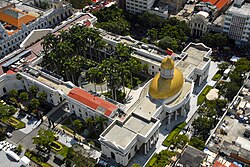
Key Facts
- Constitutional Basis: Established as the lower house under the 1961 constitution.
- System Change: Replaced by the unicameral National Assembly under the 1999 constitution.
- Final Size: The Chamber consisted of 207 members at its final election in 1998.
- Voting Evolution: Shifted from a closed-list proportional representation system to a mixed member proportional representation system in 1993.
Evolution of the Electoral System
For many years, the Chamber utilized a closed-list proportional representation system, where voters chose a party list rather than individual candidates. This method was criticized for creating an extremely party-centered political environment. To address this, the 1993 Venezuelan parliamentary election introduced a mixed member proportional representation system, which was modeled after the German system with some specific variations.
This transition was supported by the traditionally dominant political parties, Democratic Action and COPEI, as the new system closely resembled the structures under which they had previously prospered.
Seat Allocation and Calculation
The distribution of seats in the Chamber of Deputies was primarily based on the population of each state. Starting in 1970, the allocation was set at 0.55% of the population per deputy. To ensure representation for smaller regions, a rule was implemented in 1993 stating that no state could have fewer than three deputies.
The Process for Additional Seats
Beyond the population-based allocation, the Chamber used a specific quota system to award additional seats:
- A quota was calculated by dividing the total number of votes cast by the number of deputies determined by population.
- The total national votes received by each party were then divided by this quota.
- The difference between the seats already won and this calculated result determined the number of additional seats awarded to a party.
To prevent any single party from gaining excessive power, a limit was placed on these bonuses. Since 1980, no party was permitted to receive more than five additional seats in the Chamber of Deputies.
Legislative Summary
| Feature | Details |
|---|---|
| Constitutional Era | 1961 Constitution |
| Legislative Type | Lower House (Bicameral) |
| Successor Body | National Assembly (Unicameral) |
| Final Membership (1998) | 207 members |
| Population Ratio (since 1970) | 0.55% of population per deputy |
| Minimum State Representation | 3 deputies (since 1993) |
Frequently Asked Questions
What happened to the Chamber of Deputies?
The Chamber of Deputies was abolished when Venezuela transitioned from a bicameral system to a unicameral system under the 1999 constitution, leading to the creation of the National Assembly.
How were seats allocated to the states?
Seats were allocated based on population, specifically with one deputy for every 0.55% of the population. Additionally, after 1993, every state was guaranteed at least three deputies regardless of population size.
What was the mixed member proportional representation system?
Introduced in 1993 and modeled on the German system, this electoral method replaced the closed-list proportional representation system to reduce the extreme party-centered nature of the legislature.
Was there a limit on additional seats?
Yes. Since 1980, the system imposed a cap ensuring that no single political party could receive more than five additional seats in the Chamber of Deputies.
How many members were in the Chamber at its end?
During its final election in 1998, the Chamber of Deputies consisted of 207 members.