
Charles Frederick Williams: The Daring War Correspondent of the Victorian Era
In the golden age of the foreign correspondent, few figures embodied the spirit of adventure and journalistic grit as much as Charles Frederick Williams. A man described as both a daring rider and an admirable writer, Williams spent decades documenting the world's most volatile conflict zones, from the plains of Europe to the deserts of Sudan and the mountains of Afghanistan.
Beyond his reports from the front lines, Williams was a pivotal figure in the professionalization of journalism in London, blending a deep knowledge of military strategy with a flair for public storytelling.
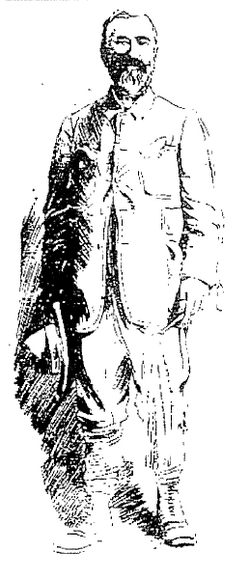
Key Facts
- Primary Role: Renowned war correspondent for publications including The Standard, The Evening News, and the Daily Chronicle.
- Major Conflicts Covered: Franco-Prussian War, Russo-Turkish War, Second Anglo-Afghan War, and the Mahdist War (Sudan).
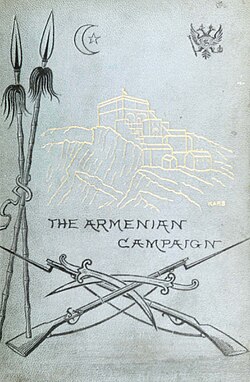
- Literary Contribution: Author of The Armenian Campaign: A Diary of the Campaign of 1877, in Armenia and Koordistan.
- Professional Legacy: Founder and former president of the London Press Club.
- Military Experience: Member of the 1st Surrey Rifles and London Irish Volunteers; wounded three times in action.
A Career Defined by the Front Lines
Williams began his professional ascent in England in 1859, serving as a leader writer for the London Evening Herald and establishing a long-term connection with The Standard that lasted until 1884. His editorial expertise grew quickly, leading him to serve as first editor for the London Evening Standard (1860–1863) and later as editor of The Evening News (1882–1884).
European Conflicts and the Russo-Turkish War
Williams first gained prominence during the Franco-Prussian War in 1870, reporting from the headquarters of the Armée de la Loire (the French army) and becoming one of the first journalists in Strasbourg following the French defeat.
His most significant work occurred during the Russo-Turkish War (1877–1878). Attached to Ahmed Muhtar Pasha, the commander of Turkish forces in Armenia, Williams provided the only continuous series of letters to reach England from the front. This reporting was later expanded into his book, The Armenian Campaign: A Diary of the Campaign of 1877, in Armenia and Koordistan, which remains a detailed, albeit pro-Turkish, record of the conflict.
Following the campaign in Armenia, he tracked Muhtar Pasha to European Turkey and reported on the defense of Constantinople against the Imperial Russian Army. He was present at the headquarters of General Mikhail Skobelev when the Treaty of San Stefano was signed in March 1878, and subsequently reported on the Berlin Congress.
Expeditions in Asia and Africa
Williams' appetite for danger led him to Afghanistan in late 1878, resulting in the 1879 publication of Notes on the Operations in Lower Afghanistan, 1878–9, with Special Reference to Transport.
In 1884, representing the Central News Agency of London, he joined the Gordon Relief Expedition—a British mission to rescue Major-General Charles George Gordon in Khartoum, Sudan. Williams holds the distinction of filing the first dispatch announcing the loss of Gordon. His time in Sudan was not without peril; he survived the overturning of a steamer in the Nile River, an event that prompted him to commission a gold and ivory mitre for the Bishop of London as a gesture of gratitude.
Later Reports and Military Ties
Williams continued his reporting through the Serbo-Bulgarian War of 1885 (as the only British correspondent with the Bulgarian Army), the Greco-Turkish War of 1897 in Thessaly, and Herbert Kitchener's 1898 Sudanese campaign. Though failing health prevented him from traveling to South Africa, he continued to contribute a diary of the South African War to The Morning Leader.
Beyond Journalism: Politics, Military, and Arts
Williams was more than a reporter; he was a man of diverse interests and strong convictions. In 1885, he ran as a Conservative Party candidate for the House of Commons in Leeds West, though he was defeated by Liberal candidate Herbert Gladstone.
His commitment to the craft of journalism was evident in his leadership roles. He served as Chairman of the London district of the Institute of Journalists (1893–1894) and founded the London Press Club, serving as its president from 1896 to 1897.
Military Expertise and Authorship
A known marksman and member of the 1st Surrey Rifles and London Irish Volunteers, Williams was wounded three times during his career, including a gunshot wound to the leg in Egypt in 1885. He was a staunch supporter of Field Marshal Viscount Wolseley's military policies and wrote extensively on military subjects for the United Service Magazine and the National Review.
His literary output extended to fiction, such as John Thaddeus Mackay, a story focusing on religious tolerance. He also edited Songs for Soldiers for the March The Camp and the Barracks to boost troop morale, contributing several of his own compositions to the collection.
Personal Life and Legacy
Williams maintained high-profile friendships, including a close bond with explorer Henry Morton Stanley. Williams gifted Stanley a compass used on several expeditions, which is now housed in the Royal Museum of Central Africa in Belgium. He also shared an early office with Robert Gascoyne-Cecil (later Lord Salisbury, Prime Minister of Great Britain), with whom he shared a lifelong joke about alternating the payment for their beers.
His influence extended into literature; the character of Mr. Nilghai in Rudyard Kipling's play The Light that Failed was based on Williams. His standing in society was further evidenced by a personal invitation from King Edward VII to attend the funeral of Queen Victoria.
The journalistic tradition continued in his family, with his sons Frederick and Francis Austin Ward Williams pursuing careers as journalists in Canada and Australia, respectively.
Summary of Career Highlights
| Period/Year | Conflict/Event | Role/Key Contribution |
|---|---|---|
| 1870 | Franco-Prussian War | Reported from Armée de la Loire and Strasbourg |
| 1877–1878 | Russo-Turkish War | Correspondent for Ahmed Muhtar Pasha; authored The Armenian Campaign |
| 1878–1879 | Second Anglo-Afghan War | Published notes on operations and transport in Lower Afghanistan |
| 1884 | Gordon Relief Expedition | First to report the loss of Major-General Gordon |
| 1885 | Serbo-Bulgarian War | Only British correspondent with the Bulgarian Army |
| 1897 | Greco-Turkish War | Attached to Greek forces in Thessaly |
| 1898 | Sudanese Campaign | Reported on Herbert Kitchener's campaign |
Frequently Asked Questions
Which book is Charles Frederick Williams most known for?
He is best known for The Armenian Campaign: A Diary of the Campaign of 1877, in Armenia and Koordistan, which provided an accurate, though pro-Turkish, record of the Russo-Turkish War.
What was Williams' contribution to the journalism profession?
Williams was a leader in the professionalization of the field, serving as Chairman of the London district of the Institute of Journalists and founding the London Press Club, where he served as president.
Did Charles Frederick Williams serve in the military?
While primarily a journalist, he was a member of the 1st Surrey Rifles and the London Irish Volunteers. He was a skilled marksman and was wounded three times in action, including once in Egypt in 1885.
How did Williams influence literature?
Beyond his own books and fiction, Williams served as the inspiration for the character Mr. Nilghai, a war correspondent, in Rudyard Kipling's play The Light that Failed.
What was his relationship with Lord Salisbury?
Williams and Robert Gascoyne-Cecil (Lord Salisbury) were colleagues who shared an office early in their careers. They maintained a lifelong friendship characterized by a humorous tradition of alternating who paid for their beers.