
Chelveston Aerodrome and the Impact of World War II
During the Second World War, the landscape of the village was fundamentally altered by the establishment of the Chelveston Aerodrome. Originally constructed in 1941 with three runways, the site evolved from a testing ground for airborne tactics into a critical hub for the United States Army Air Forces (USAAF), playing a significant role in the Allied bombing campaigns over Europe.
The Evolution of the Aerodrome
The facility first saw action in 1942 when a detachment of the Airborne Forces Experimental Establishment began operations. This period was characterized by the use of Horsa gliders—unpowered aircraft towed into the air by Short Stirling bombers—to refine airborne deployment techniques.
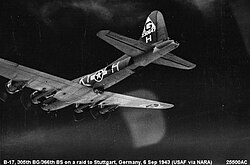
Following the entry of the United States into the conflict, the aerodrome became the base for the 305th Bombardment Group of the USAAF. This group operated four squadrons of Boeing B-17 Flying Fortresses, heavy bombers that were instrumental in pioneering the daylight formation and bombing procedures used during the war.
Operational Scale and Impact
Between November 1942 and April 1945, the aerodrome hosted nearly 2,000 personnel. The operational intensity of the 305th Bombardment Group is reflected in the statistics of their deployment, involving hundreds of sorties and significant losses in the pursuit of strategic targets.
The Human and Local Cost
The presence of the military extended into the village itself. Buildings originally intended as quarters for the Women's Auxiliary Air Force (WAAF)—the female branch of the Royal Air Force—were instead repurposed as the sergeant's mess for the American forces. While these structures, known locally as "the camps," have since been demolished to make way for modern housing developments such as Philips Medows, Stanbrook Way, and Forge Gardens, their history remains part of the local identity.
Tragedy struck the community on 24 March 1944, when a Boeing B-17G Flying Fortress from the 422nd Bomb Squadron crashed during takeoff. The disaster claimed the lives of the 10-man crew and 11 people on the ground. Among the victims were two children, 14-year-old Keith and 4-year-old Monica, who were killed when the aircraft struck their home. Other casualties included servicemen sleeping in a nearby barrack block. Today, Forge Gardens occupies the site of the crash, and a memorial tablet dedicated to the victims resides in the village church.
Key Facts
- Operational Period: November 1942 to April 1945 for the 305th Bombardment Group.
- Aircraft Used: Boeing B-17 Flying Fortresses, Horsa gliders, and Short Stirling aircraft.
- Bombing Totals: 22,362 tons of bombs dropped across 337 missions.
- Combat Losses: 154 Allied aircraft lost and 810 men killed.
- Enemy Claims: 332 enemy aircraft claimed shot down.
- Personnel: Nearly 2,000 personnel based at the aerodrome.
| Category | Detail/Statistic |
|---|---|
| Primary US Unit | 305th Bombardment Group |
| Total Missions | 337 |
| Tonnage Dropped | 22,362 tons |
| Allied Aircraft Lost | 154 |
| Enemy Aircraft Shot Down | 332 |
Frequently Asked Questions
What was the original purpose of the buildings known as "the camps"?
The buildings were originally constructed to serve as quarters for the Women's Auxiliary Air Force (WAAF) but were ultimately used as the sergeant's mess for the American forces.
Which aircraft were used by the 305th Bombardment Group?
The 305th Bombardment Group operated Boeing B-17 Flying Fortresses, which were used to pioneer daylight formation and bombing procedures.
What happened during the crash on 24 March 1944?
A Boeing B-17G Flying Fortress crashed on takeoff, killing all 10 crew members and 11 people on the ground, including two children and several servicemen in a barrack block.
What currently stands on the site of the former military camps and crash site?
The former camps are now the sites of Philips Medows, Stanbrook Way, and Forge Gardens; the latter specifically stands on the site of the 1944 crash.
What was the role of the Airborne Forces Experimental Establishment at the aerodrome?
Starting in 1942, the detachment used the aerodrome to fly Horsa gliders that were towed by Short Stirling aircraft for experimental purposes.