
Chilean Flag History: From Colonial Symbols to the Lone Star
The evolution of the Chilean flag is a visual chronicle of the nation's struggle for sovereignty. From the imposed symbols of the Spanish Empire to the indigenous influences of the Mapuche people, each iteration of the flag reflects a pivotal moment in Chile's journey toward independence and national identity.
Pre-Independence and Colonial Influence
During the colonial era, Chile lacked a unique national flag, instead utilizing the symbols of the Spanish monarchy. The most prominent of these was the Cross of Burgundy—a red, serrated saltire on a white field associated with the Habsburg dynasty. By 1785, King Carlos III introduced a uniform red-and-yellow flag for the Spanish Armada, which was later extended to coastal defenses and maritime towns in 1793, though the Cross of Burgundy remained in common use.
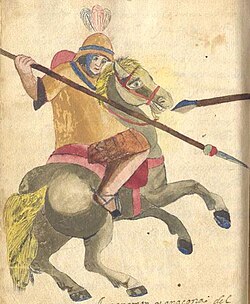
Parallel to Spanish influence, the Mapuche—the indigenous people of central-southern Chile—maintained their independence. While it is unlikely they used flags before Spanish contact, early records from 1569 in the epic poem La Araucana mention Mapuche warriors using blue, white, and red. A significant symbol was the Guñelve, a representation of the planet Venus. This white star on a blue background is believed by some to have influenced the design of the modern Chilean flag.
The Flag of the Patria Vieja (1812–1814)
As the Chilean War of Independence began, the First Government Junta was proclaimed on September 18, 1810. Under the leadership of Jose Miguel Carrera, the drive for emancipation grew, leading to the creation of distinct national symbols to identify the patriots. Tradition holds that Javiera Carrera embroidered the first flag, which was raised on July 4, 1812, during a dinner with U.S. consul Joel Roberts Poinsett.
Known as the flag of the Patria Vieja (Old Fatherland), this design featured three horizontal stripes of blue, white, and yellow. Interpretations of these colors vary: some suggest they represent the branches of government (majesty popular, law, and force), while others see them as natural elements (the sky, the snowy Andes, and golden wheat fields).
Variations of this flag existed, including some with the red Cross of Santiago in the upper left corner—a symbol captured from Spanish forces during the Battle of El Roble. However, following the Treaty of Lircay in 1814, Spanish sovereignty was reaffirmed, and the Spanish flag was readopted. The Patria Vieja tricolor flew briefly again until the royalist victory at the Battle of Rancagua in October 1814, ushering in the period of the Reconquista.
The Flag of the Transition (1817–1818)
The victory of the Liberation Army of the Andes at the Battle of Chacabuco on February 12, 1817, ended the Reconquista and began the Patria Nueva (New Fatherland). On May 26, 1817, a new design attributed to Juan Gregorio de Las Heras was adopted: the Flag of the Transition.
This flag maintained three equal stripes of blue, white, and red. The red stripe replaced the yellow of the previous era to symbolize the blood shed during the conflicts. This color palette was inspired by the descriptions of Mapuche insignia. Despite its initial popularity, the flag was never officially legalized and was phased out within five months, partly because it was too similar to the flags of the Netherlands and revolutionary France.
The Third and Current National Flag
The current Chilean flag was officially established by decree on October 18, 1817, and presented during the Pledge of Independence on February 12, 1818. While often attributed to José Ignacio Zenteno or Antonio Arcos, some historians credit Gregorio de Andía y Varela with the drawing.
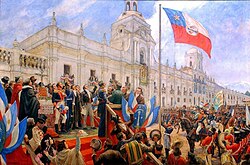
The original design utilized the Golden Ratio to determine the proportions of the blue canton and the white and red fields. The star, known as the Star of Arauco, reflects a blend of European and indigenous traditions. While the Mapuche used an octagram or foliated cross for Venus (Wünelfe), the national flag adopted a five-pointed star. Early versions included an asterisk in the center of the star and an embroidered seal, but these were simplified over time for easier construction.
By 1854, the proportions were standardized with a 2:3 hoist-to-fly ratio and a square canton. In 1912, the star's diameter and the precedence of colors (blue, white, red) were finalized. These specifications were later codified in Supreme Decree No. 1534 of 1967. The 1980 Political Constitution of Chile further mandates that all inhabitants respect the national emblems.
Historical Curiosities and Legends
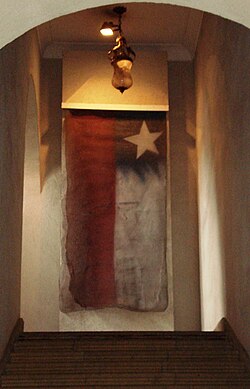
The original flag from the Declaration of Independence was stolen in 1980 by the Revolutionary Left Movement as a political protest but was returned to the National Historical Museum in 2003. Additionally, a popular but undocumented legend claims the Chilean flag won a "Most Beautiful National Flag" contest in Belgium in 1907; however, historical inaccuracies in the story suggest it is a myth.
Key Facts
- Patria Vieja Flag: Blue, white, and yellow stripes (1812–1814).
- Transition Flag: Blue, white, and red stripes (1817–1818).
- Current Flag: Adopted in 1817/1818, featuring a single white star in a blue canton.
- Indigenous Influence: The star is linked to the Mapuche symbol for Venus, the Guñelve.
- Design Principle: The original 1818 flag was based on the Golden Ratio.
- Legal Status: National emblems are protected under the 1980 Political Constitution.
| Era/Flag Name | Period | Primary Colors | Key Symbolism |
|---|---|---|---|
| Colonial | Pre-1812 | Red, White, Yellow | Spanish Monarchy / Cross of Burgundy |
| Patria Vieja | 1812–1814 | Blue, White, Yellow | Government branches or Nature (Sky, Andes, Wheat) |
| Transition | 1817–1818 | Blue, White, Red | Blood shed during independence conflicts |
| Current Flag | 1818–Present | Blue, White, Red | The Lone Star (Star of Arauco/Venus) |
Frequently Asked Questions
What does the star on the Chilean flag represent?
The star is known as the Star of Arauco and is inspired by the Mapuche symbol for the planet Venus, called the Guñelve. It represents a combination of indigenous and European traditions.
Why was the Flag of the Transition replaced?
The Transition flag was suppressed because it lacked official legalization and was too easily confused with the national flags of the Netherlands and revolutionary France.
Who is credited with designing the current flag?
Attributions vary among historians, with names including José Ignacio Zenteno, Antonio Arcos, and Gregorio de Andía y Varela.
Is the story about the "Most Beautiful Flag" contest true?
No, this is considered a popular legend. The lack of documentation and factual errors regarding the geography of the alleged contest in Belgium suggest it is not historically accurate.
What happened to the original Declaration of Independence flag?
It was stolen in 1980 by members of the Revolutionary Left Movement as a protest against the military dictatorship and was returned to the National Historical Museum in 2003.