
Chinese Zodiac: Animals, Elements, and the Sexagenary Cycle
The Chinese zodiac, known in Mandarin as shēngxiào (生肖), is a traditional classification system based on a twelve-year cycle, with each year represented by a specific animal. More than just a calendar, this system integrates complex astrological concepts including the Four Pillars, where the birth year provides insight into a person's family background, societal standing, and relationship with their grandparents.
This intricate system blends the movements of the heavens with the characteristics of the natural world, creating a framework used for centuries to determine personality traits, compatibility, and the timing of significant life events.
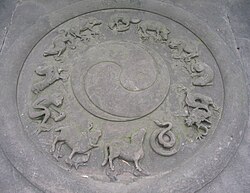
Key Facts
- Cycle Length: A full cycle consists of 12 animals, but the complete sexagenary cycle lasts 60 years.
- Timing: The zodiac year typically begins at lichun (the start of spring), around February 4.
- Components: Each sign is associated with an Earthly Branch, a fixed element, and a polarity of Yin or Yang.
- Global Reach: While originating in China, variations of the zodiac exist across Asia, including Vietnam, Korea, and Japan.
The Twelve Zodiac Signs
Each animal in the zodiac is linked to a specific Earthly Branch (a traditional Chinese method of designating time) and a fixed element. These signs alternate between Yang (active/masculine) and Yin (passive/feminine) polarities.
| Number | Animal | Earthly Branch | Yin/Yang | Fixed Element |
|---|---|---|---|---|
| 1 | Rat | zǐ | Yang | Water |
| 2 | Ox | chǒu | Yin | Earth |
| 3 | Tiger | yín | Yang | Wood |
| 4 | Rabbit | mǎo | Yin | Wood |
| 5 | Dragon | chén | Yang | Earth |
| 6 | Snake | sì | Yin | Fire |
| 7 | Horse | wǔ | Yang | Fire |
| 8 | Goat | wèi | Yin | Earth |
| 9 | Monkey | shēn | Yang | Metal |
| 10 | Rooster | yǒu | Yin | Metal |
| 11 | Dog | xū | Yang | Earth |
| 12 | Pig | hài | Yin | Water |
The Sexagenary Cycle and the Calendar
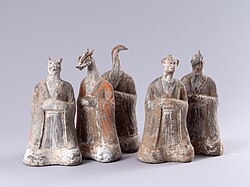
While the animal signs repeat every 12 years, the Chinese calendar uses a 60-year sexagenary cycle. This is formed by combining the 12 Earthly Branches with 10 Heavenly Stems. This means that while you may be born in the Year of the Rat, the specific element (Wood, Fire, Earth, Metal, or Water) associated with that year changes, making your specific birth year unique within a 60-year window.
This cycle allows for easy age deduction. For example, a person born in the Year of the Tiger will be 12, 24, or 36 years old during any subsequent Year of the Tiger (such as 2022).
Compatibility and Nature
Astrological compatibility is determined by the relationship between different signs. Some animals are naturally harmonious, while others are in conflict or harm. These relationships are often mapped on a grid that considers the nature and elements of each sign.
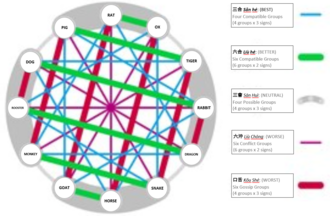
Harmonious and Conflicting Pairs
- Rat: Highly compatible with the Dragon and Monkey.
- Ox: Finds harmony with the Pig, Tiger, Dog, Snake, Rooster, and Rat.
- Tiger: Compatible with the Horse and Dog.
- Rabbit: Pairs well with the Goat and Pig.
Origin Stories and Time Periods
The zodiac is not only used for years but also to divide the day into twelve two-hour periods. Each period is associated with an animal based on the behavior of that animal during those hours.
- Rat (23:00–00:59): The start of the cycle.
- Ox (01:00–02:59): When oxen begin to chew their cud slowly.
- Tiger (03:00–04:59): When tigers are most ferocious while hunting.
- Rabbit (05:00–06:59): Associated with the Jade Rabbit pounding medicine on the moon.
- Dragon (07:00–08:59): When dragons hover in the sky to bring rain.
- Snake (09:00–10:59): When snakes leave their caves.
- Horse (11:00–12:59): When the sun is highest and horses remain standing while others rest.
- Goat (13:00–14:59): When goats eat grass and urinate frequently.
- Monkey (15:00–16:59): When monkeys are most lively.
- Rooster (17:00–18:59): When roosters return to their coops.
- Dog (19:00–20:59): When dogs guard the house.
- Pig (21:00–22:59): When pigs sleep sweetly.

Regional Variations Across Asia
As the Chinese zodiac spread, different cultures adapted the animals to fit their own local fauna and folklore. While the 12-year structure remains largely consistent, the animals themselves often vary.
- Vietnam: The Rabbit is replaced by the Cat, and the Ox is replaced by the Water Buffalo.
- Japan: The Pig is often referred to as the Wild Boar, and the Goat is called the Sheep.
- Thailand: The Dragon is often represented as the Nāga (a mythical serpent).
- Malaysia: The Rabbit is replaced by the Mouse deer, and the Pig by the Tortoise.
Frequently Asked Questions
When does the Chinese zodiac year actually start?
The zodiac year does not start on January 1. According to many astrological sources, it begins at lichun (the start of spring), which typically falls around February 4.
What is the difference between the 12-year cycle and the 60-year cycle?
The 12-year cycle refers only to the animal signs. The 60-year sexagenary cycle is a combination of the 12 Earthly Branches (animals) and 10 Heavenly Stems (elements), meaning a specific animal-element combination only repeats every 60 years.
Why does the Vietnamese zodiac have a cat instead of a rabbit?
This is a regional adaptation. While the structure of the zodiac was adopted from China, Vietnam replaced the Rabbit with the Cat to better reflect local culture and language.
How is the zodiac used to determine age?
Because the animal signs repeat every 12 years, a person's age can be deduced by comparing their birth sign to the current year's sign. For example, if you are a Tiger and the current year is the Year of the Tiger, you are likely a multiple of 12 years old (12, 24, 36, etc.).