
Cholet: A Journey Through Prehistory, Textiles, and Revolution
From the remnants of prehistoric settlements to its status as a textile powerhouse, Cholet possesses a rich and often turbulent history. Located in the heart of the Vendée, this town has evolved from a Neolithic outpost into a center of industrial innovation and a site of significant historical conflict.
Prehistoric and Medieval Foundations
The territory of Cholet has been inhabited since prehistoric times. Archaeological evidence, including several polishers and thirty-three polished stone axes, confirms a long-standing human presence. During the Neolithic period—the final stage of the Stone Age characterized by the development of agriculture and polished stone tools—the region saw the erection of several menhirs (large standing stones).
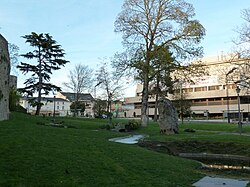
While many have disappeared, three menhirs remain: one at "la Garde," one known as "la Pierre Plate" at "la Pochetière," and the "le Grand menhir de la Garde," which was relocated to the Mail garden in 1885. Other sites, such as "Gué-au-Boin" and "La Bréchoire," once held menhirs that have since been destroyed.
The transition to the medieval era is marked by the appearance of the "De Cholet" family in the 11th century, associated with Lord Pierre I of Chemillé, who passed away in 1048. By 1069, historical records first mention the existence of a castle in the town.
Economic Rise and the Textile Legacy
Cholet's prosperity was largely driven by the textile industry. This growth was sparked by Édouard Charles Victurnien Colbert, the Count of Maulévrier and brother of the famous Jean-Baptiste Colbert, who encouraged weavers to settle in the area. The town's development was further accelerated under the leadership of Gabriel-François de Rougé, the Marquess of Cholet. His influence on the local economy is still honored today through the "Arcades Rougé," a major commercial mall opened in 2009.
The town eventually earned the title of Handkerchief Capital, specifically for its famous red handkerchiefs. This tradition is tied to the Wars of the Vendée. During the Battle of Cholet on October 17, 1793, Henri de la Rochejaquelein used white handkerchiefs to identify himself to his troops. Legend holds that after one of these handkerchiefs was used to bandage a wound, it turned red with blood. This inspired local industrialist Léon Maret to create the traditional Cholet handkerchief: red with white stripes.
The Turmoil of the French Revolutionary Wars
The late 18th century brought devastation to Cholet as it became a focal point of the counter-revolutionary struggle in the Vendée. The conflict peaked in October 1793 with the Battle of Cholet, where Republican forces—led by figures such as Beaupuy, Travot, Marceau, Kléber, and the Mayençais—defeated the Vendean forces commanded by d'Elbée, Bonchamps, La Rochejaquelein, and Stofflet.
The aftermath was brutal. Republican repression led to the destruction of 60% to 70% of the town. The human cost was staggering: out of a pre-conflict population of 8,400 to 8,500, approximately 5,000 inhabitants were killed or went missing. Today, this tragedy is remembered via a monument erected in 1993 near the aerodrome, alongside several crosses dating back to the jubilee of 1850.
Modern Developments and Civic Life
Cholet has continued to evolve through the centuries, though not without tragedy. In January 1885, a temporary theatre collapsed, resulting in 150 deaths among an audience of 1,000. In more recent history, the town updated its civic infrastructure with the opening of a new Hôtel de Ville (town hall) in 1976.
Key Facts
- Prehistoric Evidence: 33 polished stone axes and several polishers discovered.
- Neolithic Landmarks: Three remaining menhirs; others at Gué-au-Boin and La Bréchoire were lost.
- Economic Catalyst: Weavers were settled by Édouard Charles Victurnien Colbert.
- War Impact: 60-70% of the town was destroyed during the Vendée wars.
- Population Loss: Approximately 5,000 people killed or missing during the revolutionary conflicts.
- Cultural Icon: The red and white striped handkerchief, created by Léon Maret.
| Period/Date | Event/Feature | Significance |
|---|---|---|
| Neolithic | Menhirs and Stone Axes | Proof of prehistoric presence |
| 11th Century | De Cholet Family | Early recorded lineage and castle (1069) |
| 1793 | Battle of Cholet | Republican victory and severe town destruction |
| 1885 | Theatre Collapse | Tragic accident causing 150 fatalities |
| 1976 | New Hôtel de Ville | Modernization of civic administration |
Frequently Asked Questions
Why is Cholet known as the Handkerchief Capital?
Cholet is famous for its red handkerchiefs with white stripes. This design was created by industrialist Léon Maret, inspired by a story from the Vendée wars where a white handkerchief used as a bandage turned red with blood.
What happened during the Battle of Cholet in 1793?
The battle pitted Republican forces against Vendean counter-revolutionaries. The Republicans won, leading to a period of brutal repression that destroyed 60% to 70% of the town and resulted in the loss of roughly 5,000 inhabitants.
Who were the key figures in Cholet's economic development?
Édouard Charles Victurnien Colbert brought weavers to the town, and Gabriel-François de Rougé, the Marquess of Cholet, further developed the town's economy and infrastructure.
Are there any prehistoric monuments still visible in Cholet?
Yes, three Neolithic menhirs remain: one at "la Garde," one at "la Pochetière" (la Pierre Plate), and the "le Grand menhir de la Garde," which is located in the Mail garden.
What is the significance of the Arcades Rougé?
The Arcades Rougé is the town's main commercial mall, opened in 2009, and is named in honor of Gabriel-François de Rougé, the marquess who helped develop the town's economy.