
Christian Denominational Positions on Homosexuality and LGBTQ Rights
The intersection of faith and sexual orientation is one of the most diverse and debated landscapes within global Christianity. While some denominations maintain traditional interpretations of scripture that view same-sex activity as sinful, others have evolved toward affirming positions, viewing sexual orientation as a natural diversity of the human experience. This spectrum of belief ranges from strict prohibition and requirements for chastity to the full celebration of same-sex marriage and the ordination of LGBTQ clergy.
Key Facts
- Catholic Church: Distinguishes between "objectively disordered" tendencies and the sinful act of homosexual behavior; recently approved non-liturgical blessings for same-sex couples.
- Orthodox Churches: Generally condemn homosexual acts, though some jurisdictions emphasize welcoming individuals while discouraging the activity.
- Inclusive Protestants: Denominations like the United Church of Canada and the Episcopal Church (USA) affirm same-sex marriage and ordain LGBTQ clergy.
- Evangelical/Fundamentalist: Often hold conservative views, though some adopt a "welcoming but not affirming" stance.
- Restorationist: Views vary widely, from the fully accepting Community of Christ to the conservative Seventh-day Adventist Church.
The Catholic Church: Tradition and Transition
The Catholic Church teaches that any sexual act not intended for procreation within a marriage is sinful. According to the Catechism, while "homosexual tendencies" are considered objectively disordered, the tendency itself is not a sin, but rather a temptation. The Church advocates for the acceptance of individuals with these tendencies with respect and compassion, opposing unjust discrimination and criminal penalties.
However, the Church requires the practice of chastity for all unmarried persons. In terms of leadership, a 2005 Vatican document stated that homosexual tendencies must be "clearly overcome" at least three years before ordination to the diaconate.
Recent years have seen internal tension. In 2023, the Synodal Path in Germany and the Episcopal Conference of Belgium allowed liturgical blessings for same-sex unions, despite condemnation from the Holy See. In December 2023, Pope Francis approved Fiducia supplicans, which allows for non-liturgical blessings of same-sex couples, provided these do not mimic a formal marriage ceremony.
Eastern Orthodox Perspectives
Eastern Orthodox churches generally maintain a conservative stance, sharing a history of canon law similar to the Catholic Church. While some jurisdictions, such as the Orthodox Church in America, welcome those with homosexual feelings, they encourage them to overcome these effects and deny sacraments to those who justify homosexual activity.
In more conservative regions, such as Greece and Eastern Europe, views are stricter. The Greek Orthodox Archdiocese of America classifies homosexuality as "immoral and inappropriate." Tensions arise when these rules are challenged; for example, Archbishop Elpidophoros of America faced a formal protest from the Holy Synod of the Church of Greece after baptizing children adopted by a gay couple in 2022.
Protestantism: A Spectrum of Inclusion
Inclusive and Affirming Denominations
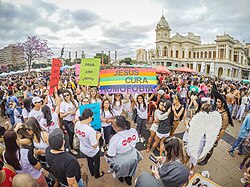
Many Protestant denominations view monogamous same-sex relationships as morally acceptable and a gift from God. These affirming denominations often perform same-sex marriages and ordain LGBTQ clergy. Examples include the United Church of Canada, the Presbyterian Church (USA), the United Church of Christ, and various national churches in Scandinavia, Germany, and the Netherlands.
The Metropolitan Community Church was founded specifically to serve the LGBTQ community, while the Global Alliance of Affirming Apostolic Pentecostals (GAAAP) and the Affirming Pentecostal Church International provide affirming spaces within the Pentecostal tradition.
Moderate and Evolving Positions
Some groups occupy a middle ground. The Moravian Church in Europe allows blessings of same-sex unions, though the broader church continues to research policy. Liberal Quakers have long been advocates for equality, with Quakers in Britain recognizing same-sex relationships as early as 1963.
The United Methodist Church has experienced significant internal conflict. After rejecting the "One Church Plan" in 2019, the church strengthened its opposition to LGBTQ clergy. However, in 2024, a General Conference vote of 93% moved to lift bans on the ordination of LGBTQ+ people and the hosting of same-sex marriages.
Conservative and Rejecting Positions
Other mainline groups, such as the American Baptist Churches USA and the Presbyterian Church in America, oppose LGBTQ relationships. Confessional Lutheran churches, such as the Wisconsin Evangelical Lutheran Synod, argue that both the desire and the act of homosexuality are sinful, rejecting the distinction between orientation and behavior.

Evangelical and Fundamentalist Views
Evangelical positions vary by denomination. Some are neutral, leaving decisions to local congregations, while others are strongly opposed. Conservative Evangelicals often cite the "Nashville Statement" (2017), a manifesto signed by 150 leaders asserting that same-sex relationships contradict God's design for marriage.
A "moderate conservative" approach is often described as "welcoming, but not affirming." This means the church shows respect and sympathy toward homosexual individuals but does not support their sexual activity or marriage. The French Evangelical Alliance exemplifies this by condemning homophobia while denying full membership to "unrepentant" homosexuals.
Restorationist and Other Traditions
Restorationist churches show a wide divergence in belief. The Community of Christ fully accepts LGBTQ persons and performs weddings. Conversely, the Seventh-day Adventist Church and Jehovah's Witnesses maintain that homosexual sex is forbidden, though Jehovah's Witnesses explicitly state that the Bible does not condone hatred or homophobia.
The Church of Jesus Christ of Latter-day Saints welcomes gay and lesbian members provided they maintain sexual abstinence.
| Tradition | General Stance | Same-Sex Marriage/Blessing | LGBTQ Ordination |
|---|---|---|---|
| Catholic | Conservative / Evolving | Non-liturgical blessings allowed | Generally not permitted |
| Eastern Orthodox | Conservative | Not permitted | Not permitted |
| Inclusive Protestant | Affirming | Permitted / Celebrated | Permitted |
| Evangelical | Varied (mostly Conservative) | Generally opposed / Local option | Generally opposed |
| Restorationist | Divergent | Varies (Community of Christ: Yes) | Varies |
Frequently Asked Questions
Does the Catholic Church support same-sex marriage?
No. The Catholic Church does not recognize same-sex marriage. However, under the document Fiducia supplicans, it allows for non-liturgical blessings of same-sex couples, which are distinct from formal marriage rites.
Which Christian denominations are fully LGBTQ-affirming?
Fully affirming denominations include the United Church of Canada, the United Church of Christ, the Episcopal Church (USA), and various national Lutheran and Reformed churches in Europe (such as those in Sweden, Norway, and Denmark).
What does "welcoming but not affirming" mean?
This term describes a position where a church welcomes LGBTQ individuals into their community with respect and love but does not support or "affirm" same-sex sexual relationships or marriages based on their theological beliefs.
Do any Orthodox bishops support LGBTQ families?
While the general stance is conservative, some individual leaders have taken inclusive actions, such as Archbishop Elpidophoros of America, who baptized children adopted by a gay couple, despite protests from the Holy Synod of the Church of Greece.
How does the United Methodist Church currently view LGBTQ ordination?
Following a 2024 General Conference vote, 93% of delegates voted to lift the existing bans on the ordination of LGBTQ+ people and the hosting of same-sex marriages.