
Christmas Island: A History of Discovery, Mining, and Migration
Located in the Indian Ocean, Christmas Island is a territory defined by its unique geological wealth and its strategic position. From its first sightings by European navigators in the 17th century to its modern role in Australian border policy, the island has transitioned from an uninhabited outpost to a hub of industrial exploitation and political significance.
Early European Encounters
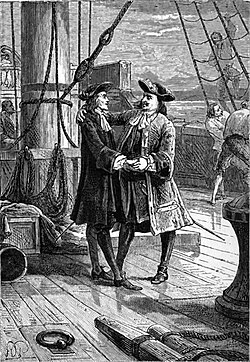
The first European to sight the island was Richard Rowe of the Thomas in 1615. However, it was Captain William Mynors of the East India Company vessel Royal Mary who gave the island its name after sailing past it on Christmas Day in 1643. While the island appeared on English and Dutch charts early in the 17th century, it was not formally mapped by the Dutch cartographer Pieter Goos until 1666, who labeled it "Mony" or "Moni".
The first recorded visit to the waters surrounding the island occurred in March 1688. English navigator William Dampier, sailing aboard the Cygnet under privateer Charles Swan, was blown off course while attempting to reach the Cocos Islands from New Holland. Dampier landed on the west coast at a location known as "the Dales," where two of his crewmen became the first Europeans to set foot on the island. Dampier noted in his accounts that the island was uninhabited.
Exploration and British Annexation
Formal exploration began in 1857 when Captain Sidney Grenfell of the HMS Amethyst attempted to reach the island's plateau summit, though the expedition was forced back by steep inland cliffs. Later, during the 1872–1876 Challenger expedition, naturalist John Murray conducted extensive surveys of the area.
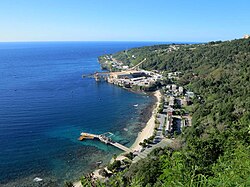
The island's economic potential was realized in 1886 when Captain John Maclear of the HMS Flying Fish discovered a viable anchorage, which he named Flying Fish Cove. Shortly after, Pelham Aldrich and J. J. Lister collected biological and mineralogical samples. Upon examination by Murray, these samples revealed the presence of nearly pure phosphate of lime (a mineral used primarily in fertilizers). This discovery prompted the British Crown to annex the island on June 6, 1888.
The Era of Phosphate Mining
Following annexation, G. Clunies-Ross established a small settlement at Flying Fish Cove to gather timber and supplies. By 1899, large-scale phosphate mining commenced, utilizing indentured workers from China, British Malaya, and Singapore. The operations were supervised by John Davis Murray, a Purdue University graduate known as the "King of Christmas Island" until 1910.
Administration of the island was shared between the British Phosphate commissioners and the UK Colonial Office via the Straits Settlements and the Crown Colony of Singapore. During this period, the island also hosted scientific endeavors, including a failed 1922 attempt to observe a solar eclipse to test Albert Einstein's theory of relativity.
World War II and Japanese Occupation
Due to its phosphate reserves, Christmas Island became a target for Japan during World War II. The conflict began on the island on January 20, 1942, when the Japanese submarine I-59 torpedoed the Norwegian freighter Eidsvold. Most European and Asian staff were evacuated to Perth as the island faced aerial bombings and naval shelling.
The occupation was marked by internal strife. On the night of March 10–11, 1942, mutinous Indian troops killed a British officer and four non-commissioned officers. While the Europeans were initially spared execution after negotiations, they remained under armed guard until the Japanese fleet officially occupied the island on March 31, 1942. The Japanese 21st and 24th Special Base Forces and the 102nd Construction Unit seized the island, repairing sabotaged equipment to resume phosphate exports.
The occupation ended in October 1945 when the HMS Rother re-occupied the territory. In the aftermath, several mutineers were prosecuted in Singapore; five were originally sentenced to death, though these were later commuted to life imprisonment following requests from the Indian government.
Transfer to Australian Sovereignty
In 1958, the United Kingdom transferred sovereignty of Christmas Island to Australia. This transition involved a $20 million payment to Singapore as compensation for lost phosphate revenue. The transfer was formalized through the UK's Christmas Island Act (May 14, 1958) and Australia's Christmas Island Act (September 1958), with official authority passing to the Commonwealth of Australia on October 1, 1958.
The island's administration evolved over the following decades. In 1968, the official secretary became an "administrator." Since 1997, Christmas Island and the Cocos (Keeling) Islands have been collectively known as the Australian Indian Ocean Territories, sharing a single administrator based on Christmas Island.
Modern Challenges: Refugees and Detention
From the late 1980s, the island became a landing point for asylum seekers, primarily from Indonesia. This culminated in the 2001 Tampa controversy, where the Australian government prevented the MV Tampa from disembarking 438 rescued asylum seekers, sparking a major political debate during the 2001 federal election.
Between 2001 and 2007, the "Pacific Solution" was implemented, excising the island from Australia's migration zone to prevent asylum seekers from applying for refugee status on-shore. In 2006, a large immigration detention centre was built at a final cost of over $400 million. The island has seen significant humanitarian crises, including the 2010 boat disaster where 48 asylum seekers died near Flying Fish Cove.
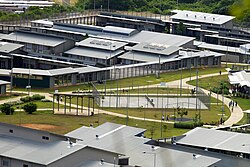
The detention centre closed in September 2018 but was reopened in February 2019. During the early stages of the COVID-19 pandemic, parts of the facility were repurposed as a quarantine center for Australian citizens evacuated from Wuhan, China, in February 2020.
Key Facts
- First Sighting: Richard Rowe in 1615; named by William Mynors in 1643.
- First Landing: William Dampier and crew in March 1688.
- Annexation: Claimed by the British Crown on June 6, 1888, due to phosphate deposits.
- WWII Occupation: Occupied by Japanese forces from March 31, 1942, to October 1945.
- Australian Transfer: Sovereignty transferred from the UK to Australia on October 1, 1958.
- Administrative Status: Part of the Australian Indian Ocean Territories since 1997.
| Period | Status/Control | Primary Activity/Event |
|---|---|---|
| 1615–1888 | Uninhabited / Unclaimed | Early European sightings and exploration |
| 1888–1942 | British Crown | Discovery of phosphate and start of mining |
| 1942–1945 | Japanese Empire | Military occupation during WWII |
| 1945–1958 | British / Singapore | Post-war recovery and phosphate export |
| 1958–Present | Australia | Territorial administration and immigration processing |
Frequently Asked Questions
Why is the island called Christmas Island?
The island was named by Captain William Mynors of the Royal Mary, who sailed past the land on Christmas Day in 1643.
What resource led to the British annexation of the island?
The discovery of nearly pure phosphate of lime, a valuable mineral for fertilizer, led the British Crown to annex the island in 1888.
How did the island become an Australian territory?
The United Kingdom transferred sovereignty to Australia on October 1, 1958, following a request from the Australian government and a $20 million compensation payment to Singapore.
What was the "Pacific Solution"?
The Pacific Solution was a policy operated by the Howard government from 2001 to 2007 that excised Christmas Island from Australia's migration zone, relocating asylum seekers to Nauru and Manus Island to prevent them from applying for refugee status on Australian soil.
What happened during the 2010 boat disaster?
A boat carrying asylum seekers hit rocks near Flying Fish Cove and smashed against cliffs, resulting in the deaths of 48 people.