
Columbia Journalism School: A Legacy of Professionalizing the Press
For over a century, the Columbia Journalism School has served as a beacon for the evolution of news reporting. Founded on the belief that journalism should be more than a trade learned through apprenticeship, the school was designed to be a center of enlightened practice, blending technical skills with a deep commitment to public service and democracy.
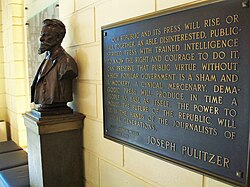
The vision began in 1892 when Joseph Pulitzer, a Hungarian-born newspaper magnate, proposed the creation of the world's first school of journalism to Columbia University. While the university was initially resistant, the support of President Nicholas Murray Butler eventually paved the way for Pulitzer's vision. Pulitzer provided a $2 million gift, allocating a portion of these funds to establish prizes in the arts and journalism.
Following years of negotiation and the death of Joseph Pulitzer in 1911, the school officially opened its doors on September 30, 1912. Under the leadership of director Talcott Williams, the inaugural class consisted of 79 students, including twelve women. These early students balanced academic lectures with immersive field work, covering high-profile events such as a visit from President William Howard Taft, women's suffrage marches, and sensational murder trials.
The Evolution of Journalism Education
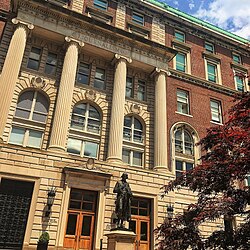
The school's trajectory shifted significantly in 1935 under Dean Carl Ackerman, who transitioned the institution into the first graduate school of journalism in the United States. This move elevated the academic rigor of the program and expanded its scope beyond traditional newspapers.
As the media landscape evolved, so did the curriculum. The school integrated coursework in radio, television news, and documentary filmmaking. This growth was supported by a prestigious faculty comprising both tenured academics and working New York journalists, including Pulitzer winners Douglas Southall Freeman and Henry F. Pringle.
Expanding Influence and Awards
Columbia became a hub for recognizing excellence in the field through several prestigious awards and publications:
- Maria Moors Cabot Prizes (1938): The oldest international journalism awards, focusing on reporting in the Caribbean and Latin America.
- Columbia Journalism Award (1958): The school's highest honor for distinguished service to the profession.
- Columbia Journalism Review (1961): A critical publication launched to analyze and critique the industry.
- Alfred I. duPont-Columbia Awards (1968): Awards for excellence in broadcast journalism.
- National Magazine Awards (1966): Awarded in association with the American Society of Magazine Editors.
Modernization and Digital Innovation
Throughout the late 20th and early 21st centuries, the school continued to adapt to the changing nature of information. In 1975, the Knight-Bagehot Fellowship was established to strengthen business and economics reporting, followed by the founding of the Delacorte Center for Magazine Journalism in 1985.
The academic offerings expanded further with the introduction of a doctoral program in 1998, led by communications theorist James W. Carey, and a specialized Master of Arts program in 2005 under Dean Nicholas Lemann. By 2013, the school responded to the digital revolution by removing the rigid distinctions between newspaper, broadcast, and magazine specializations in its Master of Science curriculum, recognizing the convergence of modern media.
Specialized Centers of Excellence
To address specific challenges in modern reporting, the school established several dedicated centers:
- Toni Stabile Center for Investigative Journalism (2006): Focused on deep-dive investigative training.
- Spencer Fellowship (2007): Dedicated to long-form reporting.
- Dart Center for Journalism and Trauma (2009): Specializing in the coverage of conflict and tragedy.
- Tow Center for Digital Journalism (2010): Exploring the intersection of news and technology.
- Brown Institute for Media Innovation (2012): Focused on data science and media innovation.
Key Facts
- Founded: Classes began September 30, 1912.
- Founder: Joseph Pulitzer, who provided a $2 million endowment.
- Milestone: Became the first graduate school of journalism in the U.S. in 1935.
- First Female Dean: Joan Konner (served 1988–1996).
- Core Curriculum: The Reporting and Writing 1 (RW1) course became the cornerstone of basic training by the 1970s.
| Year | Event/Establishment | Significance |
|---|---|---|
| 1912 | School Opening | First professional journalism school with 79 students. |
| 1935 | Graduate Transition | First graduate-level journalism school in the U.S. |
| 1954 | Pulitzer Prize Administration | John Hohenberg became the first administrator. |
| 1961 | Columbia Journalism Review | Launch of a premier industry critique publication. |
| 2013 | Curriculum Overhaul | Removed media-type distinctions to embrace digital convergence. |
Frequently Asked Questions
Who founded the Columbia Journalism School?
The school was founded by Joseph Pulitzer, a Hungarian-born newspaper magnate, who provided the funding and vision to professionalize journalism as a service to democracy.
When did it become a graduate school?
Under the leadership of Dean Carl Ackerman, the school transitioned into the first graduate school of journalism in the United States in 1935.
What is the significance of the RW1 course?
Reporting and Writing 1 (RW1) became the cornerstone of the school's basic curriculum by the 1970s, serving as the fundamental training for students.
How has the school adapted to digital media?
In 2013, the school erased the distinctions between newspaper, broadcast, and magazine specializations in its Master of Science curriculum to reflect the integrated nature of modern digital media.
What specialized centers does the school host?
The school hosts several specialized entities, including the Toni Stabile Center for Investigative Journalism, the Dart Center for Journalism and Trauma, the Tow Center for Digital Journalism, and the Brown Institute for Media Innovation.