
Combat Engineers: The Essential Role of Sappers and Pioneers in Modern Warfare
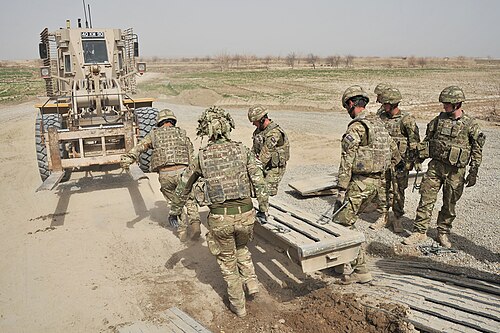
In the complex environment of land warfare, the ability to move quickly, protect troops, and dismantle enemy defenses is critical. This is the domain of the combat engineer—specialized soldiers, often referred to as sappers or pioneers, who provide vital engineering support to land forces. From constructing bridges under fire to clearing deadly minefields, combat engineers act as force multipliers, ensuring that friendly forces can advance while the enemy is stalled.
Combat engineers are trained to operate in both combat and non-combat zones, blending technical engineering skills with infantry tactics. Because they often work at the leading edge of an advance, they are typically proficient in infantry battle drills and can serve as provisional infantry when the mission requires.
Key Facts
- Primary Goal: Facilitate the mobility of friendly forces while impeding the mobility of the enemy.
- Core Competencies: Demolitions, mine warfare, bridge construction, and fortification building.
- Terminology: Known as "sappers" in Commonwealth and US armies, and "pioneers" in several European forces.
- Integration: Embedded within divisions, combat brigades, and special operations teams (such as US Army Special Forces and the Israeli Yahalom unit).
- Specialized Training: Includes high-intensity courses like the US Army Sapper Leader Course and various IDF professional codes.
Organizational Structure and Roles
Combat engineers are integrated into almost every modern military force. Depending on the nation, they may be organized as a distinct branch or as a support element within a broader military engineering corps. For example, the Danish Ingeniørregimentet is organized almost entirely as a single regiment of combat engineers.
Combat Support and Arms Formations
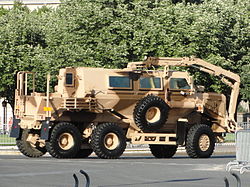
Typically, combat engineer battalions are part of a brigade combat team. During the conflicts in Iraq (2003–2011) and Afghanistan, the U.S. Army pivoted many of these units toward route clearance to counter the threat of improvised explosive devices (IEDs). To maximize effectiveness, these platoons often embed Explosive Ordnance Disposal (EOD) and mechanic teams.
Special Operations Integration
Due to their specialized skill set, combat engineers are essential to direct action special operations. In the US Army Special Forces, "A-Teams" (Operational Detachment Alpha) typically include two combat engineer sergeants (MOS 18C). Similarly, the Israeli Yahalom unit is a dedicated special operations engineering unit specializing in sabotage, explosives, and tunnel warfare.
Terminology: Sappers, Pioneers, and Field Engineers
The language used to describe combat engineers varies by nation and history:
- Sapper: Used by British, Indian, Canadian, Australian, and New Zealand armies. In the US, it refers to those with the combat engineer specialty or graduates of the rigorous 28-day Sapper Leader Course. In the IDF, "Sapper" is a professional code ranging from basic (05) to officer level (11).
- Pioneer: A term used in the Finnish army (as a private equivalent rank) and the German Bundeswehr (Pionier), where they often work with Special Forces to clear obstacles.
- Assault Pioneer: In Commonwealth armies, these are infantry soldiers with limited engineering training, historically responsible for flamethrowers.
- Field Engineer: A broader term formerly used in Commonwealth armies to distinguish those supporting field operations from garrison engineers who managed permanent bases.
Core Practices and Engineering Disciplines
Combat engineering is divided into several critical functional areas designed to control the battlefield.
Mobility
Mobility focuses on the ability of friendly forces to move without hindrance. This involves the reduction of obstacles, such as clearing minefields, breaching walls in urban terrain, and overcoming anti-tank ditches. Mechanized units may use armored vehicles to lay short bridges for gap-crossing.
Countermobility
Countermobility is the art of slowing or stopping the enemy. This includes destroying bridges, blocking roads, digging trenches, and planting land mines. When retreating, engineers often destroy infrastructure to hinder the attacker's advance.
Survivability and Defense
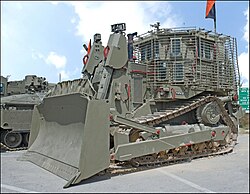
Engineers ensure the survival of troops by constructing fortifications, such as bunkers, trenches, and armored vehicle fighting positions. These structures are often designed as concentric series of defenses to slow attackers and expose them to friendly fire.
Explosive Material Handling and Assault
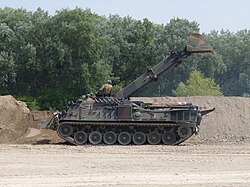
Combat engineers are the primary experts in the use of explosives for both demolition and breaching. This includes the use of Bangalore torpedoes and Mine-Clearing Line Charges (MICLIC) to open routes during an assault.
Equipment and Tooling
| Category | Examples | Primary Purpose |
|---|---|---|
| Basic Tools | Sledges, saws, levels, picks, power tools | General construction and demolition |
| Breaching Gear | Mine rollers, MICLIC, Bangalore torpedoes | Clearing minefields and obstacles |
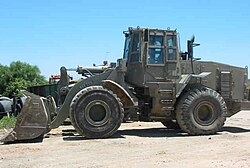
| Heavy Machinery | Armored bulldozers, front loaders | Route opening and structure demolition |
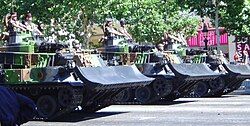
| Bridging | Bailey bridge, French EFA | Crossing water or gaps in terrain |
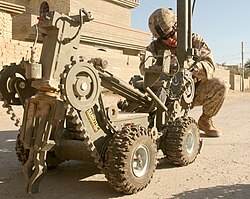
| Specialized Tech | Bomb disposal robots | Safe removal of IEDs and mines |
Frequently Asked Questions
What is the difference between a sapper and a pioneer?
While both terms refer to combat engineers, their usage depends on the country. "Sapper" is common in the US and Commonwealth nations, while "Pioneer" is more prevalent in European armies like the German and Finnish forces. In some historical contexts, they represented different ranks or levels of training.
Do combat engineers fight as infantry?
Yes. Combat engineers are typically trained in infantry tactics and can serve as provisional infantry when required by the mission.
What is the purpose of countermobility?
Countermobility aims to impede the enemy's movement. This is achieved by creating obstacles, such as digging anti-tank ditches, planting minefields, or destroying bridges to slow an enemy advance.
What is a "Sapper School"?
In the U.S. Army, the Sapper Leader Course is a challenging 28-day program for volunteers. It covers combat engineer and infantry drills, covert infiltration, mountaineering, water operations, and expedient demolitions.
What are the specific roles of the Israeli Yahalom unit?
Yahalom is a special operations engineering unit that specializes in high-stakes tasks including sabotage, explosives demolition, and tunnel warfare.