
Crop Circles: Scientific Explanations and the History of Hoaxes
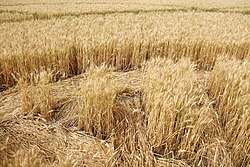
Intricate patterns appearing overnight in agricultural fields have long captured the public imagination. Known as crop circles, these formations range from simple geometric shapes to complex fractal designs. While they often spark theories about extraterrestrial visitors or supernatural forces, the scientific community maintains a much more grounded explanation: they are the result of human ingenuity, art, and occasional animal activity.
The fascination with these patterns often stems from their scale and precision, leading many to wonder how such designs could be created without leaving obvious traces of human presence. However, the history of these formations reveals a clear pattern of human authorship and copycat behavior.
Key Facts
- Scientific Consensus: Most crop circles are man-made hoaxes, art installations, or corporate advertisements.
- Originators: Doug Bower and Dave Chorley confessed in 1991 to starting the trend in southern England.
- Construction Methods: Simple tools like ropes, boards, and GPS are used to flatten crops.
- Natural Causes: While some suggest weather or animals, there is no credible evidence for meteorological origins of complex designs.
- Pseudoscience: Claims of microwave radiation or extraterrestrial messages lack empirical evidence.
How Crop Circles Are Created
The process of creating a crop circle is surprisingly straightforward. The most common method involves using a rope tied to a central anchor point and a board to crush the plants in a precise radius. In certain conditions, such as after recent rainfall, grass can be bent without breaking, a technique documented in Hungary in 1992.
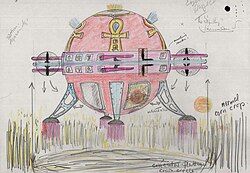
As the phenomenon grew in popularity, the designs became more sophisticated. To achieve high levels of complexity, such as fractal figures, some creators have utilized GPS (Global Positioning System) and lasers. The human element is further proven by the existence of commercial crop circles paid for by companies for advertising, as well as formations featuring human symbols like hearts or stereotyped alien faces.
The History of the Hoax
The modern era of crop circles can be traced back to Doug Bower and Dave Chorley, who confessed in 1991 to creating the first formations in southern England. To challenge skeptics who refused to believe humans were responsible, they began adding straight lines and squares—shapes unlikely to occur naturally.
This sparked a global copycat effect. Many "experts" and researchers were fooled by these designs. For instance, Matt Ridley, who began making circles in northern England in 1991, noted in Scientific American how easily simple tools could deceive observers, including reputable sources like The Wall Street Journal. Even high-profile researchers have been pranked; the tabloid Today hoaxed Pat Delgado, and the program Equinox fooled Terence Meaden.
The late astronomer Carl Sagan addressed this in his 1995 book, The Demon-Haunted World, suggesting that UFOlogists often ignore evidence of human fraud to maintain their belief in extraterrestrial origins.
Natural and Alternative Theories
Meteorological Explanations
Some have attempted to attribute crop circles to weather. In 1880, John Rand Capron suggested "cyclonic wind action" in a letter to Nature. Later, physicist Terence Meaden proposed that whirlwinds influenced by hills created the circles, eventually evolving his theory into an electromagneto-hydrodynamic "plasma vortex." Even Stephen Hawking once noted that circles were either hoaxes or formed by air vortex movement. However, Meaden eventually conceded that complex designs were the work of humans.
Animal Activity
In rare cases, animals are the culprits. In 2009, the attorney general of Tasmania reported that wallabies in Australia created circles in opium poppy fields after consuming the opiate-laden plants and running in circles.
Pseudoscience and Paranormal Claims
During the 1980s and 90s, some magazines suggested that microwave radiation bent the plants. While this was treated as serious research at the time, it is now categorized as pseudoscience. Paranormal investigators have proposed various origins, including messages from God, the "quantum field" of human consciousness, or extraterrestrial beings. The Indonesian National Institute of Aeronautics and Space (LAPAN) has explicitly dismissed these claims, stating they cannot be scientifically proven.
The Debate Over Plant Biology
A few scientists, such as William Levengood, claimed that grain inside circles showed deformities that suggested non-human origins. However, these claims were heavily criticized by skeptics like Joe Nickell, who argued that correlation does not equal causation and that Levengood's methods lacked the rigor of double-blind studies.
Critics of the "cereology" (the study of crop circles) industry argue that some researchers have a financial incentive to maintain the mystery, as they earn money from books and guided tours of the fields.
| Theory | Proposed Cause | Scientific Standing |
|---|---|---|
| Human-Made | Ropes, boards, GPS, lasers | Widely accepted / Proven |
| Meteorological | Whirlwinds, plasma vortexes | Largely discredited for complex designs |
| Animal | Intoxicated wallabies (specific cases) | Documented in isolated instances |
| Paranormal | Aliens, Gaia, supernatural beings | Pseudoscience / No credible evidence |
Frequently Asked Questions
Who started the crop circle phenomenon?
Doug Bower and Dave Chorley confessed in 1991 to creating the first crop circles in southern England, which then inspired copycats worldwide.
Can weather actually create crop circles?
While simple circular patterns can be caused by wind or vortexes, there is no evidence that complex, geometric, or fractal designs are created by meteorological phenomena.
How are complex designs made without leaving tracks?
Creators use simple tools like ropes and boards to flatten crops. Modern creators may use GPS and lasers to ensure precision and minimize visible footprints.
Is there any scientific evidence for extraterrestrial origins?
No. No credible evidence has been presented to support the claim that crop circles are created by aliens or other supernatural entities.
Why do some people still believe they are paranormal?
Some are fooled by the complexity of the designs, while others, including some "cereologists," may have a vested financial interest in promoting supernatural explanations.