
CUVE Mission: Investigating the Mysterious Ultraviolet Absorber of Venus
Venus remains one of the most enigmatic neighbors in our solar system. While many missions have attempted to map its surface and analyze its crushing atmosphere, a persistent mystery lingers in its upper clouds. To solve this, NASA selected the CUVE concept mission in 2017 for further conceptual development. This mission aims to orbit Venus and measure ultraviolet (UV) light absorption and airglow emissions—the faint light emitted by a planet's atmosphere—to unlock the secrets of the planet's atmospheric dynamics.
CUVE is part of the Planetary Science Deep Space SmallSat Studies (PSDS3) program, managed by NASA's Science Mission Directorate. This initiative focuses on utilizing SmallSats (small satellites) to conduct high-impact planetary science. The project is led by the University of Maryland, in collaboration with NASA's Goddard Space Flight Center, the Catholic University of America, and the National Institute for Astrophysics in Italy.
Key Facts
- Mission Goal: Identify the unknown UV absorber in the Venusian cloud tops.
- Program: Selected in 2017 under the PSDS3 program.
- Lead Institution: University of Maryland.
- Target Area: Upper cloud deck (60–70 km altitude).
- Launch Strategy: Designed as a secondary payload to maximize launch opportunities.
The Mystery of the Venusian Cloud Deck
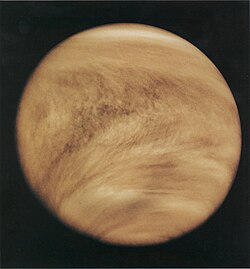
The upper cloud deck of Venus, located between 60 and 70 kilometers in altitude, consists of small droplets made of water and approximately 80% sulfuric acid (H2SO4). While the composition of the droplets is known, the behavior of solar energy at this layer is not. Roughly half of the solar energy Venus receives is absorbed in the ultraviolet spectrum by a substance located at the top of the cloud layer.
This "unknown absorber" is critical to the planet's radiative and thermal balance. Because it absorbs such a vast amount of energy, it directly influences the atmospheric dynamics and temperature of the planet. Despite numerous missions from NASA, Roscosmos, the European Space Agency (ESA), and JAXA, the exact nature of this absorber remains unidentified.
Candidate Chemical Species
Scientists have proposed several chemical candidates to explain the spectral contrast features observed in the UV spectrum. As of 2018, the list of potential absorbers includes:
- Sulfur dioxide (SO2)
- Ferric chloride (FeCl3)
- Chlorine (Cl2)
- Tin (Sn)
- Sulfur chloride (SCl2)
- Sulfur monoxide (S2O)
- Elemental sulfur
- Disulfur dioxide (S2O2)
Beyond chemical compounds, some researchers have speculated that hypothetical microorganisms living in the upper atmosphere could be responsible. If present, these organisms might use solar ultraviolet light as an energy source, resulting in the observed absorption patterns.
Mission Logistics and Collaboration
To ensure the mission is cost-effective and viable, CUVE's technical requirements are designed for flexibility. Rather than requiring a dedicated primary launch, the spacecraft is intended to reach Venus as a secondary payload. This means it could hitch a ride on another planetary mission—even one not targeting Venus—or be launched via an Earth-orbiting mission.
| Category | Details |
|---|---|
| Lead Organization | University of Maryland |
| Collaborators | NASA Goddard, Catholic University of America, National Institute for Astrophysics (Italy) |
| Primary Target | Venus Upper Cloud Deck (60–70 km) |
| Key Measurement | UV light absorption and airglow emissions |
| Program | PSDS3 (Planetary Science Deep Space SmallSat Studies) |
Frequently Asked Questions
What is the primary goal of the CUVE mission?
The primary goal is to identify the unknown absorber in the top layer of Venus's clouds by measuring ultraviolet light absorption and airglow emissions.
Why is the unknown absorber important to study?
Because this absorber captures about half of the solar energy Venus receives, understanding its nature is essential for understanding the planet's overall thermal balance and atmospheric dynamics.
What is the composition of the Venusian upper cloud deck?
The cloud deck, located at 60–70 km altitude, is composed of small droplets consisting of roughly 80% sulfuric acid and water.
Could the UV absorption be caused by biological life?
It has been speculated that hypothetical microorganisms in the upper atmosphere could be using UV light as an energy source, which would cause the observed absorption.
How does CUVE plan to reach Venus?
To increase launch opportunities, CUVE is designed to be a secondary payload on another planetary or Earth-orbiting mission.