
Danmarks Nationalbank: A History of Denmark's Central Bank
The financial stability of Denmark has been anchored for over two centuries by its central bank. Established during a period of significant European transition, Danmarks Nationalbank has evolved from a private entity with a royal monopoly into a fully independent institution overseeing the nation's monetary framework.
The Foundation and Early Monopoly
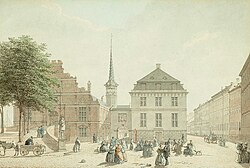
Danmarks Nationalbank was established on August 1, 1818, by King Frederick VI of Denmark. At its inception, the bank operated as a private institution, but it was granted a critical 90-year monopoly on the issuance of currency. This exclusive right allowed the bank to standardize the monetary system across the kingdom.
As the economy grew, the necessity of this monopoly remained evident. In 1907, the government extended the currency issuance rights, pushing the expiration date out to 1938.
Evolution Toward Independence
The relationship between the bank and the state shifted significantly in the early 20th century. By 1914, the National Bank had become the sole banker for the Danish government, centralizing the state's financial operations.
The final step toward modern central banking occurred in 1936, when the bank became fully independent of the government, ensuring that monetary decisions could be made without direct political interference.
The Rise and Fall of the Branch Network
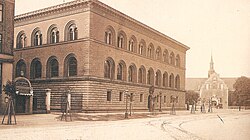
To ensure financial accessibility across the country, the National Bank originally established a network of branches in Denmark's principal cities. These offices served as vital hubs for regional financial management.
![Former branch (1924-1968) on Jernbanegade 27 in Kolding[6]: 134](/images/7e/79/7e795c16c535ddb53219ee34f97b52b2f17291b7d4f63bbf8769cf49067d48e7.jpg)
However, as banking technologies evolved and financial practices shifted during the second half of the 20th century, these physical branches became redundant. The bank began a gradual phase-out process, culminating in 1989 with the closure of its final two branches in Aarhus and Odense.
Modernization of Banknote Production
For nearly two centuries, the production of Danish and Faroese banknotes was handled internally at the bank's own Banknote Printing Works. This internal operation ensured strict control over the physical currency.
On December 20, 2016, the bank transitioned to an outsourced printing model. This decision was driven by a declining demand for physical cash and a strategic effort to reduce costs, resulting in estimated savings of 100 million kroner through 2020.
Key Facts
- Founded: August 1, 1818, by King Frederick VI.
- Independence: Achieved full independence from the government in 1936.
- Government Role: Became the sole banker for the Danish government in 1914.
- Branch Closures: The last branches (Aarhus and Odense) closed in 1989.
- Printing Shift: Banknote printing was outsourced on December 20, 2016.
| Year | Event |
|---|---|
| 1818 | Establishment of the bank and 90-year currency monopoly. |
| 1907 | Currency monopoly extended to 1938. |
| 1914 | Became the sole banker for the Danish government. |
| 1936 | Attained full independence from the government. |
| 1989 | Closure of the final regional branches. |
| 2016 | Outsourcing of banknote printing. |
Frequently Asked Questions
Who founded Danmarks Nationalbank?
The bank was established by King Frederick VI of Denmark on August 1, 1818.
When did the bank become independent from the government?
Danmarks Nationalbank became fully independent of the Danish government in 1936.
Why did the bank close its regional branches?
The branches were phased out during the second half of the 20th century because evolving technologies and banking practices made them unnecessary.
What happened to the printing of Danish banknotes?
Until December 20, 2016, banknotes were printed at the bank's own printing works. They are now outsourced due to lower cash demand and to reduce expenses.
How much money was saved by outsourcing banknote printing?
The move to outsource printing was expected to cut expenses by 100 million kroner until 2020.