
Deseret News: A History of Utah's Oldest Newspaper
The Deseret News stands as a cornerstone of journalism in the American West, serving as a primary record of the settlement and growth of the Great Basin. From its humble beginnings with a hand-pressed iron machine hauled across the plains to its evolution into a modern digital media entity, the publication has mirrored the religious, political, and social transformations of Utah.
Founding and the Journey West
The origins of the paper date back to March 31, 1847, when the LDS Church's Quorum of the Twelve Apostles authorized William W. Phelps to acquire a printing press. Phelps traveled to Boston, where he procured a wrought iron Ramage hand-press—a manual printing machine—along with type and essential equipment. This heavy machinery was transported to Winter Quarters, Nebraska, and later to Kanesville, Iowa.
In April 1849, the press was loaded onto ox-drawn wagons and traveled the Mormon Trail with the Howard Egan Company, finally arriving in the Salt Lake Valley on August 7, 1849.
The First Issue and Early Struggles
The first issue of the Deseret News was published on June 15, 1850. This eight-page debut featured a prospectus by editor Willard Richards, news from the U.S. Congress, and a report on the San Francisco Christmas Eve fire of 1849. Named to be the voice of the State of Deseret, the paper adopted the motto "Truth and Liberty" and was initially published as a weekly pamphlet.
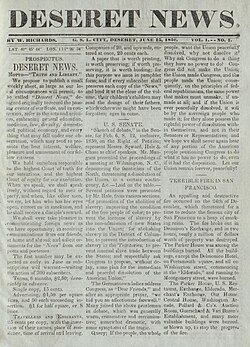
Early operations were plagued by severe paper shortages. By October 1850, the publication frequency dropped to bi-weekly, and some periods in the 1850s saw total shutdowns for months. To solve this, Thomas Howard, an immigrant papermaker, convinced Brigham Young to repurpose sugar-producing machinery to create "homemade paper," which was notably thick and grayish.
War, Expansion, and Competition
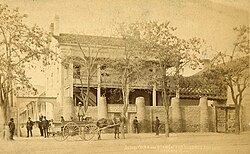
During the Utah War, the presses were moved to Fillmore and Parowan for safety, with some equipment housed in the basement of the Utah Territorial Statehouse. Normal operations resumed in Salt Lake City in late 1858. This era also saw the rise of the area's first competitor, the Valley Tan, published on November 6, 1858.
The 1860s brought technological leaps. The arrival of the Pony Express accelerated news from the East, and in 1864, a steam-powered press was installed in the basement of the Deseret Store.
Evolution of Editions
- 1865: Launched a semi-weekly edition for faster news and more advertising.
- 1867: Launched the Deseret Evening News, a daily edition for city residents.
- 1870: The Mormon Tribune (later The Salt Lake Tribune) was founded, sparking decades of "newspaper battles."
Ownership and Infrastructure
To protect assets from the Morrill Anti-Bigamy Act and Poland Act, ownership shifted from the LDS Church to The Deseret News Company in 1880. The paper also established the Cottonwood Paper Mill in 1883 to ensure a steady supply of paper, though the mill was destroyed by fire in 1893.
Between 1892 and 1898, the paper was leased to the Cannon family to address financial difficulties. However, the venture was not profitable, and ownership returned to the LDS Church in 1898.
The 20th Century: Diversification and Media Growth
In 1903, the News moved into its first purpose-built facility, designed by Richard K.A. Kletting.
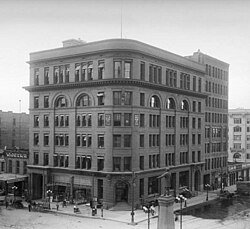
The 1920s marked a period of rapid expansion. The paper adopted teletype technology from the Associated Press and ventured into broadcasting. In 1922, the paper received a license for radio station KZN (later KSL), which eventually evolved into the KSL-TV and radio network under the Deseret Management Corporation.
The Joint Operating Agreement (JOA)
By 1952, financial struggles led the Deseret News and The Salt Lake Tribune to enter a Joint Operating Agreement. This arrangement allowed the rivals to maintain separate editorial voices while sharing printing, advertising, and circulation costs through the Newspaper Agency Corporation (later MediaOne of Utah).

The Digital Era and Modern Transition
The News embraced digital technology early, launching the Crossroads Information Network in 1995 via floppy disks, followed by the website DesNews.com later that year. In 2003, the paper changed its name to the Deseret Morning News, before reverting to Deseret News in 2008.

The 21st century brought significant shifts in political neutrality and business models. In 2016 and 2020, the editorial board broke long-standing traditions by taking public stances on presidential candidates and legal challenges to election results. In October 2020, the JOA with The Salt Lake Tribune was dissolved. Consequently, the Deseret News ended its daily print edition on January 1, 2021, transitioning to a weekly local edition and a weekly national edition.
Key Facts
- Founded: June 15, 1850.
- Original Motto: "Truth and Liberty."
- First Press: A wrought iron Ramage hand-press transported from Boston.
- Broadcasting: Launched KZN (now KSL) radio in 1922.
- Print Transition: Ceased daily print publication on January 1, 2021.
- Ownership: Primarily owned and operated by the LDS Church.
| Year | Milestone | Significance |
|---|---|---|
| 1850 | First Issue Published | Established as the voice of the State of Deseret. |
| 1867 | Daily Edition Launched | Created the Deseret Evening News for urban readers. |
| 1922 | KSL Radio Launch | Expanded the organization into wireless broadcasting. |
| 1952 | Joint Operating Agreement | Shared business costs with The Salt Lake Tribune. |
| 1995 | Digital Launch | Introduced Crossroads Network and first website. |
| 2021 | End of Daily Print | Shifted to weekly local and national print editions. |
Frequently Asked Questions
Why was the Deseret News originally published in pamphlet form?
The paper was published in pamphlet form with the hope that readers would bind the individual issues into volumes for permanent keeping.
What was the Deseret Alphabet?
The Deseret Alphabet was a phonetic alphabet used in numerous articles within the Deseret News during the 1850s and 1860s.
What was the purpose of the Joint Operating Agreement (JOA)?
The JOA was a business arrangement between the Deseret News and The Salt Lake Tribune to share printing, advertising, and circulation costs to ensure financial survival while maintaining separate editorial content.
How did the paper handle paper shortages in the 1850s?
The paper reduced its frequency to bi-weekly and eventually produced its own thick, grayish "homemade paper" using repurposed sugar-making machinery.
Does the Deseret News still print a daily newspaper?
No. As of January 1, 2021, the daily print edition was replaced by a weekly local edition and a weekly national edition.