
Diocese of Wheeling-Charleston: A Comprehensive History
The history of the Catholic Church in West Virginia is a journey from colonial restriction to the establishment of a robust diocesan structure. From the early days of clandestine worship to the creation of hospitals, schools, and universities, the Diocese of Wheeling-Charleston has played a pivotal role in the social and spiritual development of the region.
Early Foundations (1700–1850)
During the late 1600s, the colonial government of Virginia outlawed the practice of Catholicism, leaving very few Catholics in the region prior to the American Revolution. The landscape began to shift after 1783 when Pope Pius VI established the Prefecture Apostolic of the United States in 1784, which later became the Diocese of Baltimore in 1789.
A turning point occurred in 1786 with the passage of the Virginia Statute for Religious Freedom, proposed by Thomas Jefferson, which granted Catholics the legal right to practice their faith. By 1820, the Diocese of Richmond was created to oversee most of Virginia and present-day West Virginia. In 1822, the first Catholic parish in Wheeling, St. James, was established in a small log cabin to serve German and Irish immigrants.
By the 1840s, Bishop Richard Vincent Whelan of Richmond recognized that his diocese had become too vast to manage effectively. He proposed a division of the territory, suggesting the Allegheny Mountains serve as the natural boundary.
The Birth of the Diocese of Wheeling (1850–1894)
On July 19, 1850, Pope Pius IX officially erected the Diocese of Wheeling, covering the area west of the Allegheny Mountains and south of the Pennsylvania border. Bishop Whelan was appointed as the first bishop of the new diocese.
Whelan's leadership was marked by a commitment to healthcare and education. In his first year, he founded Wheeling Hospital—the only medical facility between Pittsburgh and Cincinnati—which was later staffed by the Sisters of Saint Joseph. In 1856, he opened the Children's Home, an orphanage now known as St. John's Home for Children.
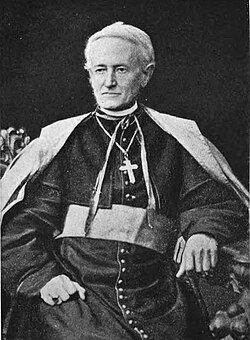
Over his 24-year tenure, Whelan constructed 42 churches and nine schools, including the first church in Charleston, Sacred Heart, in 1869. By his death in 1874, the Catholic population had grown to approximately 18,000. He was succeeded in 1875 by Bishop John Kain.
The Era of the "Great Builder" and Rapid Growth (1894–1948)
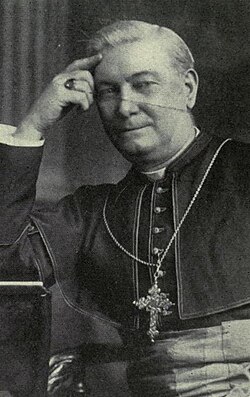
In 1894, Patrick Donahue became bishop, earning the nickname the "Great Builder" for his massive expansion of diocesan infrastructure. Donahue established 38 parishes, six missions, four hospitals, two monasteries, and an orphanage. He also launched the first official diocesan periodical, The Church Calendar, in 1895.
Under Donahue, the Catholic population surged from 20,000 to 62,000. This growth continued under Bishop John Swint, who served for 40 years starting in 1922. Swint oversaw the construction of a new cathedral, 100 churches, and 52 schools, while the overall Catholic population doubled during his tenure.
Social Conflict and Educational Expansion (1948–1960)
Bishop Swint's later years were marked by public clashes over social issues. In 1948, he threatened to excommunicate Catholic women participating in the Miss West Virginia competition, labeling the pageant "pagan." Despite the ban, contestant Mariruth Ford participated and won the competition.
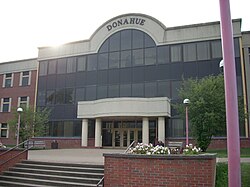
In 1952, Swint condemned the opening of a Planned Parenthood clinic in Parkersburg, viewing it as an attempt to undermine the Church's ban on artificial birth control. Despite these controversies, Swint expanded the diocese's intellectual reach by opening Wheeling College in 1954, run by the Society of Jesus (Jesuits).
Modernization and the Shift to Wheeling-Charleston (1960–1985)
Following Swint's death in 1963, Bishop Joseph Hodges took leadership. Hodges focused on implementing the reforms of the Second Vatican Council (a major assembly of bishops that modernized Church practices), establishing a priests' senate and the Cursillo movement.
Hodges was a champion of ecumenism (the movement promoting unity among different Christian denominations), co-founding the Joint Commission of Roman Catholics and Episcopalians in 1978. He also renovated St. Joseph's Cathedral in 1973.
A significant administrative change occurred in 1974. Because the state line created during the Civil War did not align with diocesan borders, Pope Paul VI transferred all West Virginia parishes to the Diocese of Wheeling and all Virginia parishes to Richmond. The diocese was renamed the Diocese of Wheeling-Charleston, and the Church of the Sacred Heart in Charleston was designated as the co-cathedral.
Contemporary Leadership (1985–Present)
From 1985 onward, the diocese was led by Bishop Francis B. Schulte, followed by Bernard Schmitt. In 2009, Pope Benedict XVI elevated Sacred Heart to a minor basilica. The diocese later faced a period of transition in 2018 when Pope Francis accepted the resignation of Bishop Michael J. Bransfield following allegations of sexual harassment of adults.
Archbishop William E. Lori served as apostolic administrator during the investigation, and in 2019, Bishop Mark E. Brennan was appointed. Bishop Brennan reinstated the diocesan advisory council in 2021. Most recently, on May 1, 2026, Pope Leo XIV appointed Evelio Menjivar-Ayala as the tenth bishop of the diocese.
Key Facts
- Founded: July 19, 1850, by Pope Pius IX.
- First Bishop: Richard Vincent Whelan.
- Major Institutions: Founded WVU Medicine Wheeling Hospital and Wheeling University.
- Renaming: Became the Diocese of Wheeling-Charleston in 1974 to align with state borders.
- Key Landmarks: St. Joseph's Cathedral (Wheeling) and Sacred Heart Basilica (Charleston).
| Era/Bishop | Key Contributions | Notable Event |
|---|---|---|
| Richard V. Whelan | 42 churches, 9 schools, Wheeling Hospital | First Bishop of Wheeling (1850) |
| Patrick Donahue | 38 parishes, 4 hospitals, The Church Calendar | Known as the "Great Builder" |
| John Swint | 100 churches, 52 schools, Wheeling College | Population doubled during tenure |
| Joseph Hodges | Vatican II reforms, Ecumenical commissions | Renamed to Wheeling-Charleston (1974) |
| Mark E. Brennan | Reinstated diocesan advisory council | Served as 9th Bishop |
Frequently Asked Questions
Why was the Diocese of Wheeling created?
Bishop Richard Vincent Whelan requested the division of the Diocese of Richmond because the territory was too vast to administer effectively, proposing the Allegheny Mountains as a natural boundary.
What is the significance of the 1974 name change?
The name change to the Diocese of Wheeling-Charleston corrected a geographic disparity where some West Virginia parishes were still under the Diocese of Richmond and some Virginia parishes were under Wheeling.
Who was known as the "Great Builder"?
Bishop Patrick Donahue earned this nickname due to his extensive construction of parishes, missions, hospitals, and schools between 1894 and 1922.
What is the status of the Church of the Sacred Heart in Charleston?
Originally the first Catholic church in Charleston (1869), it was designated as a co-cathedral in 1974 and raised to a minor basilica by Pope Benedict XVI in 2009.
How did the Diocese of Wheeling contribute to healthcare in the region?
The diocese established several critical facilities, including Wheeling Hospital (the only one of its kind in the region at the time), Sacred Heart Hospital in Richwood, St. Joseph's Hospital in Buckhannon, and St. Mary's Medical Center in Huntington.