
Dodd, Mead and Company: A Legacy of American Publishing
The story of Dodd, Mead and Company is a reflection of the evolution of the American book trade. From its humble beginnings as a religious press to its status as a powerhouse of contemporary literature and rare books, the firm played a pivotal role in shaping the literary landscape of New York City and beyond.
The Origins of the Firm
The company's roots trace back to 1839, when Moses Woodruff Dodd and John S. Taylor, a prominent New York publisher, established Taylor and Dodd. Initially focusing on the publication of religious texts, the partnership was short-lived; by 1840, Dodd purchased Taylor's share and rebranded the entity as M.W. Dodd.
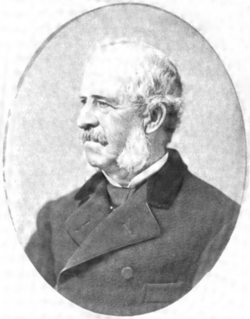
The business remained a family affair as Frank Howard Dodd joined his father in 1859. Frank quickly became integral to the company's operations, eventually taking full control in 1870 upon Moses Dodd's retirement. This transition marked a new era of growth. Frank partnered with his cousin, Edward S. Mead, reorganizing the firm as Dodd and Mead. By 1876, with the addition of Bleecker Van Wagenen, the company adopted its most enduring name: Dodd, Mead and Company.
Growth, Prominence, and Literary Influence
Dodd, Mead and Company earned a reputation for excellence, specializing in American history and contemporary literature. Beyond publishing, the firm established itself as a leading authority and dealer in rare books—books that are valued for their scarcity, age, or historical significance.
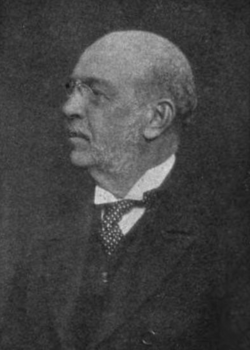
Under Frank Dodd's leadership, the company expanded its reach into periodicals and reference works. He founded The Bookman in 1895 and The New International Encyclopedia in 1902. Frank's influence extended to the wider industry, where he served as president of the American Publishers Association for several years. In 1910, the firm solidified its presence in New York City by constructing the 11-story Dodd Mead Building at the corner of Fourth Avenue and Thirtieth Street, which was viewed as a new center for the trade.
The firm was instrumental in promoting new poetic voices, publishing the works of Paul Laurence Dunbar, Bliss Carman, and Robert W. Service. Following Frank Dodd's death in 1916, the partnership was dissolved and incorporated, with his son, Edward H. Dodd, assuming the presidency.
Strategic Expansions and Famous Authors
The 1920s and 30s were a period of aggressive growth. In 1922, the company purchased the American branch of the John Lane Company, bringing authors such as Anatole France, William John Locke, G. K. Chesterton, and Agatha Christie into its fold. This was followed by the 1924 acquisition of Moffat, Yard & Co., which added the intellectual weight of Sigmund Freud, Carl Jung, and William James to their catalog.
Further acquisitions included the Sears Publishing Company and Duffield and Green in 1934, the latter of which published Emma Gelders Sterne, Elinor Glyn, and General Krasnov. The company also secured the complete works of George Bernard Shaw. While the firm expanded its author list, it sold The New International Encyclopedia to Funk & Wagnalls in 1931.
The Final Chapters and Acquisition
For over a century, Dodd, Mead and Company remained one of the last family-owned publishers in the United States. However, the late 20th century brought a series of ownership changes. In December 1981, the company was purchased for $4 million by Thomas Nelson Inc.
In 1986, the firm was sold for $4.7 million to the Gamut Publishing Company, a partnership formed by Lynne A. Lumsden and Jon B. Harden. To manage debt, the 149-year-old house sold its most valuable assets—the U.S. rights to the works of Max Brand and Agatha Christie—to the Putnam Berkley Group in 1988.
The end came swiftly in the late 1980s. Business operations were suspended in March 1989 due to arbitration with its fulfillment house, Metro Services, Inc. By the end of 1990, Dodd, Mead and Company ceased all publications.
Key Facts
- Founded: 1839 as Taylor and Dodd; renamed M.W. Dodd in 1840.
- Key Figures: Moses Woodruff Dodd, Frank Howard Dodd, and Edward H. Dodd.
- Major Publications: The Bookman (1895) and The New International Encyclopedia (1902).
- Notable Authors: Agatha Christie, George Bernard Shaw, Sigmund Freud, and Carl Jung.
- Final Sale: Acquired by Gamut Publishing Company in 1986 for $4.7 million.
- Closure: Ceased publications by the end of 1990.
| Year | Event |
|---|---|
| 1839 | Company founded as Taylor and Dodd |
| 1870 | Reorganized as Dodd and Mead under Frank Howard Dodd |
| 1876 | Renamed Dodd, Mead and Company |
| 1910 | Completion of the Dodd Mead Building in NYC |
| 1922 | Purchase of John Lane Company (American branch) |
| 1924 | Purchase of Moffat, Yard & Co. |
| 1981 | Acquired by Thomas Nelson Inc. for $4 million |
| 1990 | Company ceased publications |
Frequently Asked Questions
Who founded the company?
The company was founded in 1839 by Moses Woodruff Dodd and John S. Taylor as Taylor and Dodd, before Moses Dodd bought out Taylor in 1840.
Which famous authors were published by Dodd, Mead and Company?
The firm published a wide array of legendary figures, including Agatha Christie, George Bernard Shaw, Sigmund Freud, Carl Jung, and Theodore Dreiser.
What were some of the company's non-book ventures?
Frank Howard Dodd established The Bookman magazine in 1895 and The New International Encyclopedia in 1902.
Why did the company eventually close?
After several acquisitions and the sale of key assets (such as the rights to Agatha Christie's books), operations were suspended in 1989 due to arbitration with Metro Services, Inc., leading to the cessation of publications by 1990.
What was the significance of the Dodd Mead Building?
Completed in 1910, the 11-story building at Fourth Avenue and Thirtieth Street was heralded as the creation of a new trade center for publishing in New York City.