
Dublin Airport: Ireland's Primary Aviation Gateway
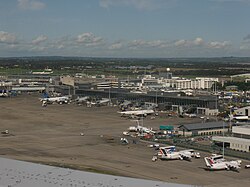
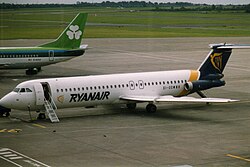
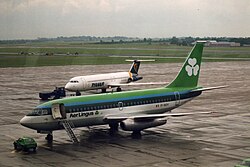
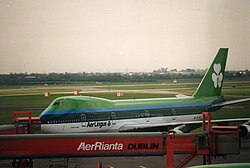
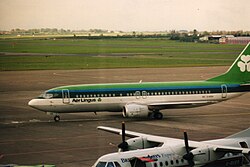
Located in Collinstown, Santry, Dublin Airport (DUB/EIDW) serves as the primary international gateway to Ireland. Since opening its doors on January 19, 1940, the airport has evolved from a modest aerodrome into a massive public aviation hub. Managed by the daA (Dublin Airport Authority), it acts as the primary hub for Aer Lingus, Aer Lingus Regional, and Emerald Airlines, while serving as a major operating base for Ryanair.
The airport is strategically positioned north of Dublin city, operating at an elevation of 242 feet (74 meters) above mean sea level. It plays a critical role in Ireland's economy and connectivity, linking the island to major cities across Europe, North America, and Asia.
Key Facts
- Opened: January 19, 1940.
- Annual Passengers (2025): Approximately 36.4 million.
- Primary Hubs: Aer Lingus and Ryanair.
- Special Feature: US border preclearance facilities.
- Runways: Three active runways, including the concrete 10L/28R.
- Operator: Dublin Airport Authority (DAA).
Infrastructure and Operations
Runway Configuration
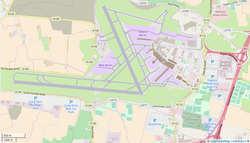
Dublin Airport utilizes three runways to manage its high volume of aircraft movements. The longest is runway 10L/28R, a concrete strip measuring 3,110 meters (10,203 feet). Other operations are handled by the asphalt runways 10R/28L (2,637 meters) and 16/34 (2,072 meters).
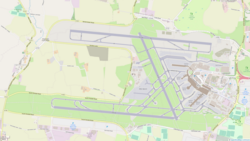
The evolution of the airport's layout is evident when comparing current maps to those from before the construction of the north runway (10L/28R), which significantly increased the airport's capacity for long-haul flights.
Passenger Terminals
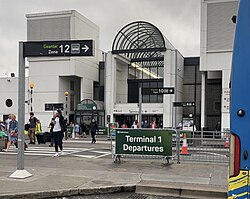
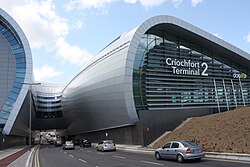
The airport's passenger experience is split between two main terminals. Terminal 1, built in 1972, continues to serve a vast array of short-haul and charter flights. Terminal 2 is a more modern facility designed to handle increased capacity and long-haul traffic.
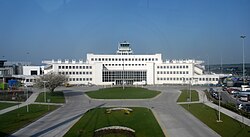
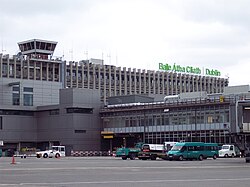
Beyond the terminals, the airport houses the DAA headquarters and extensive maintenance facilities, including dedicated areas for Ryanair aircraft upkeep.

Airlines and Global Connectivity
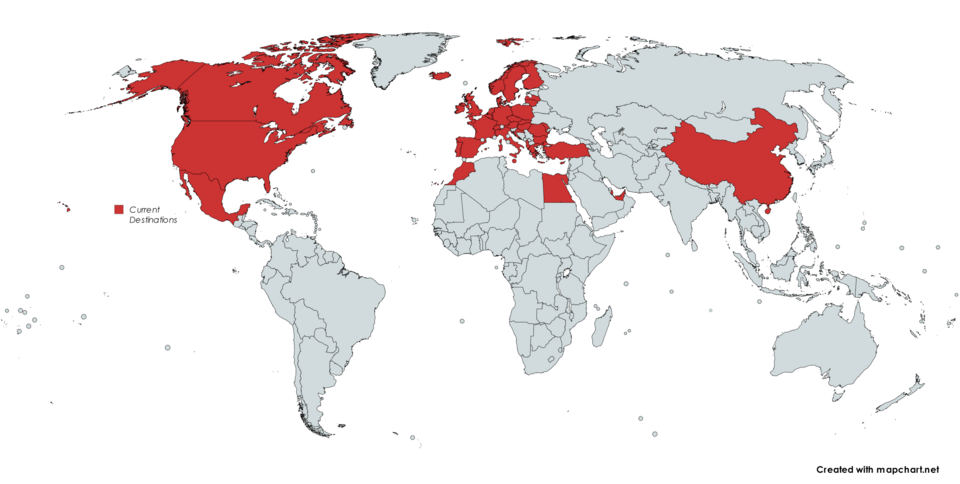
Dublin Airport connects passengers to a diverse range of global destinations. While short-haul European routes are dominated by Ryanair and Aer Lingus, the airport has expanded its long-haul reach significantly. This includes services to East Asia (such as China Eastern Airlines to Shanghai and Hainan Airlines to Beijing) and extensive North American connectivity.
A standout feature of the airport is the US border preclearance, which allows passengers traveling to the United States to clear customs and immigration in Dublin, arriving in the US as domestic passengers.
Major Airline Operators
The airport hosts a mix of flag carriers and low-cost airlines. Notable operators include Delta Air Lines, American Airlines, United Airlines, Emirates, Etihad, and Qatar Airways, providing seamless access to the Middle East and North America.
Growth and Statistics
The airport has seen a steady climb in passenger numbers over the last few decades. Despite a significant dip during the 2020-2021 period, traffic rebounded sharply. By 2025, passenger numbers reached 36,402,926, representing a 5.1% increase from the previous year.
| Metric/Route | Value/Passengers | Change/Trend |
|---|---|---|
| Total Passengers (2025) | 36,402,926 | +5.1% (YoY) |
| Aircraft Movements (2025) | 226,181 | +4.8% (vs 2017-18) |
| Busiest Route: London-Heathrow | 1,825,433 | +4.1% |
| Second Busiest: Amsterdam | 1,332,261 | +2.6% |
| Third Busiest: Manchester | 1,148,219 | +7.9% |
Airport Facilities and Ground Transport
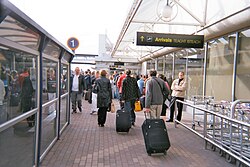
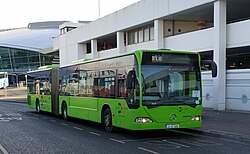
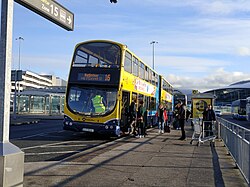
To support millions of travelers, Dublin Airport provides comprehensive ground transportation, including dedicated car parking, taxi ranks, and an extensive bus network. Dublin buses and specialized airport coaches provide frequent links to the city center.


Frequently Asked Questions
Which airlines use Dublin Airport as a hub?
Dublin Airport serves as the primary hub for Aer Lingus, Aer Lingus Regional, and Emerald Airlines, and is a major operating base for Ryanair.
What is US border preclearance?
US border preclearance is a facility that allows passengers to complete US customs and immigration formalities in Dublin before departure, eliminating the need to clear immigration upon arrival in the United States.
How many runways does Dublin Airport have?
The airport has three runways: 10L/28R (concrete), 10R/28L (asphalt), and 16/34 (asphalt).
What are the busiest flight routes from Dublin?
The busiest routes are London-Heathrow, Amsterdam, and Manchester, with London-Heathrow handling the highest volume of passengers.
Who owns and operates the airport?
Dublin Airport is owned and operated by the Dublin Airport Authority (DAA).