
Early Life in the Paleoarchean Era
The quest to understand the origins of life on Earth leads scientists back to the Paleoarchean era, a time when the planet's first biological signatures began to emerge. However, reconstructing this ancient history is a significant challenge. Because of metamorphism (the alteration of rock characteristics by heat and pressure) and geological deformation, most rocks from this period have been destroyed or altered beyond utility.
Today, only two locations on Earth possess rock formations intact enough to preserve evidence of these earliest life forms: the Pilbara Craton in Western Australia and the Kaapvaal Craton in Southern Africa.
Key Facts
- The oldest ascertained life forms are found in microbial mats.
- The Dresser Formation in Western Australia is estimated to be 3.48 billion years old.
- The Barberton Greenstone Belt was influenced by a massive asteroid impact approximately 3.26 billion years ago.
- Evidence of early reproduction, including binary and multiple fission, exists in the Kromberg Formation.
- Some early structures, like those in the Strelley Pool Chert, remain debated as either biological or abiogenic.
The Pilbara Craton: Australia's Ancient Record
The Pilbara Craton serves as a critical archive for early biological activity. One of its most significant sites is the Dresser Formation, consisting of sedimentary rock approximately 3.48 billion years old. This formation contains a diverse array of structures created by ancient life, most notably stromatolites (layered sedimentary formations created by the trapping and binding of sediment by microorganisms) and MISS (Microbially Induced Sedimentary Structures).
These structures were formed by microbial mats, which represent the oldest confirmed life forms and likely contain fossilized bacteria.
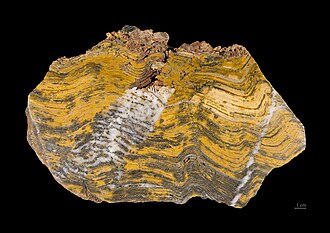
Another vital site in the Pilbara Craton is the Strelley Pool Chert. This formation contains stromatolites dating back 3.4 billion years. While these are often attributed to bacteria, some researchers suggest they may be abiogenic, meaning they were formed by non-biological processes such as evaporitic precipitation on the sea floor.
The Kaapvaal Craton: Africa's Geological Treasures
In Southern Africa, the Kaapvaal Craton houses the Barberton Greenstone Belt. This region was shaped by a cataclysmic event roughly 3.26 billion years ago (Ga) when an asteroid measuring between 37 and 58 kilometers wide collided with Earth.
Within this belt, the Buck Reef chert and the Josefsdal chert provide clear evidence of the Paleoarchean era through the presence of microbial mats containing fossilized bacteria.
The Kromberg Formation
Located near the top of the Onverwacht Group within the Barberton Greenstone Belt, the Kromberg Formation dates to approximately 3.416–3.334 Ga. This site is particularly valuable because it contains evidence of early microbial reproduction, specifically through binary fission (the division of one cell into two) and multiple fission.
Summary of Paleoarchean Life Sites
| Location | Formation | Approximate Age | Evidence Found |
|---|---|---|---|
| Pilbara Craton | Dresser Formation | 3.48 Ga | Stromatolites, MISS, microbial mats |
| Pilbara Craton | Strelley Pool Chert | 3.4 Ga | Stromatolites (potentially abiogenic) |
| Kaapvaal Craton | Buck Reef & Josefsdal Chert | Paleoarchean | Microbial mats, fossilized bacteria |
| Kaapvaal Craton | Kromberg Formation | 3.416–3.334 Ga | Binary and multiple fission evidence |
Frequently Asked Questions
Why is the geological record of the Paleoarchean era so limited?
Most rocks from this era have undergone deformation and metamorphism, which alters or destroys the original structures and chemical signatures needed to identify early life.
What are stromatolites?
Stromatolites are layered sedimentary structures formed when microbial mats, typically consisting of bacteria, trap and bind sediment together over time.
What is the difference between biotic and abiogenic structures?
Biotic structures are created by living organisms, such as bacteria. Abiogenic structures are formed by non-biological chemical or physical processes, such as evaporitic precipitation.
How did early microbes reproduce in the Kromberg Formation?
Evidence suggests that the microbial life in the Kromberg Formation reproduced using both binary fission and multiple fission.
What event impacted the Barberton Greenstone Belt?
Approximately 3.26 billion years ago, a large asteroid estimated to be 37 to 58 kilometers wide collided with Earth in that region.