
Ecocrop Model: Assessing Crop Suitability through Bioclimatic Variables
Determining whether a specific crop will thrive in a particular geographic location is a fundamental challenge in agriculture. The Ecocrop model provides a systematic approach to this problem by evaluating a variety of plant and environmental variables to determine a location's suitability for a given crop.
At its core, the model functions by comparing the biological requirements of a plant against the environmental conditions of a target area. By utilizing a comprehensive crop database, the system can estimate suitability even when detailed local data is limited, making it a versatile tool for agricultural planning.
How the Ecocrop Model Works
The Ecocrop model processes two primary sets of data: plant descriptors and environmental descriptors. Plant descriptors define the biological nature of the crop, including its category, life form, growth habit, and life span. Environmental descriptors encompass the physical conditions of the site, such as temperature, precipitation, light intensity, latitude, and altitude.
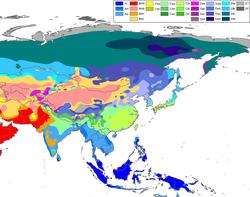
Additionally, the model incorporates the Köppen climate classification—a system used to categorize climates based on temperature and precipitation patterns—along with photoperiodism (the physiological reaction of organisms to the length of night or day) and various soil characteristics.
Calculating the Suitability Index
Once the input variables are established, the model calculates a suitability index. This index is expressed as a percentage or a value ranging from 0 to 1. A score of 0 indicates that the location is totally unsuitable for the crop, while a score of 1 represents optimal or excellent suitability.
To provide a more granular analysis, the output does not just provide a final score; it also delivers separated suitability values specifically for temperature and precipitation, allowing users to identify which specific climatic factor may be limiting growth.
Key Facts
- Suitability Range: The index scores from 0 (totally unsuitable) to 1 (optimal).
- Primary Inputs: Evaluates both plant descriptors (e.g., life form) and environmental descriptors (e.g., altitude).
- Climatic Focus: Analyzes temperature and precipitation monthly throughout the growing season.
- Data Source: Utilizes a crop database to provide environmental ranges when specific data is unavailable.
Model Comparison and Limitations
While the Ecocrop model is highly useful, it is important to understand its position relative to other prediction models like DOMAIN and BIOCLIM. The data yielded by the Ecocrop algorithm tends to be more generic. This generality is primarily attributed to a lack of detailed information regarding certain specific crops.
Furthermore, the model has specific limitations regarding the variables it considers. The results are based solely on bioclimatic factors. This means the model discounts other critical agricultural variables, such as specific soil requirements, the presence of pests, and the risk of diseases.
| Category | Included Variables |
|---|---|
| Plant Descriptors | Category, life form, growth habit, life span |
| Environmental Descriptors | Temperature, precipitation, light intensity, Köppen classification, photoperiodism, latitude, altitude, soil characteristics |
| Model Outputs | Suitability index (0-1), temperature suitability, precipitation suitability |
Frequently Asked Questions
What does a suitability index of 1 mean in Ecocrop?
A suitability index of 1 indicates that the location provides optimal or excellent suitability for the crop based on the evaluated variables.
How does Ecocrop handle temperature and precipitation?
The model evaluates whether climatic conditions are adequate every month within a growing season, calculating suitability based on the marginal and optimal ranges for rainfall and temperature.
What are the main limitations of the Ecocrop model?
The model's results are based exclusively on bioclimatic factors, meaning it ignores the impact of pests, diseases, and specific soil requirements.
How does Ecocrop differ from DOMAIN or BIOCLIM?
Ecocrop produces more generic data than DOMAIN and BIOCLIM, largely due to the limited availability of specific information for some crops.
What is the purpose of the crop database in this model?
The crop database is particularly useful when there is no alternative but to rely on general environmental ranges to determine suitability.