
Elizabeth Pease Nichol: A Pioneer of Anti-Slavery and Women's Suffrage
Elizabeth Pease Nichol was a formidable force in the 19th-century movements for human rights and gender equality. Born into a family of deep conviction, she transitioned from a quiet life of domestic duty to becoming a leading voice in the fight against slavery and a key figure in the early struggle for women's right to vote.
Early Life and Quaker Influence
Elizabeth was born in Darlington, England, to Joseph Pease and Elizabeth Beaumont. Her parents were members of the Society of Friends, commonly known as Quakers, a religious group that emphasized equality and peace. Her father, Joseph, was a founder of the Peace Society, ensuring that Elizabeth grew up in an environment centered on social justice.
Reflecting the Quaker belief in the equal education of girls and boys, Elizabeth attended school alongside her brother and male cousins. She was one of only two girls in the institution. After the school closed, her education continued at home, though it was frequently interrupted as she spent her early years nursing her mother, who suffered from poor health.
Leadership in the Anti-Slavery Movement
By 1837, Pease had risen to lead the Darlington Ladies Anti-Slavery Society. Her leadership caught the attention of Charles Stuart, an abolitionist lecturer, who encouraged her to attend a national society being formed by Joseph Sturge or to send a female delegate. Initially, Pease resisted the spotlight, preferring to focus her efforts on local activism rather than public fame.
Despite her preference for local work, she recognized the need for a broader mobilization of women. In 1838, she and Jane Smeal published a pivotal pamphlet titled Address to the Women of Great Britain. This document served as a call to action, urging British women to form their own anti-slavery organizations and to find their voices by speaking in public.
The 1840 World Anti-Slavery Convention
In June 1840, Elizabeth traveled to London for the World Anti-Slavery Convention. She was accompanied by her friend Eliza Wigham, the secretary of the Edinburgh Ladies Emancipation Society. During this trip, Pease met influential American activists Lucretia Mott and Elizabeth Cady Stanton, forging connections that would bridge the transatlantic fight for equality.
The convention became a flashpoint for gender conflict. Joseph Sturge, the British organizer, informed the six women delegates that they would not be permitted to participate, citing opposition from leading English members who viewed female participation as an "insane innovation." Consequently, women were forced to sit in segregated areas, hidden from the male delegates.
This decision sparked a divide among the men. Several American delegates, including George Bradburn, Wendell Phillips, James Mott, William Adam, Isaac Winslow, J. P. Miller, and Henry B. Stanton, supported the women. William Lloyd Garrison famously refused to take his seat until women were granted equal seating. Conversely, American Baptist Henry Grew spoke in favor of excluding women, even though his own daughter was among those affected. Ultimately, Pease and other observers, such as Lady Byron and Anne Knight, remained in the segregated section.
![Pease is on the right edge in this painting which is of the 1840 Anti-Slavery Convention.[3]](/images/8b/6c/8b6cc7c7b11c188c33a590f45918eb8b10f4d8a627c53e2e6ee6ed52b6775bbe.jpg)
The convention drew a global crowd with delegates from France, Haiti, Australia, Ireland, Jamaica, Barbados, the United States, and Great Britain. A painting commemorating the event depicts the women—including Pease, Lucretia Mott, Amelia Opie, Baroness Byron, Mary Anne Rawson, Mrs. John Beaumont, Elizabeth Tredgold, and Mary Clarkson—positioned at the far right of the canvas, reflecting their marginalized status at the event.
Advocacy for Women's Suffrage
After relocating to Edinburgh, Elizabeth continued her activism by joining the women's suffrage movement. She served as the treasurer for the Edinburgh chapter of the National Society for Women's Suffrage. This local chapter had been established by a dedicated group including Eliza and Jane Wigham, with Priscilla Bright McLaren serving as president and Agnes McLaren and Eliza Wigham as secretaries.
Personal Life and Later Years
In 1853, Elizabeth married Dr. John Pringle Nichol, the Regius Professor of Astronomy at the University of Glasgow. Because Nichol was a Presbyterian, the marriage was opposed by her family. Due to the endogamous rules of the Quakers—which required members to marry within the faith—Elizabeth was forced to leave the Society of Friends.
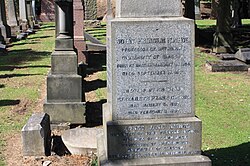
Following the death of her husband in 1859, she moved to Huntly Lodge in the Merchiston district of Edinburgh. She is buried alongside her husband in Grange Cemetery.
Key Facts
- Early Activism: Led the Darlington Ladies Anti-Slavery Society by 1837.
- Key Publication: Co-authored Address to the Women of Great Britain (1838) to mobilize women against slavery.
- 1840 Convention: Attended the World Anti-Slavery Convention in London, where she faced gender-based segregation.
- Suffrage Role: Served as treasurer for the Edinburgh chapter of the National Society for Women's Suffrage.
- Religious Shift: Left the Society of Friends (Quakers) upon marrying Dr. John Pringle Nichol.
| Category | Details |
|---|---|
| Birthplace | Darlington, England |
| Primary Causes | Abolitionism and Women's Suffrage |
| Notable Collaborators | Jane Smeal, Eliza Wigham, Lucretia Mott, Elizabeth Cady Stanton |
| Key Organizations | Darlington Ladies Anti-Slavery Society, National Society for Women's Suffrage |
| Final Residence | Edinburgh, Scotland |
Recognition
Despite her significant contributions, Elizabeth Pease Nichol remained largely overlooked by history for many years. In 2015, local historians in Edinburgh launched a campaign to honor her and three other "forgotten heroines" of the city: Priscilla Bright McLaren, Eliza Wigham, and Jane Smeal.
Frequently Asked Questions
Why did Elizabeth Pease have to leave the Quakers?
She left the Society of Friends because she married Dr. John Pringle Nichol, who was a Presbyterian. The Quakers' rules on endogamy required members to marry within their own faith.
What was the significance of the 1840 World Anti-Slavery Convention for women?
The convention highlighted the gender inequality of the era; women delegates were barred from participating and forced to sit in segregated areas, sparking early debates about women's rights among abolitionists.
What was the purpose of the pamphlet 'Address to the Women of Great Britain'?
Published in 1838, the pamphlet was a call to action for British women to organize their own anti-slavery societies and to begin speaking in public to advocate for the cause.
Who were the 'forgotten heroines' of Edinburgh?
The 'forgotten heroines' are a group of four women—Elizabeth Pease Nichol, Priscilla Bright McLaren, Eliza Wigham, and Jane Smeal—who were the subject of a 2015 campaign to gain historical recognition for their activism in Edinburgh.